Home Blog Page 69

Save 50% on Motley Fool Stock Advisor: Exclusive $99 Introductory Deal for Seniors

If you are retired or planning for retirement, managing your investment portfolio can feel like a balancing act. You want to grow your nest egg, but you also need reliable, proven data to avoid costly missteps.

That is why top-tier stock picking services are so valuable—and why they usually come with a hefty price tag.

Fortunately, Senior Affair has tracked down an incredible, limited-time offer to help you access Wall Street-level insights without breaking the bank. For a short time, new members can get a full year of Motley Fool Stock Advisor for just $99—that is a massive 50% discount off the standard annual price.

12584 208130612584

Why Stock Advisor Matters for Senior Investors

The Motley Fool Stock Advisor is one of the most respected investment newsletters in the world. Over the last two decades, their stock recommendations have consistently outpaced the S&P 500, helping everyday investors spot massive winners like Amazon, Netflix, and Disney long before they became household names.

As a member, you get:

  • Two brand-new stock picks every single month.
  • Regular “Best Buys Now” reports featuring 10 timely stock recommendations.
  • Starter Stocks designed to build the foundation of a brand-new portfolio.
  • Full access to educational resources and community boards to share strategies with like-minded investors.

Whether you are looking to add some calculated growth to your retirement accounts or simply want an expert second opinion on the market, this service takes the guesswork out of investing.

The Deal Breakdown: How to Save 50%

We believe in full transparency, so here is exactly how this exclusive offer works:

  • The Discount: You pay just $99 for your first year.
  • The Savings: This is a 50% discount based on the current standard list price of $199/year.
  • The Fine Print: This special $99 rate is an introductory price available to new members only. After your first year, the membership will renew annually at the then-current list price.

It is a low-risk way to test-drive one of the industry’s best financial tools and see how the recommendations fit into your personal financial strategy.

Claim Your 50% Discount Today

Don’t let market uncertainty stall your financial goals. Take control of your portfolio with data-backed research at a fraction of the usual cost.

📢 Ready to Save?

Click Here to Claim Your 50% Off Motley Fool Stock Advisor Subscription Today! Secure your introductory $99 rate before this exclusive offer expires.

PureWine Review: How Does it Eliminate the Side Effects from Wine?


Disclosure: This article contains affiliate links. If you purchase through these links, SeniorAffair.com may earn a small commission at no additional cost to you. We only recommend products we believe offer genuine value to our readers.


PureWine Review: Can a Simple Wand End Wine Headaches for Good?

If a glass of red wine leaves you with a throbbing headache, a stuffy nose, or a flushed face — you’re far from alone. According to PureWine founder Dr. David Meadows, up to 70% of women over 50 experience occasional to chronic allergic reactions to wine. For many older adults, these reactions have led to giving up wine entirely — even an occasional glass with dinner or a toast at a family gathering.

That’s exactly the problem PureWine was created to solve. This Texas-based company makes patented wine purifiers — small, elegant tools that remove the compounds responsible for wine sensitivity symptoms before the wine ever reaches your lips. No pills. No prescriptions. No sacrificing the wines you love.

In this review, we’ll cover everything you need to know about PureWine: how it works, who it’s designed for, what the products cost, and whether it’s worth adding to your wine routine.

Bottom line up front: If wine headaches or wine sensitivity symptoms have been keeping you from enjoying a glass, PureWine is one of the most straightforward, well-researched solutions available — and it has the customer testimonials to back it up.

🍷 Ready to enjoy wine without the headache?

Browse The Wand, The Wave, and bundle sets — free shipping on orders over $74.99.

Shop PureWine → SeniorAffair.com/recommends/purewine


What Is PureWine?

PureWine is an American company founded in 2016 by Dr. David Meadows — a longtime pharmaceutical executive — and his son Derek. The company’s mission is simple: eliminate the problem of wine sensitivity so that more people can enjoy the health pleasures and social rituals of wine.

Their flagship products — The Wand™ and The Wave™ — are patented wine purifiers that use ion exchange technology to strip histamines and sulfites out of wine. Both compounds are naturally present or deliberately added to virtually all wines, and both are well-established triggers for headache, congestion, skin flushing, and stomach discomfort — especially in people over 50 whose histamine tolerance tends to decrease with age.

PureWine products are:

  • 100% made in the USA
  • FDA-compliant and BPA-free
  • Free of harsh chemicals — they add nothing to your wine
  • Independently tested for safety and efficacy
  • Available without a prescription

Why Seniors Are More Sensitive to Wine

Many adults notice that their relationship with wine changes in their 50s, 60s, and beyond. A glass of red that was perfectly fine at 40 might cause a headache or flushed cheeks at 65. This isn’t imaginary — it has a biochemical explanation.

Histamines are natural byproducts of fermentation, most concentrated in red wines. As we age, levels of the enzyme diamine oxidase (DAO) — which helps break down histamines — tend to decline. This means histamines that were once easily metabolized begin accumulating and triggering reactions.

Sulfites are added to virtually all wines as preservatives (and also occur naturally in small amounts). Sulfite sensitivity tends to increase with age and is particularly common among people with asthma or other respiratory conditions.

Together, these two compounds are responsible for the constellation of symptoms many older wine drinkers know too well: headaches, nasal stuffiness, skin flushing, scratchy throat, and upset stomach.

PureWine addresses both simultaneously — no dietary changes, no antihistamines, no avoiding wine altogether.


PureWine Products: The Wand, The Wave, and The Phoenix

The Wand™ — Per-Glass Wine Purifier

The Wand is PureWine’s original product and remains their most popular. It looks like a small stirring wand and works exactly as its name suggests: you drop it into your glass of wine, swirl gently for about three minutes, and the patented resin technology inside absorbs the histamines and sulfites as you stir.

Key facts about The Wand:

  • Works on all red, white, rosé, and sparkling wines
  • Each wand purifies up to 3 glasses of wine
  • Also aerates the wine, enhancing flavor and aroma
  • Restores opened, oxidized wine back to its natural taste
  • Disposable and made from environmentally renewable materials
  • Convenient and portable — perfect for restaurants and travel

Customer reviews consistently mention relief from reactions they’d experienced for years. One reviewer wrote: “I drank 6 oz of red wine with the wand and had no allergic reaction — for the first time in years.”

The Wave™ — Bottle Purifier for Entertaining

The Wave was designed for when you’re sharing wine with guests or pouring multiple glasses in an evening. It sits in the neck of the bottle and filters the wine as you pour, covering a full bottle (5–6 glasses) in one use.

Key facts about The Wave:

  • Filters an entire 750ml bottle in one pour session
  • Simultaneously removes histamines and sulfites as you pour
  • Features Phoenix Absorption Technology that rejuvenates tired wine
  • Ideal for dinner parties, family gatherings, or holiday entertaining
  • No waiting — purification happens as you pour

The Phoenix® — Reusable Purifier

The Phoenix is PureWine’s premium, reusable option. It uses the same patented purification resin but housed in a refillable unit with disposable BioPod cartridges. Each BioPod pack covers 8 uses. This is ideal for daily wine drinkers looking for a more sustainable, cost-effective long-term solution.

Quick Comparison: Which PureWine Product Is Right for You?

FeatureThe Wand™The Wave™The Phoenix®
Best forSolo glass at home or outEntertaining & partiesDaily wine drinkers
How usedStir in glassPour through bottlePour through device
CoverageUp to 3 glassesFull bottle (5–6 glasses)Full bottle (refillable)
Portable?✅ Yes✅ Yes✅ Yes
Reusable?❌ Single-use❌ Single-use✅ Reusable + cartridges
Alters taste?❌ No❌ No❌ No

Not sure which product is right for you?

Start with The Wand for solo glasses, or The Wave if you entertain. Both ship free on qualifying orders.

Compare All PureWine Products →


How to Use The Wand: Step by Step

Using The Wand couldn’t be simpler — and that simplicity matters when you want to enjoy wine without a production around it.

  1. Pour your glass of red, white, rosé, or sparkling wine as you normally would.
  2. Remove The Wand from its packaging and insert it into the glass.
  3. Swirl gently for about 20 seconds, then let the wand soak in the glass for approximately 2–3 minutes.
  4. Remove The Wand and enjoy your wine. That’s it.

The ion exchange resin inside The Wand binds to histamine and sulfite molecules, pulling them out of the wine. The process also aerates the wine slightly, which can actually enhance the natural flavors and aromas — especially in younger or more tannic reds.

Tip for seniors: Keep a few Wands in your purse or jacket pocket so you always have one available at restaurants, holiday dinners, or when visiting family. They’re slim, light, and discreet.

Watch: See The Wand in action

Video: PureWine product demonstration. Hosted on Vimeo.


What Customers Are Saying

PureWine has generated a substantial base of loyal, enthusiastic customers — many of them older adults who had all but given up on wine. Here’s a sampling of what real users report:

“They really work!!!! No headache, neck pain or puffiness the next day. Woo Hoo!!”

“I drank 6 oz of red wine with the wand and had no allergic reaction — for the first time in years. Grateful for this product and my allergist’s recommendation.”

“It’s AMAZING!!! Absolutely no headache, no hangover, no puffy swollen face feeling in the morning. It also makes it taste better!”

“Even one glass of wine would turn my face bright red. With the PureWine wands, that no longer happens.”

These testimonials are consistent across Amazon, the PureWine website, and independent reviewer sites: the products work reliably for people whose sensitivities were well-established — and many say the wine actually tastes better as a bonus.


Is PureWine a Good Gift Idea for Seniors?

Absolutely — and this is an important point. Many older adults have quietly stopped enjoying wine because of sensitivity symptoms, without ever telling anyone. A box of PureWine Wands or a gift set that includes The Wand and The Wave is a genuinely thoughtful, practical gift for:

  • A parent or grandparent who used to love wine but “gave it up”
  • A spouse or partner who gets headaches after a single glass
  • A sibling or friend who complains of flushing or congestion
  • A wine lover who’s approaching or past 60 and has noticed increasing sensitivity

PureWine products come in attractive packaging and are available in multi-pack and bundle formats that make excellent holiday, birthday, or Father’s Day / Mother’s Day gifts.

🎁 Looking for a thoughtful gift for a wine-loving senior?

PureWine bundles ship in gift-ready packaging. Free shipping on orders $74.99+.

See Gift Options at PureWine →


PureWine: Pros and Cons for Older Adults

✅ What We Like

  • It works — independent lab testing and thousands of real-world reviews confirm significant reduction in sulfites and histamines
  • Simple to use — no learning curve; stir and sip
  • Doesn’t change the wine — taste, color, and aroma are preserved or enhanced
  • No chemicals added — only removes compounds; adds nothing to your glass
  • FDA-compliant, BPA-free, made in USA
  • Portable — works at restaurants, travel, family events
  • Satisfaction guarantee — low-risk purchase

⚠️ Things to Consider

  • The Wand is disposable — ongoing cost if you drink wine frequently (The Phoenix reusable option addresses this)
  • Not a medical device — won’t address alcohol intolerance or other alcohol-related reactions unrelated to histamines/sulfites
  • Requires 3 minutes of soak time for The Wand — minimal, but worth knowing
  • Free shipping threshold — $74.99 minimum for free standard shipping (bundles typically exceed this)

Pricing and Value

PureWine products are priced accessibly for what they offer. A box of 8 Wands retails in the $12–$18 range, with each wand covering up to 3 glasses of wine. At that math, you’re spending less than a dollar per glass of headache-free wine — a fair trade for most people who have suffered through years of wine-related discomfort.

The Wave is priced similarly per bottle. The Phoenix (reusable) has a higher upfront cost but delivers long-term savings through the BioPod refill system.

Bundles — which combine multiple products or add larger quantities — tend to be the best value and push totals past the free shipping threshold. PureWine also offers a subscription option with free shipping on all orders.

Our recommendation: If you’re new to PureWine, start with an 8-pack of Wands. If you host dinners or drink wine several times a week, look at the combo bundle with The Wand and The Wave.

See current pricing and bundle deals:

Check PureWine Pricing & Bundles →

Prices may vary. See PureWine’s site for current offers.


Frequently Asked Questions About PureWine

What is PureWine and how does it work?

PureWine makes patented wine purifiers — The Wand and The Wave — that remove histamines and sulfites from wine using ion exchange technology. You simply stir The Wand in a glass for about three minutes, or pour through The Wave directly from the bottle. Both products leave the taste, aroma, and color of the wine intact while eliminating the compounds that trigger headaches, congestion, and skin flushing.

Why do so many people over 50 get headaches from wine?

As we age, the body’s ability to break down histamines and sulfites tends to decrease. Histamines are most concentrated in red wines; sulfites are added to nearly all wines as preservatives. When these compounds aren’t metabolized efficiently, they can cause headaches, nasal congestion, skin flushing, and stomach upset. PureWine removes both before you take your first sip.

Does PureWine change the taste of wine?

No. PureWine’s patented purification technology targets only histamines and sulfites. Independent tests confirm it does not alter taste, aroma, or color. Many users report the wine actually tastes smoother and less bitter after using The Wand or The Wave, because bitter compounds that masked the wine’s natural character are also removed.

What is the difference between The Wand and The Wave?

The Wand is a single-use purifier for one glass of wine — ideal for everyday use at home or dining out (each wand handles up to 3 glasses). The Wave filters an entire bottle as you pour, covering 5–6 glasses — perfect for entertaining. The Phoenix is a reusable option with replaceable BioPod cartridges for daily wine drinkers.

Is PureWine safe for seniors?

Yes. PureWine products are FDA-compliant, BPA-free, made in the USA, and free of harsh chemicals. They add nothing to your wine — they only remove sulfites and histamines. If you take medications or have specific health conditions, always consult your physician about moderate alcohol consumption.

Where can I buy PureWine?

PureWine is available on their official website, on Amazon, and at select retailers like Total Wine & More. Shop through our link at SeniorAffair.com/recommends/purewine for the latest product selection and bundle pricing.

Does PureWine offer a money-back guarantee?

Yes. PureWine offers a satisfaction guarantee — if you’re not completely satisfied, they want to make it right. Free shipping is available on U.S. orders over $74.99 and on all subscription orders.


Our Verdict: PureWine Is Worth It for Wine-Sensitive Seniors

If wine headaches, congestion, skin flushing, or next-day discomfort have been quietly dimming your enjoyment of wine, PureWine offers a genuinely effective, safe, and easy solution. The science is sound — histamines and sulfites are real triggers, and PureWine’s patented ion exchange technology removes them reliably without touching the flavor of your wine.

For adults over 55, this isn’t a gimmick product. It’s a practical tool that can restore one of life’s small pleasures — a glass of good wine at dinner, a toast at a family gathering, a red by the fire on a winter evening — without the morning-after penalty.

The Wand is our top pick for first-time buyers: low cost, no commitment, and easy to try. If it works for you (and based on thousands of reviews, the odds are good), the bundle options and subscription program make ongoing use very affordable.

Ready to get your wine back?

Start with an 8-pack of Wands and see the difference for yourself. Satisfaction guaranteed.

Shop PureWine Now — SeniorAffair Recommends

Affiliate link — we may earn a commission at no cost to you.


About This Review: This article was reviewed and published by the editorial team at SeniorAffair.com, a health and lifestyle publication serving adults 55+ with over 11,000 email subscribers and Google News syndication. Product claims are based on manufacturer documentation, independent lab testing data, and published customer reviews. This is not medical advice — consult your physician before making changes to your diet or alcohol consumption, especially if you take medications or manage a chronic health condition.

Last updated: 2026 | Sources: PureWine Inc. (DrinkPureWine.com), PRNewswire, independent lab review via GlobeNewswire, Amazon verified reviews, Texas Wine Lover, Total Wine & More.


ResponseNow Review: Best Medical Alert Systems

Disclosure: This article contains affiliate links. If you purchase through our links, Senior Affair may earn a commission at no additional cost to you. We only recommend products we have independently reviewed and believe provide genuine value to our readers. Read our full affiliate disclosure →

Every 11 seconds, an older adult in the United States is treated in an emergency room for a fall-related injury. For millions of seniors living independently — and the family members who love them — a medical alert device isn’t a luxury. It’s the difference between getting help in minutes and waiting hours alone on the floor.

But not all medical alert systems are built the same. Some require a landline. Some have two-year contracts with steep cancellation fees. Some have devices that need charging every day. And some simply don’t work the moment you step outside your home.

ResponseNow Medical Alert Systems has been solving these problems since 2001. With over 30 years of combined management experience in life safety, their three mobile devices — the Belle, Belle W, and Belle X — consistently rank among the most recommended medical alert systems for active seniors.

In this review, we cover every device in the ResponseNow lineup, compare them side by side, and share their current 2026 Special Offer — which bundles four normally paid features as free inclusions for new subscribers.

Why ResponseNow Stands Out in 2026

The medical alert industry is crowded, and many companies compete primarily on marketing rather than product quality. ResponseNow has earned its reputation the harder way — through transparent pricing, honest contracts, and devices that work exactly as described.

Here’s what consistently separates ResponseNow from the competition:

  • No long-term contracts. Cancel anytime with no penalties. Month-to-month, quarterly, and annual plans are all available.
  • No hidden fees. Pricing is straightforward and ResponseNow guarantees your monthly rate won’t increase for the duration of your service.
  • 30-day money-back guarantee. If you’re not satisfied for any reason within the first 30 days, you get a full refund.
  • U.S.-based monitoring centers, 24/7. All calls go to domestic operators trained in emergency response — not overseas call centers.
  • Operators stay on the line. Unlike some providers that disconnect once emergency services are dispatched, ResponseNow operators remain connected until help physically arrives on scene.
  • No smartphone required. All devices operate independently on 4G LTE cellular networks. Seniors who don’t own a smartphone or computer can use every feature.

ResponseNow currently offers three devices: the Belle, the Belle W (smart watch), and the Belle X. Each is designed for a specific type of user, and each comes with the same core promise — fast access to a live operator, anywhere in the U.S., any time of day or night.

ResponseNow Belle — Best Battery Life of Any Mobile Medical Alert

The ResponseNow Belle is the company’s flagship product and most popular device by subscriber volume. If there’s one statistic that defines the Belle, it’s this: 30-day battery life on a single charge. That’s not a typo. While most mobile medical alert devices require charging every 24 to 48 hours, the Belle only needs to be plugged in twice a month.

For seniors who struggle to remember daily charging routines — or who simply don’t want that responsibility — the Belle removes the problem entirely.

ResponseNow Belle Key Features

  • ✅ 30-day battery life — charges in approximately 3 hours; only requires charging twice monthly
  • ✅ 4G LTE cellular — works anywhere in the U.S., no Wi-Fi or landline needed
  • ✅ Waterproof — shower-safe (not for full submersion)
  • ✅ Built-in two-way speaker and microphone — speak directly to operators through the pendant
  • ✅ Low battery alerts — ResponseNow texts and calls you when battery drops below 20%, then calls again below 10%
  • ✅ Lightweight necklace pendant style
  • ✅ No smartphone required — fully standalone
  • ✅ Simple setup — works right out of the box

Who the Belle Is Best For

The Belle is ideal for active seniors who want reliable protection at home and on the go with virtually zero daily maintenance. It’s also the right choice for anyone who has struggled with remembering to charge devices or who has been frustrated by dead batteries at critical moments.


Get the ResponseNow Belle — Use Code SAVE26 for Free Lockbox, Shipping & More →

ResponseNow Belle W — Best Medical Alert for Seniors Who Prefer a Watch

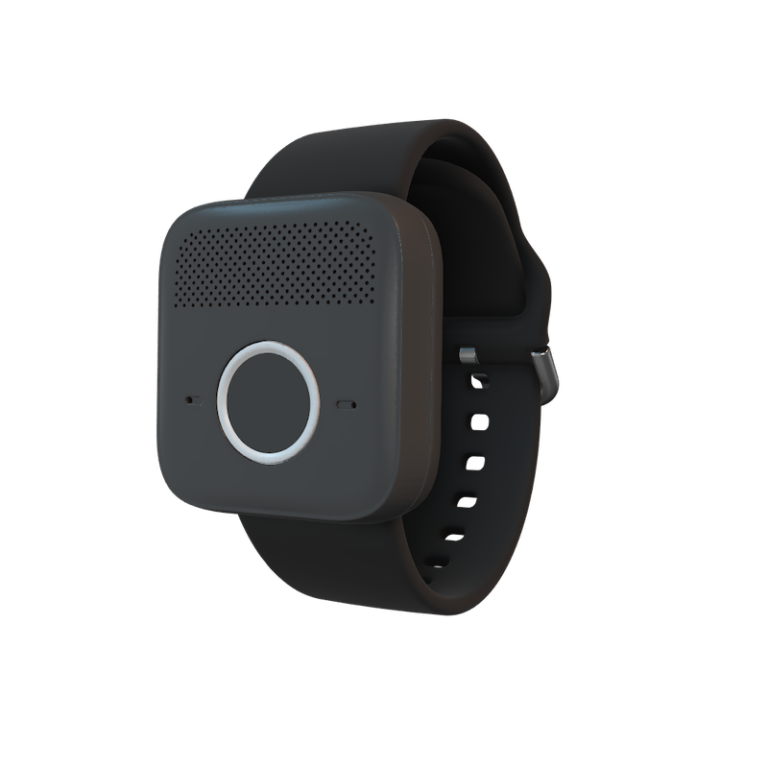
The ResponseNow Belle W delivers the same core protection as the Belle — 4G LTE coverage anywhere in the U.S., direct two-way communication with a live operator, and shower-safe durability — in a wristband form factor that looks and feels like a smartwatch.

For seniors who are more likely to consistently wear a wristband than remember to put on a pendant necklace, this design difference is significant. A medical alert device only protects you when you’re wearing it. The Belle W solves the compliance problem by meeting seniors where their habits already are.

ResponseNow Belle W Key Features

  • ✅ Smartwatch / wristband style — discreet, comfortable, always on
  • ✅ 5–6 day battery life
  • ✅ 4G LTE cellular — works anywhere in the U.S.
  • ✅ Two-way communication directly through the wristband — no separate device needed
  • ✅ Shower-safe
  • ✅ Lightweight at just 1.3 ounces
  • ✅ GPS location tracking
  • ✅ Optional fall detection add-on available ($9.95/month)

Who the Belle W Is Best For

The Belle W is the right choice for seniors who already wear a watch daily and want protection that integrates seamlessly into that habit. It’s also well-suited for those who find pendant necklaces uncomfortable, or for seniors whose families want the added reassurance of GPS location tracking.


Get the ResponseNow Belle W Smart Watch — Use Code SAVE26 →

ResponseNow Belle X — Best Medical Alert With Built-In Fall Detection

The ResponseNow Belle X is the newest and most advanced device in the ResponseNow lineup. It’s built for one specific scenario: what happens when a senior can’t press the button?

Falls are the leading cause of injury-related death among adults 65 and older. And in many of the most serious falls, the person is rendered unconscious, disoriented, or physically unable to reach their alert button. The Belle X addresses this directly with automatic fall detection built in — the device detects a fall and triggers an alert to ResponseNow’s monitoring center automatically, without requiring any action from the wearer.

Paired with real-time GPS tracking and an optional caregiver app, the Belle X gives families the most complete picture of a senior’s safety and location available in the ResponseNow lineup.

ResponseNow Belle X Key Features

  • ✅ Built-in automatic fall detection — alerts triggered by detected falls, even if the button isn’t pressed
  • ✅ 4G LTE cellular — Verizon or AT&T network coverage nationwide
  • ✅ GPS device location tracking
  • ✅ Optional Caregiver App — family members can verify device charge status and locate the wearer in real time; especially valuable for seniors who wander
  • ✅ Two-way communication directly through the pendant
  • ✅ Alerts activated by button press or detected fall
  • ✅ 1–2 week battery life
  • ✅ Lightweight at 1.3 ounces — wearable as a necklace
  • ✅ Shower-safe

Who the Belle X Is Best For

The Belle X is the strongest choice for seniors living alone, those with a history of falls, seniors beginning to experience mobility or balance challenges, and families who want active, real-time visibility into a loved one’s safety and location. If you’re selecting a device after a fall has already occurred, start your evaluation here.


Get the ResponseNow Belle X — Use Code SAVE26 →

ResponseNow Belle vs. Belle W vs. Belle X — Full Comparison

FeatureBelleBelle W
(Smart Watch)
Belle X
StyleNecklace PendantWristband / WatchNecklace Pendant
Battery Life30 Days5–6 Days1–2 Weeks
Cellular Network4G LTE4G LTE4G LTE (Verizon or AT&T)
Fall Detection❌Optional
+$9.95/mo
✅ Built-In
GPS Location❌✅✅
Caregiver App❌❌✅ Optional
Two-Way Speaker✅✅✅
Shower-Safe✅✅✅
Weight1.3 oz1.3 oz1.3 oz
No Smartphone Needed✅✅✅
No Long-Term Contract✅✅✅
Best ForMax battery life, minimal maintenanceWatch wearers, GPS locationFall risk, seniors living alone

ResponseNow 2026 Special Offer — Four Free Inclusions With Promo Code SAVE26

2026 Special Offer — Apply at Checkout:

SAVE26

Valid on Belle, Belle W & Belle X — Monthly, Quarterly, or Annual plans

🔒 FREE Lockbox
📦 FREE Shipping
⚡ FREE Activation
🛡️ FREE Equipment


Claim This Offer →

Most medical alert companies charge several upfront fees before you even receive the device. The ResponseNow 2026 special offer eliminates all four of them:

  • Free Lockbox — A lockbox mounts near your front door and stores a spare key. When you call for help, ResponseNow’s operators provide first responders with the combination so they can enter your home without breaking down the door. Normally $3.95/month or a one-time fee — included free with this offer.
  • Free Shipping — Standard ground shipping is normally $14.95 on monthly plans. With promo code SAVE26, it’s included at no charge on any plan.
  • Free Activation — Belle and Belle X carry a standard $35 activation fee. This offer waives it entirely.
  • Free Equipment — The device itself is included. There is no upfront hardware purchase required.

The offer applies to all three devices across all plan types. No long-term commitment is required, and the 30-day money-back guarantee applies to every new subscription.

Which ResponseNow Device Is Right for You?

Choose the ResponseNow Belle if:

  • You want the longest battery life available in a mobile medical alert — 30 days on a single charge
  • You’re active and want protection both at home and anywhere you travel
  • You don’t need fall detection or GPS — you just want reliable, simple protection
  • You want the most affordable option in the lineup

→ Get the ResponseNow Belle + use code SAVE26

Choose the ResponseNow Belle W (Smart Watch) if:

  • You consistently wear a watch and want your medical alert on your wrist
  • A pendant necklace isn’t your style — or you’re less likely to wear one consistently
  • You want GPS location as a standard feature
  • Fall detection is a consideration but you want it as an optional add-on rather than built-in

→ Get the ResponseNow Belle W Smart Watch + use code SAVE26

Choose the ResponseNow Belle X if:

  • You live alone and want automatic protection even if you can’t press the button
  • You have a history of falls or are at elevated fall risk
  • Family members want real-time GPS location and caregiver app access
  • You want the most comprehensive protection ResponseNow offers

→ Get the ResponseNow Belle X + use code SAVE26

Ready to Get Started?

Use promo code SAVE26 on any device, any plan.

Free lockbox • Free shipping • Free activation • Free equipment


Shop All ResponseNow Medical Alert Devices →

Frequently Asked Questions About ResponseNow Medical Alert Systems

What are the three ResponseNow medical alert devices?

ResponseNow offers three mobile medical alert devices: the Belle, a necklace pendant with a 30-day battery life; the Belle W, a wristband/smartwatch-style device with 5–6 days of battery life and optional fall detection; and the Belle X, the newest model with built-in automatic fall detection, GPS location tracking, and an optional caregiver app for real-time family monitoring.

Does the ResponseNow Belle require a landline or smartphone?

No. The ResponseNow Belle, Belle W, and Belle X all operate on 4G LTE cellular networks and function completely independently. No landline, home Wi-Fi, or smartphone is required. They work anywhere in the United States where cellular service is available.

How long does the ResponseNow Belle battery last?

The ResponseNow Belle has a 30-day battery life on a single charge — the longest battery life of any mobile medical alert device currently on the market. It reaches a full charge in approximately 3 hours and only needs to be charged twice per month. ResponseNow will send a text and phone alert when the battery falls below 20%, and will call again if it drops below 10%.

What is the 2026 ResponseNow promo code?

The 2026 ResponseNow promo code is SAVE26. It is valid on all three devices — Belle, Belle W, and Belle X — and on any plan including monthly, quarterly, and annual. The offer includes four free items: a lockbox (normally $3.95/month), shipping (normally $14.95), activation (normally $35 on Belle devices), and the equipment itself. All four are included at no charge when you use the promo code SAVE26.

What is a medical alert lockbox?

A medical alert lockbox is a small combination-lock box installed near the front door of a home that stores a spare key. When a ResponseNow subscriber triggers an emergency, the monitoring center operator can provide first responders with the combination so they can enter the home without breaking down the door. This is especially important for seniors who live alone and may be physically unable to answer the door after a fall. ResponseNow keeps the lockbox combination on file and provides it to emergency services upon dispatch. The 2026 special offer (promo code SAVE26) includes a free lockbox with any new subscription.

Does ResponseNow have a contract or cancellation fee?

No. ResponseNow does not require long-term contracts and charges no cancellation fees. Subscribers can choose monthly, quarterly, or annual billing. ResponseNow also guarantees that your monthly rate will not increase during your service. All new subscribers receive a 30-day money-back guarantee — if you’re unsatisfied for any reason within the first 30 days, you receive a full refund.

Is the ResponseNow Belle waterproof?

Yes. All three ResponseNow devices — the Belle, Belle W, and Belle X — are waterproof and safe to wear in the shower. They should not be fully submerged in water, but shower and rain exposure present no risk to the device. Since a significant percentage of senior falls occur in the bathroom, shower-safe waterproofing is a critical safety design feature.

How does ResponseNow’s fall detection work?

ResponseNow’s fall detection is available on the Belle W (as an optional add-on at $9.95/month) and is built into the Belle X at no extra charge. The device uses internal sensors to detect sudden changes in movement and orientation consistent with a fall. When a fall is detected, an alert is automatically sent to ResponseNow’s 24/7 monitoring center — even if the wearer is unable to press the button. A trained operator then comes on the line through the device’s two-way speaker and assesses the situation to determine the appropriate response.

Where is ResponseNow based, and are their monitoring centers in the U.S.?

ResponseNow Medical Alert Systems is headquartered in Portland, Oregon and has been in operation since 2001. All monitoring centers are based in the United States and are staffed 24 hours a day, 7 days a week. Operators are trained emergency response professionals who remain on the line with subscribers until help physically arrives on scene.

The Bottom Line on ResponseNow Medical Alert Systems

For seniors who want reliable, no-contract protection with industry-leading battery life and the option to add fall detection and GPS tracking as needs evolve, ResponseNow delivers across all three of their devices. The Belle covers the basics better than nearly any mobile alert on the market. The Belle W makes that protection wearable for seniors who live with a watch on their wrist. The Belle X provides the maximum safety net for those who need it most.

The 2026 special offer — free lockbox, free shipping, free activation, and free equipment with promo code SAVE26 — removes all of the typical upfront friction from getting started. No long-term commitment is required, and the 30-day money-back guarantee means the decision carries zero financial risk.


→ Compare All Three ResponseNow Devices & Claim the 2026 Offer


Best Online Therapy for Seniors: Ranked for Ease, Value & Mental Health Support (2026)

Mental health matters just as much as physical health after 60—yet seniors are significantly less likely to seek professional help for depression, anxiety, grief, and loneliness. Online therapy has continued to grow and improve in 2026: more platforms now accept Medicare Advantage plans, therapist availability has improved in most regions, and the technology has gotten simpler. We updated our rankings to reflect current pricing, insurance compatibility, and which platforms have the strongest track records with older adult patients in 2026.

Disclosure: This article contains affiliate links. SeniorAffair.com may earn a commission if you enroll through our links at no additional cost to you. Rankings are independent. If you are in crisis, please call or text 988 (Suicide & Crisis Lifeline) immediately.

💙 Why This Matters: Depression affects roughly 7 million adults over 65 in the United States—yet fewer than half receive treatment. Loneliness and social isolation among seniors have health consequences equivalent to smoking 15 cigarettes a day. Online therapy offers a real, accessible path to support.

Jump To

  1. Talkspace — Best Overall Online Therapy for Seniors
  2. BetterU — Best for Anxiety & Depression Programs
  3. MDVIP — Best for Seniors Who Want Medical + Mental Health Integration
  4. Mindbloom — Best for Treatment-Resistant Depression (Ketamine)
  5. Comparison Table
  6. Choosing the Right Therapy as a Senior
  7. FAQs

🥇 #1 — Talkspace: Best Overall Online Therapy for Seniors

Best for: Seniors who want access to a licensed therapist via video, phone, or text messaging

Talkspace is the largest online therapy platform in the country and has made significant investments in serving older adults. Seniors are matched with licensed therapists based on their specific concerns—depression, grief, anxiety, life transitions, caregiver stress—and can communicate via video sessions, voice calls, or text messaging throughout the week (not just at scheduled appointments).

For seniors who find themselves wanting to process something between sessions, the messaging capability alone is a meaningful advantage over traditional weekly appointments.

  • ✅ Licensed therapists matched to your specific needs
  • ✅ Video, phone, and text messaging options
  • ✅ Accepts many insurance plans—check eligibility at sign-up
  • ✅ Psychiatry services also available (for medication management)
  • ✅ Easy to use on phone, tablet, or computer
  • ✅ $85 affiliate commission per qualified enrollment

→ Get Matched with a Therapist on Talkspace — Check Insurance


💚 #2 — BetterU: Best Structured Program for Anxiety & Depression

Best for: Seniors who prefer a structured, program-based approach to managing anxiety or depression

BetterU takes a different approach than traditional therapy platforms. Rather than open-ended weekly sessions, they offer clinically endorsed, evidence-based programs specifically designed to treat anxiety and depression through a structured progression. Think of it as a guided course alongside therapist support—particularly effective for seniors who benefit from clear goals and measurable progress.

Their program is built on cognitive behavioral therapy (CBT) principles, one of the most researched and validated approaches for late-life depression and anxiety.

  • ✅ Evidence-based CBT programs for anxiety and depression
  • ✅ Structured approach—ideal for seniors who prefer clear progression
  • ✅ Clinically endorsed methodology
  • ✅ $70 affiliate commission
  • ⚠️ More structured than flexible—less suited for open-ended talk therapy

→ Explore BetterU’s Programs for Anxiety & Depression


🏥 #3 — MDVIP: Best for Seniors Wanting Medical + Mental Health Integration

Best for: Seniors who want personalized primary care that includes mental health as part of comprehensive care

MDVIP is a membership-based primary care model where your physician manages a smaller patient panel—meaning you actually get same-day or next-day appointments and a doctor who knows you well. This model is particularly valuable for seniors whose mental health concerns (depression, cognitive changes, anxiety) intersect with physical health conditions.

MDVIP physicians routinely screen for depression and cognitive decline, coordinate specialist referrals, and address mental health as part of annual wellness planning—not as a separate, stigmatized concern.

  • ✅ Concierge primary care model—smaller patient panel
  • ✅ Same-day appointments typically available
  • ✅ Mental health integrated into primary care
  • ✅ Comprehensive annual wellness exam includes cognitive screening
  • ⚠️ Annual membership fee (typically $1,500–$2,200/year) above insurance

→ Find an MDVIP Physician Near You


🌿 #4 — Mindbloom: Best for Treatment-Resistant Depression (Ketamine Therapy)

Best for: Seniors who have not responded to traditional antidepressants and are seeking clinician-supervised ketamine therapy

Mindbloom provides clinician-prescribed, at-home ketamine therapy for adults dealing with treatment-resistant depression, anxiety, and PTSD. This is not a first-line treatment—it’s for seniors who have tried traditional therapies and medications without sufficient relief. Ketamine’s mechanism of action is different from SSRIs and SNRIs, and it has demonstrated significant effectiveness in clinical trials for treatment-resistant depression, including in older adults.

All treatment is supervised by licensed clinicians, and the program includes integration coaching sessions to support the therapeutic process.

  • ✅ For treatment-resistant depression, anxiety, PTSD
  • ✅ Clinician-supervised at-home treatment
  • ✅ Integration coaching included
  • ✅ $100 affiliate commission
  • ⚠️ Medical screening required — not appropriate for all seniors
  • ⚠️ Not covered by Medicare; costs range from $200 to $400 per treatment

→ Learn About Mindbloom’s Ketamine Therapy Program


Online Therapy Comparison for Seniors

PlatformBest ForInsuranceFormatEst. CostGet Started
TalkspaceOverall / Most Seniors✅ Many plansVideo, Phone, Text$69–$109/wkStart
BetterUAnxiety / Depression ProgramsLimitedStructured Program + Therapist~$60–$100/moStart
MDVIPIntegrated Primary + Mental Health✅ Medicare OKIn-person + Telehealth~$150+/mo membershipFind a Doctor
MindbloomTreatment-Resistant Depression❌ Cash onlyAt-Home Ketamine + Coaching$200–$400/treatmentLearn More

Choosing the Right Online Therapy as a Senior

What Are You Dealing With?

The right platform depends on what you’re experiencing. For ongoing sadness, grief, or major life changes (retirement, loss of spouse, health diagnosis), Talkspace’s open-ended therapy model works best. For anxiety or depression that feels like a specific problem to solve, BetterU’s structured program may be more satisfying. For medical complexity alongside mental health, MDVIP integrates both.

Technology Doesn’t Have to Be a Barrier

Every platform listed above works on a basic smartphone or tablet. If you have a device you use for video calls with family, you have everything needed. Therapists working with older adults are accustomed to helping navigate the technology — don’t let this stop you from reaching out.

Insurance Coverage

Medicare Part B covers telehealth mental health services provided by licensed professionals. Talkspace accepts many insurance plans including Medicare Advantage plans. Always check insurance eligibility when you sign up—you may pay significantly less than the listed rates.

It’s Okay to Try More Than One

Most platforms offer a brief free consultation or matching process. The relationship with your therapist matters more than the platform itself. If the first match isn’t the right fit, ask to be rematched—this is normal and expected.


Frequently Asked Questions

Does Medicare cover online therapy?

Medicare Part B covers telehealth mental health services from licensed providers. Coverage requires a licensed therapist, psychologist, or psychiatrist—not all subscription therapy apps bill Medicare directly, so verify with the platform when enrolling.

Is online therapy effective for seniors?

Yes. Research shows telehealth therapy is as effective as in-person care for most mental health conditions. For seniors with mobility challenges or in rural areas, it often improves access and consistency compared to traditional office-based care.

What if I’m not comfortable with technology?

Most platforms work on any smartphone or tablet. Phone-only sessions are available on Talkspace for those who prefer audio without video. A family member or caregiver can assist with the initial setup if needed.

What’s the difference between a therapist, counselor, and psychiatrist online?

Therapists and counselors provide talk therapy—working through emotions, thoughts, and behaviors. Psychiatrists are medical doctors who can prescribe medication. Talkspace offers both. If you think medication may be part of your care, choose a platform that includes psychiatric services.


Get Matched with a Therapist Today

Talkspace connects seniors with licensed therapists for video, phone, or text-based support—from home, on your schedule. Many insurance plans accepted.

Sponsored | Check insurance eligibility at sign-up | No long-term commitment

⚠️ Need Immediate Support? If you or someone you know is in crisis, please call or text 988 (Suicide & Crisis Lifeline) — available 24/7. You are not alone.

Best CBD Products for Seniors Over 60: Pain, Sleep & Anxiety (2026 Rankings)

More adults over 60 are turning to CBD as a natural option for managing joint pain, sleep disruption, and daily anxiety — three of the most common complaints among older adults. In 2026, the CBD market has matured considerably: the wave of low-quality brands that flooded the space in 2020–2022 has largely thinned out, and the brands still standing are generally stronger on third-party testing, label accuracy, and formulation science. The FDA has still not issued formal CBD regulations, but the industry’s self-regulatory standards have meaningfully improved. We updated our rankings for 2026 to reflect which brands have maintained quality and which have earned new trust from older users.

Disclosure: This article contains affiliate links. SeniorAffair.com may earn a commission if you purchase through our links, at no additional cost to you. All rankings are editorially independent. Always consult your doctor before starting CBD, especially if you take prescription medications.

Jump To

  1. CBDPure — Best Overall for Seniors
  2. Slumber Sleep Aid — Best for Sleep
  3. MedTerra — Best for Pain & Inflammation
  4. Soul CBD — Best Gummies for Seniors
  5. FiveCBD — Best Full-Spectrum Value
  6. Full Comparison Table
  7. CBD Buying Guide for Seniors
  8. FAQs

🥇 #1 — CBDPure: Best Overall CBD for Seniors

Best for: Seniors who want a trusted, no-frills, rigorously tested CBD oil

CBDPure has earned a reputation as one of the most transparent CBD brands available. Every batch is third-party tested, and their full-spectrum hemp extract is sourced from Colorado-grown plants. The simple formulation — CBD, hemp seed oil, and nothing else — is ideal for seniors who are cautious about additives and want to know exactly what they’re taking.

Their oils, tinctures, and softgels are easy to dose and adjust. The 90-day money-back guarantee makes it genuinely low-risk for first-time CBD users.

  • ✅ Full-spectrum CBD (oils, tinctures, capsules)
  • ✅ Rigorous third-party lab testing — COAs publicly available
  • ✅ Clean ingredients — no artificial additives
  • ✅ 90-day money-back guarantee
  • ✅ $30 flat CPA—earned on any purchase

→ Shop CBDPure — 90-Day Guarantee


🌙 #2 — Slumber Sleep Aid: Best CBD for Senior Sleep

Best for: Seniors struggling with insomnia, restless nights, or poor sleep quality

Slumber is one of the few CBD brands built exclusively around sleep. Their products combine CBD with CBN (cannabinol) and trace THC — a formulation backed by growing research on cannabinoid synergy for sleep. For seniors who’ve tried melatonin without success, Slumber offers a meaningfully different approach.

The 10% recurring commission makes this a strong long-term earner, as seniors who find it effective tend to subscribe monthly.

  • ✅ CBD + CBN + low-dose THC sleep formula
  • ✅ Available as gummies, oils, and capsules
  • ✅ 10% recurring affiliate commission
  • ✅ Strong reviews among seniors 60+
  • ⚠️ Trace THC—not for those who need 100% THC-free

→ Try Slumber Sleep Aid — See Current Offers


💊 #3 — MedTerra: Best CBD for Joint Pain & Inflammation

Best for: Seniors with arthritis, chronic joint discomfort, or post-activity soreness

MedTerra is one of the most established names in CBD and a consistent top recommendation for seniors dealing with arthritis and joint pain. Their broad-spectrum products are THC-free while retaining beneficial minor cannabinoids. They offer both oral tinctures and topical creams—the topical being especially popular among seniors who prefer targeted relief without systemic effects.

  • ✅ THC-free broad-spectrum options
  • ✅ Topical CBD cream popular for joint pain
  • ✅ GMP-certified manufacturing
  • ✅ 5% recurring commission
  • ✅ U.S. Pharmacopeia (USP) testing verification

→ Shop MedTerra CBD — Joint & Pain Relief Options


🍬 #4 — Soul CBD: Best Gummies for Seniors

Best for: Seniors who prefer the ease and predictable dosing of gummies

Many seniors prefer gummies over tinctures—the dosing is simple, there’s no measuring, and they’re genuinely pleasant to take. Soul CBD makes some of the cleanest, best-tasting CBD gummies on the market, with transparent labeling and consistent potency per piece. Their stress and sleep gummies are particularly popular in the 60+ demographic.

  • ✅ Easy pre-dosed gummies—no guesswork
  • ✅ Stress, sleep, and daily wellness varieties
  • ✅ 7% recurring commission — rewards loyal customers
  • ✅ Clean, natural flavoring

→ Shop Soul CBD Gummies


💰 #5 — FiveCBD: Best Full-Spectrum Value

Best for: Budget-conscious seniors who want potent full-spectrum CBD without overpaying

FiveCBD (now part of the Charlotte’s Web family) delivers high-potency full-spectrum CBD at competitive price points. Their daily buzz gummies and tinctures are consistently reviewed as among the most effective per dollar. For seniors on fixed incomes who need a reliable, affordable option, FiveCBD delivers without compromise on quality.

  • ✅ High potency at lower price points
  • ✅ Full-spectrum with measurable minor cannabinoids
  • ✅ 52% commission rate — highest in this category
  • ✅ Strong third-party testing program

→ Shop FiveCBD — Best Value Full-Spectrum


Full Comparison: Best CBD Products for Seniors

BrandBest ForTypeTHC-Free OptionShop
CBDPureOverall / First-TimersOil, Softgels✅Shop
Slumber Sleep AidSleep / InsomniaGummies, Oil❌ Trace THCShop
MedTerraJoint Pain / ArthritisOil, Topical, Capsules✅Shop
Soul CBDGummies / Ease of UseGummies✅Shop
FiveCBDValue / BudgetGummies, Oil✅Shop

CBD Buying Guide for Seniors: What to Look For

1. Third-Party Lab Testing (COAs)

Any brand worth considering publishes Certificates of Analysis from independent labs. These confirm actual CBD content, verify THC levels are within legal limits, and check for pesticides and heavy metals. All five brands above meet this standard.

2. Full-Spectrum vs. Broad-Spectrum vs. Isolate

Full-spectrum contains all hemp cannabinoids, including trace THC—often considered most effective due to the “entourage effect.” Broad-spectrum removes THC while retaining other cannabinoids. Isolate is pure CBD only — best for those with drug testing concerns.

3. Format Matters for Seniors

  • Tinctures/oils: Fastest absorption (sublingual), easiest to adjust dose
  • Gummies: Easiest to take, predictable dosing — most popular among seniors
  • Capsules/softgels: Precise dosing, familiar format for pill-takers
  • Topicals: Ideal for localized joint or muscle pain without systemic effects

4. Drug Interactions — Talk to Your Doctor First

CBD is metabolized by the same liver enzymes (CYP450) as many common medications. This matters for seniors taking blood thinners (warfarin), blood pressure medications, statins, or anti-seizure drugs. A brief conversation with your physician before starting CBD is always the right call.


Frequently Asked Questions

Is CBD safe for seniors over 70?

CBD is generally well tolerated but requires medical consultation for seniors on prescription medications. The interaction risk with certain drugs is real and worth discussing with a pharmacist or physician.

What is the best CBD for sleep in older adults?

Products combining CBD with CBN—specifically designed for sleep—tend to get the strongest reviews. Slumber Sleep Aid is our top pick in this category, using a synergistic blend of CBD, CBN, and micro-dose THC.

How much CBD should a senior start with?

Most experts recommend starting at 10–25mg per day and increasing gradually over two to three weeks until you notice results. Older adults often find lower doses sufficient compared to younger users.

Will CBD show up on a drug test?

Isolate and broad-spectrum (THC-free) products minimize this risk. Full-spectrum products contain trace THC that can accumulate with daily use and potentially trigger a positive test. If this is a concern, choose THC-free products like MedTerra.


New to CBD? Start With Our #1 Pick

CBDPure offers the cleanest, most transparent CBD on the market — backed by a 90-day money-back guarantee. Perfect for seniors trying CBD for the first time. Shop CBDPure — 90-Day Guarantee →

Sponsored | Third-party tested | Free shipping on qualifying orders

Best GLP-1 Weight Loss Solutions for Seniors in 2026: Telehealth & Medicare

Quick answer

Starting July 1, 2026, Medicare’s GLP-1 Bridge pilot lets eligible Part D enrollees get Wegovy, Zepbound or Foundayo for weight loss for a flat $50 monthly copay through December 31, 2027. You qualify with a BMI of 35 or higher, or 27 or higher plus a qualifying condition such as heart disease or prediabetes, and your prescriber must submit a prior authorization. If you don’t qualify, telehealth weight-care programs can prescribe and monitor GLP-1s for a monthly fee.

Ways to get a GLP-1 at 60+

RouteCostBest for
Medicare GLP-1 Bridge (Part D)$50 per month copayMedicare enrollees who meet the BMI rules
Found weight careMonthly membership, plus medicationPeople who want coaching and clinician follow-up
Sesame telehealthUpfront cash price per visitA one-time visit to discuss options
Your own doctorYour plan’s normal costsAnyone with heart, kidney or diabetes conditions

Last reviewed October 27, 2026 by Greg Wilson. Sources: NPR via VPM, May 2026, FDA. Partner links may earn SeniorAffair a commission.

GLP-1 medications such as Wegovy and Zepbound have changed weight-loss care, and in 2026 they became much cheaper for many people on Medicare. Here is how older adults can get them, what to ask before starting, and the safety points that matter more after 60.

Medicare’s GLP-1 Bridge: $50 a month

From July 1, 2026, through December 31, 2027, a Medicare pilot called the GLP-1 Bridge covers certain GLP-1 drugs for weight loss for a flat $50 monthly copay. Key rules, as reported by NPR in May 2026:

  • You must have a Medicare Part D drug plan.
  • You qualify with a BMI of 35 or higher, or a BMI of 27 or higher plus a qualifying condition such as heart disease or prediabetes.
  • Covered drugs are Wegovy (pill and injection), Zepbound (KwikPen) and Foundayo (pill).
  • Your prescriber submits a prior authorization through the program’s central system; once approved, you pay $50 at the pharmacy.
  • The copay does not count toward your Part D deductible or yearly out-of-pocket cap, and Extra Help does not apply to these drugs.

If you already take a GLP-1 such as Ozempic for type 2 diabetes, that stays under your regular Part D coverage. Read more in our Medicare GLP-1 eligibility checklist and our guide to whether Medicare covers Ozempic.

Ways to get a GLP-1 after 60

Through your own doctor

Your primary care doctor knows your heart, kidney and diabetes history and your other medications, which makes them the safest place to start. They can also submit the Medicare Bridge prior authorization.

Telehealth weight-care programs

Online programs connect you with a licensed clinician after an online intake, then ship or send a prescription to a pharmacy. They suit people who are not on Medicare, do not qualify for the Bridge, or want more coaching.

Talk to a clinician

Found offers clinician-led weight care. Sesame lists cash-price telehealth visits.

See FoundSee Sesame

Partner link: SeniorAffair may earn a commission if you buy, at no extra cost to you.

Questions to ask any GLP-1 program

  • Will I get an FDA-approved brand, or a compounded version?
  • Is the prescriber licensed in my state, and will I have follow-up visits?
  • What is the total monthly cost, including the medication, and does it rise with the dose?
  • Can you coordinate with my own doctor and check my other medications?
  • What happens if I have side effects or want to stop?

Compounded GLP-1s: what to know

Some programs sell compounded semaglutide or tirzepatide. The FDA says compounded drugs are not FDA-approved and are not reviewed for safety, effectiveness or quality. It has received reports of adverse events, some needing hospital care, linked to dosing errors with compounded injections. The FDA advises using compounded drugs only when an FDA-approved drug cannot meet your medical need, filling prescriptions at a state-licensed pharmacy, and being cautious with very low prices or programs that skip a licensed clinician’s screening.

Safety points for older adults

  • Side effects: nausea, vomiting, diarrhea and constipation are common, especially when the dose goes up. Stay hydrated, because dehydration can strain the kidneys.
  • Muscle loss: part of the weight lost can be muscle. Doctors often recommend enough protein and regular strength training to protect muscle and balance.
  • Warnings on the label: semaglutide and tirzepatide carry a boxed warning about thyroid C-cell tumors seen in animal studies, and labels warn about pancreatitis and gallbladder problems.
  • Other medications: low blood sugar is more likely if you also take insulin or a sulfonylurea. Bring a full medication list to your appointment.

Frequently asked questions

Are GLP-1 medications safe for seniors over 65?

Many older adults use them safely with medical supervision. The main concerns are dehydration, muscle loss and interactions with other medications, so regular follow-up matters.

How much do GLP-1s cost without Medicare?

Costs vary widely by drug, dose and pharmacy. Manufacturer cash-pay programs and telehealth memberships change often, so compare the total monthly cost, including the medication.

Does Medicare cover GLP-1 drugs for weight loss?

Through December 31, 2027, the Medicare GLP-1 Bridge covers Wegovy, Zepbound and Foundayo for weight loss for a $50 monthly copay if you have Part D and meet the BMI rules.

What is the difference between semaglutide and tirzepatide?

Semaglutide (Wegovy, Ozempic) acts on the GLP-1 hormone pathway. Tirzepatide (Zepbound, Mounjaro) acts on both GLP-1 and GIP pathways. Your doctor can explain which fits your health history.

Will Your Medicare Advantage Plan Exist in 2027? Why Insurers Are Trimming Benefits and Exiting Counties

Quick answer

Some Medicare Advantage plans are leaving counties or trimming extra benefits for 2027. Read your plan’s Annual Notice of Change and compare options on Medicare.gov before Open Enrollment ends on December 7, 2026. If your plan is ending in your area, you get a special enrollment period to choose new coverage. In 2027, a plan’s in-network out-of-pocket limit can be as high as $9,850, up from $9,250 in 2026.

Key Medicare figures, 2026 and 2027

Figure20262027Source
Medicare Advantage in-network out-of-pocket limit (maximum)$9,250$9,850WA SHIBA, CMS
Medicare Advantage PPO combined out-of-pocket limit (maximum)$13,900$14,800WA SHIBA, CMS
Part D yearly out-of-pocket drug cap$2,100$2,400Medicare.gov
Part D deductible (maximum)$615$700Medicare.gov
Open Enrollment (for next year’s coverage)Oct 15 – Dec 7, 2025Oct 15 – Dec 7, 2026WA Insurance Commissioner
Medicare Advantage Open Enrollment (switch plans or return to Original Medicare)Jan 1 – Mar 31, 2026Jan 1 – Mar 31, 2027WA Insurance Commissioner

Last reviewed October 26, 2026 by Greg Wilson against official CMS, Medicare.gov and state insurance department sources. CMS announces 2027 Part A and Part B amounts in the fall; this table will be updated when they are released.

Want help comparing 2027 Medicare plans?

A licensed agent from Trusted American Insurance Agency can check your doctors, prescriptions and budget against plans in your ZIP code, at no cost to you.

Get free plan help

We do not offer every plan available in your area. Currently we represent 305 organizations which offer 6,225 products. Please contact Medicare.gov, 1-800-MEDICARE, or your local State Health Insurance Program (SHIP) to get information on all of your options. SeniorAffair is not affiliated with or endorsed by the U.S. government or the federal Medicare program.

If you’re on a Medicare Advantage plan, there’s an important question to ask before the 2026 Annual Enrollment Period opens in October: Will your plan still exist in 2027, and if it does, will it still offer the same benefits?

The answer, for a growing number of beneficiaries, is no. Major Medicare Advantage insurers—including CVS/Aetna—have signaled a deliberate shift in strategy for 2027, moving away from aggressive membership growth and toward margin improvement. The driver: a 2.48% average rate increase from CMS that, while higher than initially projected, still fell short of what many insurers needed to sustain the benefits packages they offered in prior years.

The result is a wave of selective market exits, benefit reductions, and premium increases hitting beneficiaries ahead of 2027. Here’s what’s happening, who is most affected, and exactly what you should do before December 7, 2026.

In This Article

  1. Why Insurers Are Cutting Benefits in 2027
  2. The 2.48% CMS Rate Increase: What It Means
  3. Which Insurers Are Making Changes?
  4. Types of Benefit Changes to Watch For
  5. How to Find Out If Your Plan Is Affected
  6. What to Do If Your Plan Is Cutting Benefits or Exiting Your County
  7. Your Alternatives: Comparing Options for 2027
  8. Frequently Asked Questions

Why Insurers Are Cutting Benefits in 2027

Medicare Advantage insurers are paid a fixed monthly capitated rate by CMS for each enrollee—adjusted for the enrollee’s age, health status (via a risk score), and geography. The insurer then takes on the financial risk of delivering Medicare benefits plus whatever supplemental extras (dental, vision, flex cards, etc.) they’ve added to attract enrollees.

This model worked well when CMS rates were rising faster than medical costs. But several factors have converged to squeeze insurer margins in recent years:

  • Post-pandemic healthcare utilization surge: Patients who deferred care during COVID-19 are now using significantly more medical services, driving up claims costs.
  • Risk score accuracy crackdowns: CMS has tightened oversight of how insurers calculate risk scores, reducing some of the favorable adjustments plans had previously used to boost revenue.
  • Prior authorization scrutiny: Legislative and regulatory pressure to reduce unnecessary prior authorization denials has increased care delivery costs.
  • Rate growth below medical cost inflation: The 2.48% rate increase, while nominally positive, hasn’t kept pace with medical cost trends in many markets.

When the math no longer works in a given county or market, insurers have two choices: reduce benefits to cut costs or exit the market entirely.

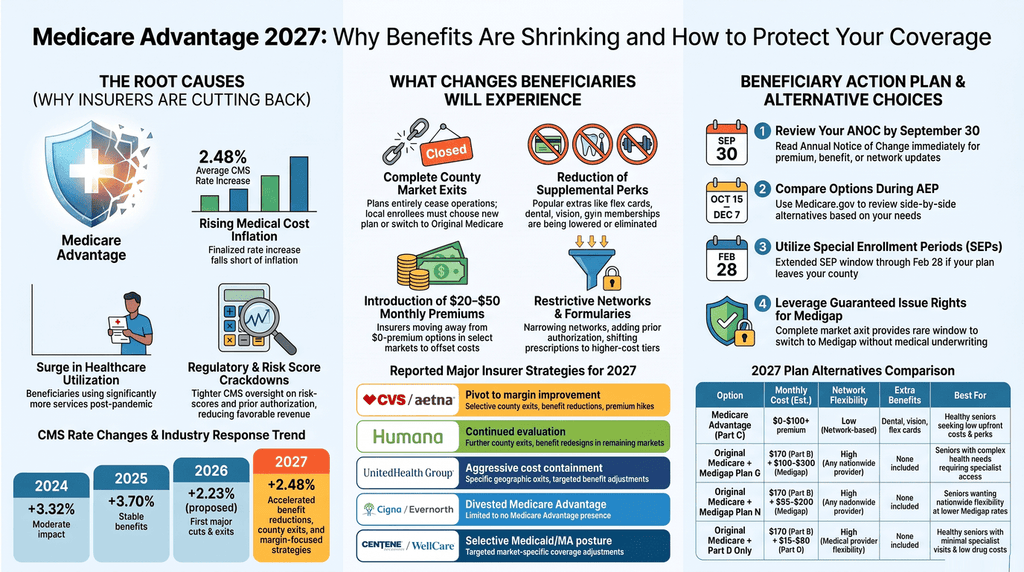
infographic clean Medicare Advantage 2027 Coverage Guide 1

The 2.48% CMS Rate Increase: What It Means for Plans and Beneficiaries

CMS sets Medicare Advantage rates annually through what’s called the “Advance Notice” and “Final Rule” process. For 2027, CMS finalized a 2.48% average rate increase to Medicare Advantage plans—higher than the 2.23% proposed in the Advance Notice, but still below what many analysts estimated plans needed to sustain current benefit packages.

Plan YearCMS Average Rate ChangeIndustry Impact
2024+3.32%Moderate—some plans still cut supplemental benefits
2025+3.70%Moderate positive—most plans maintained benefit levels
2026+2.23% (proposed) / actual variesFirst significant wave of selective exits and benefit reductions
2027+2.48%Continued exits; accelerated benefit trimming; margin-over-membership strategy

For beneficiaries, the rate increase itself is invisible—what you see is its downstream effect on your plan’s benefits, premiums, network, and continued availability.

Which Insurers Are Making Changes for 2027?

The most significant publicly signaled changes heading into 2027 involve major carriers. Here’s a summary of publicly disclosed or reported changes:

InsurerReported 2027 StrategyReported Impact
CVS/AetnaExplicit shift from membership growth to margin improvement; plan redesignSelective county exits; benefit reductions in underperforming markets; premium increases
HumanaPreviously exited significant MA markets in 2025–2026; continued selective evaluationFurther market exits possible; benefit redesigns in remaining markets
UnitedHealth GroupFacing medical cost pressures; cost containment focusSome benefit adjustments reported; market exits in specific geographies
Cigna/EvernorthPreviously divested MA business in 2024; largely exited marketLimited MA presence going forward
Centene/WellCareMedicaid-heavy; MA posture selectiveSome market-specific adjustments

Note: Insurer-specific changes for 2027 will be officially disclosed during the October–December 2026 Annual Enrollment Period through updated plan documents and Medicare.gov. The information above reflects publicly reported insurer strategies as of May 2026 and may change before final plan submissions.

Types of Benefit Changes to Watch For

When a Medicare Advantage plan “cuts benefits,” that can mean many different things. Here are the most common changes beneficiaries experience:

1. Complete Market Exit

The plan stops operating in your county entirely. You will receive a notice—required by CMS—that your plan will be discontinued and that you have a Special Enrollment Period to select a new plan. This is the most disruptive change and affects all enrollees in that county.

2. Reduction of Supplemental Benefits

The plan continues operating but eliminates or reduces extras like the grocery flex card allowance, dental benefit amount, OTC allowance, vision coverage, or gym membership. Your core Medicare coverage continues unchanged, but the perks that attracted you to the plan may disappear.

3. Premium Increases

Many Medicare Advantage plans have offered $0 monthly premiums as a selling point. In 2027, some of these plans are introducing modest monthly premiums ($20–$50/month) to offset costs. While still low compared to Medigap premiums, this breaks the $0 expectation many beneficiaries have built around.

4. Network Narrowing

Your plan may cut specific hospitals, specialist practices, or pharmacy chains from its network. If your preferred doctors or hospital are dropped, your costs for out-of-network care can increase dramatically—or care may simply be unavailable in-network.

5. Prior Authorization Expansion

Plans may add prior authorization requirements for procedures or medications they previously covered without approval, increasing administrative friction for accessing care.

6. Formulary Changes

Drug formularies can change annually. Medications that were on a preferred (lower-cost) tier may move to a higher tier or may be removed from coverage entirely, requiring a formulary exception.

How to Find Out If Your Plan Is Affected

CMS requires Medicare Advantage plans to notify affected members of material benefit changes. Here’s how and when you’ll find out:

  1. Annual Notice of Change (ANOC): Your plan must send you this document by September 30 each year. It details all changes to your plan taking effect January 1 of the following year. Read it carefully—don’t let it sit unopened.
  2. Evidence of Coverage (EOC): The full detailed plan document for the upcoming year, typically available in October. Compare your 2026 EOC to your 2027 EOC for changes.
  3. Medicare.gov Plan Finder: Updated with 2027 plan data before AEP opens October 15. Enter your zip code, current doctors, and medications to see all available plans and compare benefits side-by-side.
  4. Direct call to your plan: Call the member services number on your plan card and ask directly, “Will this plan be available in my county in 2027?” and “What changes are being made to benefits, network, and premiums?”

Don’t wait for the mail. Plans are required to send benefit change notices, but mail gets lost and seniors are sometimes not at their primary address during the September mailing. Proactively check Medicare.gov and call your plan in October rather than assuming nothing changed.

What to Do If Your Plan Is Cutting Benefits or Exiting Your County

If Your Plan Is Exiting Your County

  • You will receive a Special Enrollment Period (SEP) allowing you to switch plans outside the normal AEP window. You typically have until February 28 of the effective year to select a new plan.
  • Do not assume you will automatically be enrolled in another plan. You must actively choose a replacement. If you take no action, CMS may assign you to a default plan, which may not be optimal for your needs.
  • Use this as an opportunity to compare all available options—including Original Medicare plus a Medigap policy—not just other Medicare Advantage plans.

If Your Plan Is Trimming Benefits

  • Compare the value of the reduced plan versus competing Medicare Advantage plans in your area on Medicare.gov during AEP.
  • Calculate the actual dollar impact of the benefit change—a lost $75/month grocery card is $900/year of real value. Determine whether a competing plan with better benefits justifies switching, even at a slightly higher premium.
  • Check whether your current doctors and preferred pharmacy remain in-network under any plan you’re considering switching to.

Your Alternatives: Comparing Options for 2027

OptionMonthly Cost (Est.)FlexibilityExtra BenefitsBest For
Medicare Advantage (Part C)$0–$100+ premium; up to $9,850 in-network MOOP (2027)Low—network-basedDental, vision, flex cards, fitnessHealthy seniors who want low upfront costs and perks
Original Medicare + Medigap Plan G$170 (Part B) + $100–$300 (Medigap)High—any Medicare provider nationwideNone included; pure cost coverageSeniors with complex health needs: specialist access essential
Original Medicare + Medigap Plan N$170 (Part B) + $80–$200 (Medigap)High—any Medicare provider nationwideNone includedSeniors wanting network flexibility at a lower Medigap premium
Original Medicare + Part D only$170 (Part B) + $15–$80 (Part D)High for medical; national pharmacy networksNoneSeniors in good health with minimal specialist needs and low drug costs

Cost estimates as of 2026. Individual costs vary significantly by plan, location, age, and health history. Medigap is subject to medical underwriting outside Open Enrollment windows in most states.

The Medigap Timing Warning: If your Medicare Advantage plan exits your market and you want to switch to Medigap, you have guaranteed issue rights during your SEP—meaning insurers cannot deny coverage or charge more based on your health history. Outside of guaranteed issue windows, Medigap applicants in most states must pass medical underwriting. If a plan exit gives you a guaranteed issue window, this may be your best opportunity to move to Original Medicare with Medigap protection.

Frequently Asked Questions

Why are Medicare Advantage plans cutting benefits in 2027?

Medicare Advantage plans are cutting benefits in 2027 primarily because a 2.48% average rate increase from CMS has not kept pace with rising healthcare utilization and medical costs. Major insurers, including CVS/Aetna, have explicitly stated they are prioritizing profit margins over membership growth for the 2027 contract year. This has led to selective exits from unprofitable geographic markets, elimination of supplemental benefits like grocery allowances and OTC cards, and premium increases for some previously $0-premium plans.

How do I find out if my Medicare Advantage plan is leaving my area in 2027?

Your plan is required to send you an Annual Notice of Change (ANOC) by September 30, 2026, detailing any changes to your plan for 2027. If your plan is exiting your county, you will receive direct notification. You can also proactively check Medicare.gov’s Plan Finder tool starting in October 2026, call your plan’s member services number, or contact your State Health Insurance Assistance Program (SHIP) for free, unbiased guidance on your options.

What happens if my Medicare Advantage plan exits my county?

If your Medicare Advantage plan exits your county, you will receive a Special Enrollment Period (SEP) giving you the right to enroll in a new plan outside the normal Annual Enrollment Period window. You typically have until February 28 of the next plan year to select a replacement. If you take no action, CMS may assign you to a default plan. You should use the SEP to actively compare all available options, including other Medicare Advantage plans, Original Medicare with a Medigap supplement, and Original Medicare with Part D drug coverage.

Is Aetna Medicare Advantage leaving certain areas in 2027?

CVS/Aetna has publicly signaled a strategic shift for 2027 from membership growth to margin improvement, which analysts and insurers have indicated will include selective exits from specific counties and markets. The full scope of Aetna’s 2027 geographic footprint will be officially disclosed through CMS plan filings and beneficiary notices before and during the Annual Enrollment Period (October 15–December 7, 2026). If you are on an Aetna Medicare Advantage plan, watch for your Annual Notice of Change in late September 2026 and verify your plan’s 2027 status on Medicare.gov during AEP.

Should I switch from Medicare Advantage to Original Medicare with Medigap?

Whether to switch from Medicare Advantage to Original Medicare with Medigap depends on your personal health needs, financial situation, and geography. Original Medicare with a Medigap supplement offers broader provider access (any Medicare-accepting doctor nationally), more predictable costs, and no network restrictions — but typically costs more in monthly premiums. Medicare Advantage may offer lower monthly costs and supplemental extras, but restricts you to a plan network and has an annual maximum out-of-pocket exposure. If your Medicare Advantage plan is exiting your market, your guaranteed issue period is one of the few times you can switch to Medigap without medical underwriting — making it worth careful consideration.

The Bottom Line

The 2027 Medicare Advantage landscape is the most turbulent it’s been in years. If you’re on a Medicare Advantage plan, the best thing you can do is not assume your plan will be the same in 2027. Watch for your Annual Notice of Change in late September 2026. Compare your options actively during AEP — don’t auto-renew without reviewing. And if your plan exits your county, treat the Special Enrollment Period as an opportunity to reassess your entire Medicare strategy, not just a scramble to pick any available plan. Your health coverage deserves an annual review, and 2027 makes that review more important than ever.

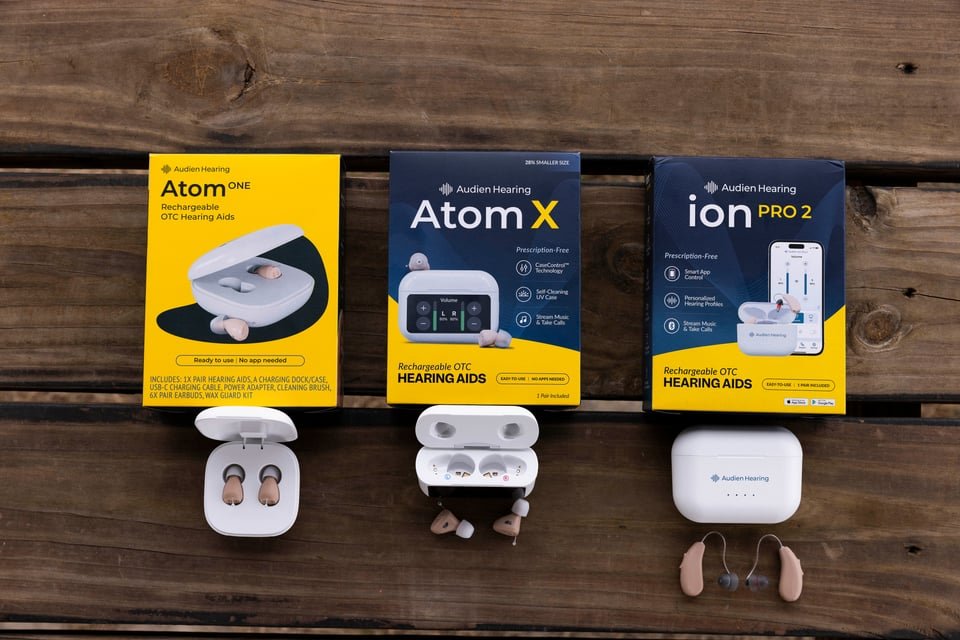
Audien Hearing Deals

Free: Medicare Open Enrollment Checklist. A printable two-page list of what to check before December 7. Get the checklist

Related: Your plan is ending: a 7-day action plan · No drug plan in your county?

Consumer Alert: Why Medicare Just Removed the 48-Hour Waiting Period for Enrolling with an Agent

0

A significant change in Medicare marketing rules is taking effect for the 2027 plan year—one that consumers need to understand before the October Annual Enrollment Period opens. The Centers for Medicare & Medicaid Services (CMS) has rolled back a consumer protection rule that previously required a mandatory 48-hour waiting period between a beneficiary completing a Scope of Appointment (SOA) form and sitting down with a Medicare insurance broker or agent.

This change is part of broader Medicare Advantage marketing rule adjustments for 2027 and represents an unexpected reversal from the stricter marketing rules CMS implemented in prior years. Here’s what it means for you — and how to protect yourself during the enrollment process.

In This Article

  1. What Is a Scope of Appointment Form?
  2. What Was the 48-Hour Waiting Rule?
  3. What CMS Changed for 2027
  4. Why the 48-Hour Rule Was Created in the First Place
  5. What This Means for Consumers: Risks to Know
  6. Your Rights as a Medicare Beneficiary Under the New Rules
  7. How to Protect Yourself: 7 Rules to Follow
  8. Frequently Asked Questions

What Is a Scope of Appointment Form?

A Scope of Appointment (SOA) is a form that Medicare insurance agents and brokers are required to have you complete before a sales meeting. The form documents exactly which Medicare plan types the agent is permitted to discuss with you during that appointment.

Plan types covered by an SOA typically include:

  • Medicare Advantage (Part C) plans
  • Medicare Supplement (Medigap) plans
  • Medicare Part D (prescription drug) plans
  • Medicare Savings Accounts

The SOA requirement exists to prevent “scope creep” — situations where an agent who scheduled a meeting to discuss one type of plan attempts to cross-sell other products you didn’t originally agree to discuss.

The SOA is not optional. CMS requires agents to obtain a completed SOA before the sales appointment, and agents can only discuss the plan types you specifically checked off on the form.

What Was the 48-Hour Waiting Rule?

Under rules implemented for the 2023 contract year, CMS required that a minimum of 48 hours pass between when a consumer completed the SOA form and when the agent could conduct the sales meeting. There were limited exceptions for beneficiaries who would lose coverage imminently.

The purpose was to give consumers a cooling-off period—time to:

  • Research plans and plan types independently before the sales meeting
  • Reconsider whether they wanted to meet at all
  • Avoid high-pressure, same-day enrollment tactics
  • Prepare informed questions for the agent

The 48-hour rule was widely regarded as a strong consumer protection, particularly for older adults who are disproportionately targeted by aggressive insurance marketing.

What CMS Changed for 2027

In the CMS 2027 Final Rule, the mandatory 48-hour waiting period between SOA completion and the sales appointment has been eliminated. Under the new rules effective for the 2027 contract year:

Rule Area2023–2026 Rules2027 Rules
Waiting period between SOA and sales meetingMandatory 48-hour minimum (except imminent coverage loss)Eliminated — no mandatory waiting period
SOA form requirementRequired before all sales appointmentsStill required—SOA itself is not eliminated
Educational eventsNo enrollment at educational eventsAgents may now potentially initiate enrollment activities at educational events (confirm specific plan rules)
Unsolicited contact restrictionsStrict limitations on cold outreachSome restrictions adjusted; confirm with specific plan/agent
Recording/documentation requirementsRequired for most sales callsMaintained

The SOA form itself still exists and must still be completed before a sales meeting. What changed is the elimination of the time buffer that previously gave consumers a built-in pause before meeting with an agent.

Why the 48-Hour Rule Was Created in the First Place

To understand why this rollback matters, it helps to understand what led to the 48-hour rule’s creation. Between 2019 and 2022, CMS received a significant increase in complaints from Medicare beneficiaries about:

  • Being switched to a Medicare Advantage plan they didn’t fully understand or want
  • Agents claiming to help with one issue (like Part B premium assistance) while enrolling them in a completely different plan type
  • High-pressure sales tactics that led to same-day enrollment before consumers had time to research
  • Unsolicited agent contact following completion of an online lead form
  • Enrollment at “educational events” that functioned as sales events

The resulting rules — including the 48-hour SOA waiting period — were specifically designed to create structural friction in the sales process to give consumers more time and autonomy. Critics of the rollback argue that removing this buffer reintroduces the conditions that generated consumer complaints in the first place.

What This Means for Consumers: Risks to Know

The 48-hour rule rollback doesn’t mean agents will automatically behave badly. Most licensed Medicare insurance agents and brokers operate ethically and professionally. However, the structural protection that gave consumers a built-in deliberation period is now gone. Here’s what to be alert to:

Risk 1: Same-Day Enrollment Pressure

Without a mandatory waiting period, an agent can now complete an SOA and conduct a sales meeting — potentially leading to enrollment — in the same interaction. If you feel rushed, it’s entirely within your rights to say: “I need time to review this before I make any changes to my Medicare plan.” No reputable agent will object.

Risk 2: Educational Events That Become Sales Meetings

The lines between educational events (where enrollment was previously prohibited) and sales appointments have become less defined in the 2027 rules. Be aware of situations where a “free lunch” Medicare information seminar transitions into an agent asking you to complete an SOA and schedule a same-day or next-day appointment.

Risk 3: Misleading “Plan Improvement” Calls

A common tactic involves calling existing enrollees to inform them about “improvements” or “new benefits” in their plan. Without the 48-hour buffer, these calls can more easily transition into same-day enrollment discussions. Always hang up and call the number on the back of your Medicare card or your plan’s member services line to verify any claim about changes to your plan.

Risk 4: Vulnerable Populations

Older adults experiencing cognitive decline, social isolation, or financial stress are particularly vulnerable to high-pressure insurance sales. Family members and caregivers should be aware of these changes and consider accompanying seniors to any Medicare agent meeting.

Your Rights as a Medicare Beneficiary Under the New Rules

Even with the 48-hour waiting period eliminated, you retain significant consumer rights:

  • You can always take time. No legitimate Medicare agent can pressure you into enrolling on the spot. You always have the right to say you need more time to decide.
  • You can disenroll from a plan you were improperly enrolled in. If you believe you were enrolled in a Medicare Advantage or Part D plan without your informed consent, you have the right to file a complaint with 1-800-MEDICARE and may qualify for a Special Enrollment Period to disenroll.
  • Agents must only discuss plan types listed on your SOA. The SOA form itself remains required, and agents cannot discuss plan types not on your SOA.
  • You can report violations. Report inappropriate agent behavior to your State Department of Insurance, CMS, or your State Health Insurance Assistance Program (SHIP).
  • SHIP counselors are always free. State Health Insurance Assistance Program counselors are federally funded, unbiased advisors who do not sell plans. Their guidance is free and confidential.

How to Protect Yourself: 7 Rules to Follow in 2026–2027

  1. Never make a Medicare plan change based on an unsolicited phone call, text, or email. Initiate your own research during AEP and contact plans or agents yourself.
  2. Before any agent meeting, write down your questions and priorities. Know which doctors and drugs need to be covered, and what your budget is for premiums and out-of-pocket costs.
  3. Ask any agent: “Are you independent or captive?” An independent broker can compare plans across multiple carriers. A captive agent can only sell plans from their employer’s company.
  4. Request the plan’s Summary of Benefits and Evidence of Coverage (EOC) before signing anything. Review it yourself before making a decision.
  5. Use Medicare.gov’s Plan Finder to compare plans independently using your specific drugs, doctors, and zip code before any agent meeting.
  6. Do not complete an SOA form at an educational event unless you have independently decided you want to meet with that specific agent. Completing an SOA is not a commitment to enroll, but it does open the door to a sales appointment.
  7. Call 1-800-MEDICARE or your local SHIP office if you have any concerns about a plan change or agent conduct. These resources are free.

Frequently Asked Questions

Is the 48-hour Medicare Scope of Appointment waiting period still required in 2027?

No. The CMS 2027 Final Rule eliminated the mandatory 48-hour waiting period between completing a Scope of Appointment (SOA) form and meeting with a Medicare insurance agent. The SOA form itself is still required before any sales meeting. What changed is that agents can now conduct a sales appointment on the same day a consumer completes the SOA, without the previous 48-hour delay.

Can a Medicare agent sign me up for a plan at an educational event in 2027?

The 2027 rules have made the line between educational events and sales events less defined. Under prior rules, enrollment was prohibited at educational events. Under the 2027 changes, agents may be able to initiate enrollment-related activities at certain events. The specific rules vary by plan contract and agent conduct guidelines. If you attend a Medicare informational event, you are never obligated to sign anything or schedule a follow-up appointment. If an agent is pressing you to sign up at or immediately after an event, you have the right to decline.

What is a Scope of Appointment form in Medicare?

A Scope of Appointment (SOA) is a CMS-required form that Medicare agents must obtain from you before a sales meeting. The form specifies exactly which types of Medicare plans — such as Medicare Advantage, Medigap, or Part D — the agent is permitted to discuss with you during that appointment. It is designed to prevent agents from cross-selling products you didn’t agree to discuss. Completing an SOA is not an enrollment agreement — it only authorizes the agent to discuss the types of plans you indicated on the form.

What should I do if I was enrolled in a Medicare plan without my full consent?

If you believe you were enrolled in a Medicare Advantage or Part D plan without your informed consent, take these steps: (1) Call 1-800-MEDICARE immediately to report the situation; (2) Contact your State Health Insurance Assistance Program (SHIP) for free, unbiased assistance; (3) File a complaint with your State Department of Insurance; (4) Ask about a Special Enrollment Period (SEP)—CMS has provisions that allow beneficiaries to disenroll from plans they were inappropriately enrolled in. Document everything: the agent’s name, the date, what was said, and any forms you signed.

How do I find a trustworthy Medicare insurance agent or broker?

To find a trustworthy Medicare agent or broker: (1) Look for independent brokers who represent multiple carriers and can compare options objectively; (2) Verify the agent’s license with your state’s Department of Insurance; (3) Ask for a written comparison of plan options before making any decision; (4) Use your local SHIP office for free, unbiased counseling as a baseline before any agent meeting; (5) Get recommendations from your doctor’s office, who may know which plans work well for patients in your area.

The Bottom Line

The elimination of the 48-hour SOA waiting period is a significant change in the Medicare marketing landscape heading into 2027. While it doesn’t authorize unethical behavior, it does remove a structural safeguard that gave beneficiaries built-in time to reflect before sales meetings. Your best protection is knowledge: understand your rights, use free resources like SHIP counselors and Medicare.gov, and never feel pressured to make a same-day plan decision. The Annual Enrollment Period runs from October 15 to December 7 — use every day of it wisely.

The Medicare GLP-1 Eligibility Checklist: How to Qualify for the $50/Month Weight-Loss Copay

Quick answer

Medicare’s GLP-1 Bridge lets people with Part D drug coverage get Wegovy, Zepbound or Foundayo for weight loss for a flat $50 a month, from July 1, 2026, through December 31, 2027. You qualify with a BMI of 35 or higher, or a BMI of 27 or higher plus a qualifying condition such as heart disease or prediabetes. Your prescriber submits a prior authorization, and once approved you pay $50 at the pharmacy.

GLP-1 Bridge at a glance

RuleDetails
DatesJuly 1, 2026 to December 31, 2027
Who qualifiesPart D enrollees with BMI 35+, or BMI 27+ with a qualifying condition
Covered drugsWegovy (pill and injection), Zepbound (KwikPen), Foundayo (pill)
Your cost$50 per month, the same at every dose
How to applyPrescriber submits a prior authorization
Fine printDoesn’t count toward the Part D deductible or yearly cap; Extra Help doesn’t apply

Last reviewed October 27, 2026 by Greg Wilson. Sources: NPR via VPM, May 2026.

For years, Medicare drug plans could not cover medications used only for weight loss. In 2026 that changed, at least for now. A Medicare pilot called the GLP-1 Bridge covers several weight-loss GLP-1 drugs for a flat $50 monthly copay. Use this checklist to see if you qualify and what to do next.

Eligibility checklist

  • I have Medicare Part D drug coverage, either a stand-alone Part D plan or a Medicare Advantage plan that includes drug coverage.
  • My BMI is 35 or higher, or my BMI is 27 or higher and I have a qualifying condition such as heart disease or prediabetes.
  • My doctor or other prescriber agrees a GLP-1 is right for me and will submit a prior authorization.
  • If I already take a GLP-1 for weight loss, my prescriber can attest that I met the criteria when I started.

Ask your doctor which conditions count toward the BMI 27 pathway, since the list is set by the program.

Which drugs are covered

  • Wegovy (semaglutide), as a pill or injection
  • Zepbound (tirzepatide), KwikPen version
  • Foundayo, a once-daily pill

How to apply

  1. Make an appointment with your doctor or another licensed prescriber. They do not have to be enrolled as a Medicare provider.
  2. Your prescriber submits a prior authorization with the prescription through the program’s central system, run for CMS by Humana.
  3. Once you are approved, fill the prescription at your pharmacy and pay $50 a month.

What it costs, and what it doesn’t count toward

The copay is a flat $50 a month and does not rise with the dose. It does not count toward your Part D deductible or the yearly out-of-pocket cap, and the Extra Help program cannot be applied to these drugs.

If you take a GLP-1 for diabetes or heart disease

People who take a GLP-1 such as Ozempic or Mounjaro for type 2 diabetes stay under their regular Part D coverage, not the Bridge, and may pay more than $50. Wegovy is also approved to lower the risk of heart attack and stroke in people with heart disease and obesity or overweight, and Part D plans can cover it for that use under their normal rules. See our guide on whether Medicare covers Ozempic.

What happens after 2027?

The Bridge is scheduled to end December 31, 2027. A longer-term program could start in 2028, but that has not been decided. Ask your doctor about a plan for staying on, or coming off, the medication if coverage changes.

Not eligible? Other options

If you do not qualify, your doctor may still prescribe a GLP-1 at your plan’s normal cost, or you can compare manufacturer cash-pay programs and telehealth weight-care programs. Our guide to the best GLP-1 options for seniors covers what to ask, including how to avoid unapproved compounded versions.

Frequently asked questions

Do I have to change Medicare plans to use the Bridge?

No. You need Part D coverage, through a stand-alone plan or a Medicare Advantage plan with drug coverage. Changes to your plan can only be made during enrollment periods.

Is the $50 the same at every pharmacy?

The program sets a flat $50 monthly copay. Confirm with your pharmacy when you fill the prescription.

Does the Bridge cover Ozempic?

Ozempic is approved for type 2 diabetes, so it is covered under regular Part D rules for diabetes, not under the weight-loss Bridge.

New Guardrails for Medicare Advantage Flex Cards: What the CMS 2027 Final Rule Means for Your Grocery and Dental Perks

0

If you have a Medicare Advantage plan with a grocery allowance, flex card, or supplemental dental benefit, a major regulatory change is coming in 2027. The Centers for Medicare & Medicaid Services (CMS) has finalized new rules that fundamentally reshape how Medicare Advantage plans must manage their Special Supplemental Benefits for the Chronically Ill (SSBCI)—the policy category that funds most flex card and over-the-counter perks.
The changes were driven by widespread concern about misleading advertising and inconsistent eligibility for these benefits. Here’s what you need to know before the 2027 Annual Enrollment Period (AEP) begins in October 2026.

In This Article

  1. What Are SSBCI Benefits and Who Qualifies?
  2. What CMS Changed for 2027: The Core Rule Updates
  3. Real-Time Electronic Verification at the Register
  4. Plans Must Now Publicly Post Eligibility Criteria
  5. Which Benefits Are Affected?
  6. What Stays the Same
  7. What to Do Before the 2027 Plan Year
  8. Frequently Asked Questions

What Are SSBCI Benefits and Who Qualifies?

Special Supplemental Benefits for the Chronically Ill (SSBCI) are extra benefits that Medicare Advantage (Part C) plans can offer to members who have one or more qualifying chronic conditions. These go beyond standard Medicare coverage and can include:

  • Food and grocery allowances (often delivered via a prepaid debit card)
  • Utility bill assistance
  • Over-the-counter (OTC) product allowances
  • Transportation to medical appointments
  • In-home support services
  • Pest control, air filtration, and bathroom safety devices

SSBCI benefits were introduced in 2019 as a way to address social determinants of health. They are not available to every Medicare Advantage enrollee — they require a chronic condition determination. However, since their introduction, aggressive insurance marketing has frequently implied these benefits are available to all seniors, regardless of health status.

Common qualifying chronic conditions for SSBCI include diabetes, heart failure, cardiovascular disease, COPD, chronic lung disorders, chronic kidney disease, dementia, hypertension, dyslipidemia, end-stage renal disease, severe hematologic disorders, HIV/AIDS, and autoimmune disorders. Plans may also include additional conditions — always confirm with your specific plan.

What CMS Changed for 2027: The Core Rule Updates

The CMS 2027 Final Rule (published in spring 2026) introduced two major structural changes to how SSBCI benefits work. These rules were designed to reduce fraud, improve transparency, and ensure these benefits reach people who genuinely qualify.

Change 1: Mandatory Public Posting of Eligibility Criteria

Starting in contract year 2027, every Medicare Advantage plan offering SSBCI benefits must publicly post the explicit eligibility criteria for each supplemental benefit. This must be available on the plan’s website and in enrollment materials — not buried in plan documents.

Previously, plans had discretion in how they communicated (or didn’t communicate) who qualified. This led to situations where beneficiaries enrolled in a plan specifically for a grocery allowance or dental perk, only to discover after enrollment that they didn’t meet the eligibility threshold.

Change 2: Real-Time Electronic Verification for Flex Card Purchases

For plans offering any type of prepaid benefit card (flex cards, OTC cards, or grocery allowances), CMS now requires real-time electronic verification at the point of sale to confirm that purchased items fall within the approved benefit categories.

This means the card system itself — not a retroactive review — must verify purchases as they happen. Items that fall outside covered categories will be declined at the register rather than flagged for repayment later.

AreaBefore 2027Starting 2027
Eligibility disclosurePlan’s discretion, often vague or buried in documentsMandatory public posting of specific eligibility criteria
Flex card purchase verificationRetroactive review; members could make ineligible purchases and receive repayment demandsReal-time electronic verification at point of sale; ineligible items declined immediately
Marketing restrictionsPlans could broadly advertise benefits without prominently noting eligibility requirementsEligibility requirements must be prominently disclosed in advertising and enrollment materials
Benefit category definitionBroad plan latitude in defining covered OTC/food itemsTighter definitions aligned with CMS-approved benefit categories

What Real-Time Verification Means for You at the Grocery Store

If you currently use a Medicare Advantage flex card or OTC allowance card for groceries or health products, the 2027 changes will affect your shopping experience directly.

What Will Change

  • Your card will now operate more like a Health Savings Account (HSA) card—purchases are checked against an approved items list at the register in real time.
  • Items not on the approved list (for example, non-nutritious foods, alcohol, tobacco, or items outside your plan’s approved categories) will be declined immediately at checkout.
  • You will no longer receive retroactive “overpayment” notices for items purchased in prior months, because invalid items will be blocked at purchase.

What Won’t Change

  • The total dollar amount of your allowance (set by your plan, not CMS)
  • Which stores accept your card (determined by your plan’s network)
  • The overall SSBCI eligibility requirement (chronic condition still required)

Practical Tip: Ask your plan for an updated list of approved items before January 2027. Many plans will release new itemized eligible product lists ahead of the contract year change. Knowing in advance what will and won’t be covered prevents rejected transactions during a grocery run.

Plans Must Now Publicly Post Eligibility Criteria: What to Look For

One of the biggest consumer wins in the 2027 Final Rule is the mandatory transparency requirement. If you’re shopping for a Medicare Advantage plan during the 2026 AEP (October 15 – December 7), you can now require that a plan show you specific eligibility criteria for any supplemental benefit before you enroll.

Questions to Ask Any Plan Offering SSBCI Benefits

  1. Which specific chronic conditions qualify for this benefit?
  2. How is a chronic condition “determination” made—by my doctor, by the plan, or at enrollment?
  3. Is the benefit available to all qualifying members from day one, or is there a waiting or determination period?
  4. What is the annual dollar amount of the allowance, and does it roll over quarter-to-quarter?
  5. At which specific retail locations can this card be used?
  6. What is the approved items list for the grocery/OTC allowance?

Under the 2027 rules, plans cannot refuse to provide this information. If a plan is unable or unwilling to provide clear answers before you enroll, that is a red flag.

Which Medicare Advantage Benefits Are Affected by These Rules?

Benefit TypeAffected by 2027 Changes?Key Impact
Grocery/food allowance (flex card)Yes—directlyReal-time POS verification; tighter approved items list
Utility bill assistanceYesEligibility criteria must be publicly disclosed
OTC card (health products)Yes—directlyReal-time POS verification for card-based OTC programs
Transportation benefitsPartialEligibility disclosure required; operational rules unchanged
Standard dental, vision, hearing benefitsNoThese are Part B/C supplemental benefits, not SSBCI; not affected
$0 premium dental plansNoNot classified as SSBCI; availability may still change due to plan exits
Fitness/gym memberships (SilverSneakers, etc.)NoWellness benefits; separate regulatory classification

What Stays the Same in 2027

It’s important to clarify what the 2027 Final Rule does not change:

  • SSBCI benefits are not being eliminated—plans can still offer grocery allowances, utility assistance, and OTC cards in 2027
  • The amount of any allowance is set by each plan, not by CMS—amounts may go up, down, or stay the same depending on your plan
  • The annual enrollment timeline (AEP: October 15 – December 7) is unchanged
  • Beneficiaries with qualifying chronic conditions can still access these benefits—the rules make access more transparent, not harder to obtain

What to Do Before the 2027 Plan Year: A Checklist

  1. Verify whether you currently qualify for SSBCI benefits under your existing plan. If you have a qualifying chronic condition and haven’t been receiving these benefits, contact your plan now.
  2. During AEP (Oct 15–Dec 7, 2026), compare plans specifically on SSBCI criteria—not just on advertising. Plans are now required to publish eligibility details.
  3. Ask your plan for the 2027 approved items list for any flex or OTC card you currently use. Get it in writing before January 1, 2027.
  4. If you receive a utility assistance benefit, confirm the eligibility criteria under the new rules before assuming your benefit continues unchanged.
  5. Talk to a SHIP counselor (free, state-funded Medicare advisors) or an independent broker who can compare plans side-by-side without a sales incentive.

Frequently Asked Questions

What is the CMS 2027 Final Rule for Medicare Advantage?

The CMS 2027 Final Rule is a set of regulatory changes finalized by the Centers for Medicare & Medicaid Services for the 2027 Medicare Advantage contract year. Among its most significant provisions are new requirements for Medicare Advantage plans to publicly disclose specific eligibility criteria for Special Supplemental Benefits for the Chronically Ill (SSBCI), and a mandate that flex cards and OTC allowance cards use real-time electronic verification at the point of sale to prevent ineligible purchases.

Will my Medicare Advantage flex card still work in 2027?

Flex cards are not being eliminated in 2027. However, how they work is changing. Starting in the 2027 plan year, flex cards must use real-time point-of-sale verification to confirm that purchases fall within your plan’s approved benefit categories. This means some items that previously could be purchased with a flex card — and only flagged retroactively — will instead be declined at the register. Check with your plan for an updated approved items list before January 2027.

What chronic conditions qualify for Medicare Advantage SSBCI flex card benefits?

Common qualifying chronic conditions for SSBCI benefits include diabetes, heart failure, chronic obstructive pulmonary disease (COPD), cardiovascular disease, chronic kidney disease, dementia, hypertension, dyslipidemia, end-stage renal disease, HIV/AIDS, severe hematologic disorders, and autoimmune disorders. Starting in 2027, each plan must publicly disclose its complete list of qualifying conditions. The specific conditions that qualify can vary by plan, so confirm with your specific Medicare Advantage plan during the Annual Enrollment Period.

How do I find out if I qualify for the grocery or utility allowance on my Medicare Advantage plan?

Under the 2027 CMS rules, your plan must publicly post specific eligibility criteria for all SSBCI benefits, including grocery allowances and utility assistance. To find out if you qualify, visit your plan’s website and look for the SSBCI or supplemental benefits section, or call your plan’s member services number and ask specifically about your eligibility for SSBCI benefits based on your chronic conditions. You can also ask your doctor to confirm which chronic conditions are documented in your medical records, as this documentation may be required.

Are the new SSBCI rules the same as Medicare Advantage benefit cuts?

No, the 2027 SSBCI rule changes are not the same as benefit cuts. The new rules are about transparency and fraud prevention — they don’t eliminate SSBCI benefits or reduce the dollar amounts plans can offer. Separately, some Medicare Advantage plans are trimming benefits or exiting certain markets in 2027 due to a 2.48% rate increase from CMS that has squeezed plan margins. Any actual benefit reductions in your specific plan are a plan-level business decision, not a direct consequence of the SSBCI eligibility disclosure rules.

The Bottom Line

The 2027 CMS Final Rule’s SSBCI changes are ultimately pro-consumer — they force plans to be honest about who qualifies for supplemental benefits and prevent the misleading advertising that has frustrated millions of Medicare Advantage enrollees. If you currently use a flex card, grocery allowance, or utility benefit, confirm your eligibility status and request the updated 2027 approved items list from your plan before the new contract year begins. And during AEP, use the new mandatory public posting requirement to compare plans with full transparency before you sign up.