


Everything you need to know about Medicare Open Enrollment for 2027 coverage: key dates, what you can change, deadlines, and how to compare plans before December 7.
By the SeniorAffair.com Medicare Team · Reviewed for accuracy against CMS.gov and Medicare.gov
Medicare Open Enrollment—officially the Annual Enrollment Period (AEP)—runs from October 15 to December 7, 2026. It is the once-a-year window when anyone with Medicare can review their current coverage and switch to a different Medicare Advantage plan, Part D drug plan, or move between Original Medicare and Medicare Advantage. Any changes you make take effect on January 1, 2027.
Article Contents
This guide walks through everything that happens during those seven weeks: who the window applies to, what you’re allowed to change, how it’s different from the other Medicare enrollment periods, and the concrete steps to take before the December 7 deadline.
Quick answer: If you already have Medicare, you don’t have to do anything during open enrollment—your current plan will continue automatically if it’s still offered. But because plans change their premiums, drug formularies, and provider networks every single year, skipping the review is one of the most common ways beneficiaries end up overpaying in the new year.
What Is Medicare Open Enrollment (AEP)?
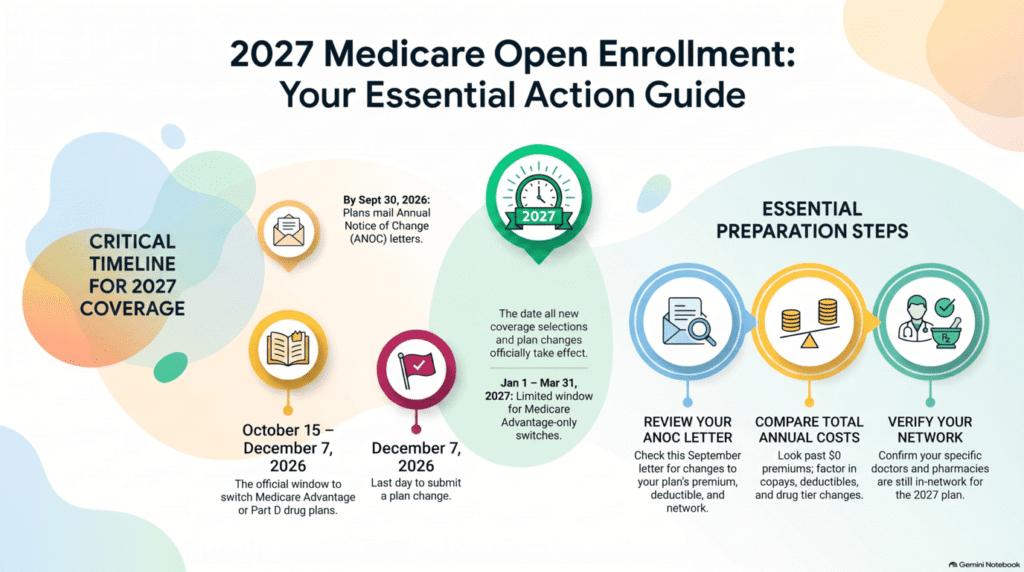
The Annual Enrollment Period is a federally set window that applies to nearly everyone already enrolled in Medicare. During AEP, Medicare health and drug plans are allowed to change their costs, covered providers, and pharmacy networks for the upcoming year—and CMS requires plans to notify members of those changes through an Annual Notice of Change (ANOC) letter, typically mailed by September 30. AEP is your annual chance to react to those changes or simply shop around to see if a better-fitting plan is available in your area.
AEP is sometimes called the “Annual Election Period” or “Fall Open Enrollment”—all three names refer to the same October 15–December 7 window.
Key Dates for the 2026–2027 Enrollment Cycle
| Date | What Happens |
|---|---|
| By September 30, 2026 | Medicare Advantage and Part D plans mail their Annual Notice of Change (ANOC) letters |
| October 15, 2026 | Open Enrollment (AEP) begins |
| December 7, 2026 | Open Enrollment (AEP) ends — last day to submit a change |
| January 1, 2027 | All AEP changes take effect |
| January 1 – March 31, 2027 | Medicare Advantage Open Enrollment Period (a second, more limited window for MA members only) |
Curious what’s changing with your specific plan for 2027? See side-by-side Medicare Advantage, Part D, and Medigap options in your ZIP code.
Who Does Open Enrollment Apply To?
AEP applies to anyone already enrolled in Medicare Part A and/or Part B, regardless of whether you currently have Original Medicare, a Medicare Advantage plan, or a standalone Part D drug plan. It is separate from your Initial Enrollment Period (the seven-month window around your 65th birthday) and separate from the General Enrollment Period (January 1–March 31, for people who missed signing up for Part A/B in the first place).
What You Can Change During AEP
- Switch from Original Medicare to a Medicare Advantage plan
- Switch from a Medicare Advantage plan back to Original Medicare
- Switch from one Medicare Advantage plan to another
- Join a Medicare Advantage plan for the first time
- Join, switch, or drop a standalone Part D prescription drug plan
For a full breakdown of the Advantage-vs-Original decision, see Medicare Advantage vs. Original Medicare: How to Decide. If you already know you want to switch Medicare Advantage plans, the step-by-step process is covered in How to Switch Medicare Advantage Plans During Open Enrollment.
AEP vs. Other Medicare Enrollment Periods
| Period | When | Who It’s For |
|---|---|---|
| Annual Enrollment Period (AEP) | Oct 15 – Dec 7 | Anyone with Medicare — broadest set of changes allowed |
| Medicare Advantage Open Enrollment Period | Jan 1 – Mar 31 | Only people already in a Medicare Advantage plan; one plan switch or a return to Original Medicare |
| General Enrollment Period | Jan 1 – Mar 31 | People who missed their Initial Enrollment Period and need to sign up for Part A/B |
| Special Enrollment Periods (SEPs) | Triggered by a qualifying life event | People who moved, lost employer coverage, qualify for Medicaid, and other specific situations |
Missed the deadline or think you might qualify for a SEP instead? See Medicare Special Enrollment Periods: Do You Qualify? and Medicare Open Enrollment Deadlines and Penalties.
Step-by-Step: How to Prepare for Open Enrollment
- Read your ANOC letter. This arrives by the end of September and lists exactly what’s changing about your current plan for next year—premium, deductible, drug tiers, and provider network.
- List your current prescriptions and doctors. Plan formularies and networks change yearly; confirm your medications are still covered and your providers are still in-network.
- Check the plan’s star rating. CMS rates Medicare Advantage and Part D plans from 1 to 5 stars on quality and member experience—see Medicare Advantage Star Ratings Explained.
- Compare total annual cost, not just premium. A $0 premium plan with high copays can cost more than a plan with a modest premium. See Medicare Costs in 2027: Premiums, Deductibles, and Limits for a full cost breakdown.
- Decide between Medigap and Medicare Advantage if you’re considering Original Medicare—the cost tradeoffs are different for everyone. Compare them in Medigap vs. Medicare Advantage: Which Costs Less?.
- Submit your change before December 7. Changes can be made online at Medicare.gov, by phone, or through a licensed agent.
What Happens If You Do Nothing?
If your current Medicare Advantage or Part D plan is still being offered in your area next year, your coverage rolls over automatically—you don’t have to re-enroll. The risk isn’t losing coverage; it’s staying in a plan whose costs or network no longer fit your needs. Because formularies and provider networks are reset every January 1, a plan that worked well this year can look very different in 2027.
Not sure if a lower-premium plan is actually the better deal? Compare total estimated annual cost across plans near you.
2026 Costs as a Starting Point
CMS typically announces final 2027 premiums, deductibles, and the Part D out-of-pocket cap in the fall, closer to the start of AEP. As of the 2026 plan year, the standard Part B premium is $202.90/month and the Part D out-of-pocket cap is $2,100. See the full, regularly updated breakdown in Medicare Costs in 2027: Premiums, Deductibles, and Limits.
Use our printable 10-question Open Enrollment checklist to walk through your review in about 20 minutes.
Why Medicare Plans Change Every Year
It surprises a lot of people that a Medicare Advantage or Part D plan can look completely different from one January to the next, even under the same plan name. Insurers renegotiate contracts with hospitals, doctors, and pharmacy networks annually. Drug manufacturers change list prices, which changes how a plan’s formulary tiers are structured. And CMS itself adjusts the underlying payment rates it pays insurers, which trickles down into premiums and supplemental benefits like dental, vision, and over-the-counter allowances. None of this is optional or announced mid-year—it all resets on January 1, which is exactly why the fall review window exists.
Using the Medicare Plan Finder
Medicare.gov’s Plan Finder tool lets you enter your ZIP code, current medications, and preferred pharmacy to see every Medicare Advantage and Part D plan available in your area, ranked by estimated annual cost. It’s free, doesn’t require creating an account to browse, and is the same tool licensed agents use behind the scenes. A few tips that make it more useful:
- Enter every prescription exactly as it’s dosed—generic vs. brand name can change which tier a drug falls into.
- Add your preferred pharmacy, since some plans offer lower copays at preferred pharmacy networks.
- Sort by “estimated annual cost,” not premium alone, so copays and deductibles are factored in.
- Re-run the search even if you’re happy with your plan—new plans enter the market every year and older ones sometimes exit.
Helping a Parent or Spouse Through Open Enrollment
If you’re reviewing coverage on behalf of a parent or spouse, you’ll need their Medicare number, a list of their current prescriptions with dosages, and a list of the doctors and specialists they see regularly. You can call 1-800-MEDICARE together, or a licensed agent can walk through options over the phone in about 20-30 minutes. Because Medicare Advantage and Part D plans require the beneficiary’s own consent to enroll (or a documented authorized representative), it’s worth setting aside time to do this together rather than trying to make the decision unilaterally.
Common Open Enrollment Mistakes to Avoid
- Comparing premiums only. A low-premium plan with a high deductible and narrow specialist network can cost far more over a full year than a plan with a higher monthly premium.
- Assuming your doctor is still in-network. Networks are rebuilt annually. Confirm directly with the plan or the provider’s office, not just last year’s card.
- Ignoring the star rating. Plans with consistently low ratings tend to have more customer service and claims issues—see Medicare Advantage Star Ratings Explained.
- Waiting until December 6. Plan Finder traffic and call center wait times spike in the final week of AEP. Starting your review in October gives you time to fix mistakes before the deadline.
Frequently Asked Questions
When is Medicare Open Enrollment for 2027 coverage?
Medicare Open Enrollment (the Annual Enrollment Period) runs from October 15 to December 7, 2026. Any changes made during this window take effect January 1, 2027.
Do I have to re-enroll in Medicare every year?
No. If you’re satisfied with your current Medicare Advantage or Part D plan and it’s still offered in your area, your coverage continues automatically without action. Reviewing your plan is recommended but not required.
What’s the difference between Open Enrollment and the Medicare Advantage Open Enrollment Period?
The Annual Enrollment Period (Oct 15 – Dec 7) is open to anyone with Medicare and allows the widest range of changes. The Medicare Advantage Open Enrollment Period (Jan 1 – Mar 31) is only for people already enrolled in a Medicare Advantage plan and allows one additional switch or a return to Original Medicare.
Can I switch from Medicare Advantage back to Original Medicare during AEP?
Yes. During the Annual Enrollment Period you can switch from a Medicare Advantage plan back to Original Medicare, and add a standalone Part D drug plan if you need prescription coverage.
What happens if I miss the December 7 deadline?
If you miss AEP, you generally have to wait for the next Medicare Advantage Open Enrollment Period (Jan 1 – Mar 31) if you’re in Medicare Advantage, or a Special Enrollment Period if you qualify for one. Missing enrollment windows can also trigger late enrollment penalties for Part B or Part D.
More in This Medicare Open Enrollment Guide
- Medicare Open Enrollment 2027: The Complete Guide
- Medicare Advantage vs. Original Medicare: How to Decide
- How to Switch Medicare Advantage Plans During Open Enrollment
- Medicare Part D Open Enrollment: Comparing Drug Plans
- Medigap vs. Medicare Advantage: Which Costs Less?
- Medicare Open Enrollment Deadlines and Penalties
- Medicare Advantage Star Ratings Explained
- Medicare Special Enrollment Periods: Do You Qualify?
- Medicare Costs in 2027: Premiums, Deductibles, and Limits
- Medicare Open Enrollment Checklist: 10 Questions to Ask
Not sure your current plan is still your best option?
Compare Medicare Advantage, Part D, and Medigap plans available in your ZIP code before the December 7 deadline.
SeniorAffair.com may earn a commission from partner links above.
This does not affect our editorial coverage. We are not connected with or endorsed by the U.S. government or the federal Medicare program.
© 2026 SeniorAffair.com — A 55+ Lifestyle Digital Magazine.
Information on this page is general in nature and not a substitute for personalized advice from Medicare.gov, 1-800-MEDICARE, or a licensed insurance agent.





[…] The question, “Which costs less, Medigap or Medicare Advantage?” doesn’t have a straightforward answer. It largely depends on your healthcare usage throughout the year. The two plans have distinct cost structures, making a comparison based solely on premiums somewhat misleading. Here’s a breakdown to consider as you approach Open Enrollment. […]
[…] drug costs are a significant reason to shop around during Medicare Open Enrollment. Each year, Part D plans reset their formularies, pharmacy networks, and pricing tiers on January […]
[…] Medicare costs are comprised of several components: Part A, Part B, Part D, and, depending on your choice, either Medigap or Medicare Advantage cost-sharing. Below is a detailed overview of confirmed costs for 2026, typical changes that occur each fall, and key points to monitor as CMS finalizes 2027 figures ahead of Open Enrollment. […]
[…] and travel habits. This guide outlines the key differences to help you decide before the December 7 Open Enrollment […]
[…] a quick reference to evaluate a plan’s real-world effectiveness before committing during the Open Enrollment. However, most people either ignore these ratings or lack an understanding of what they truly […]
[…] penalty that lasts for as long as you have Medicare. Here’s what you need to know if you miss the Open Enrollment period (Oct 15–Dec 7, 2026), along with how the Part B and Part D late enrollment penalties are […]