


Home Blog Page 111

Mobile Home Park Investing for Retirees: Passive Income Pros and Cons

0

Disclosure: Senior Affair may earn a commission when you buy through links on this page, at no extra cost to you. It never changes our rankings or what we tell you.

Quick answer

Mobile home investing can produce rental income, but it’s rarely passive. Investors earn by renting homes, renting lots, or owning a whole park. Returns depend on occupancy, lot rent, maintenance, and management. Owning a park means handling water, sewer, roads, and tenant issues, so many retirees hire a manager or invest through funds instead.

Ways to earn income from mobile homes

StrategyEffortCapital neededMain risk
Rent out a single homeMediumLowVacancy and repairs
Owner-finance a home saleLow to mediumLowBuyer default
Own a small parkHighHighInfrastructure and management
Invest in a fund or syndicationLowMedium to highIlliquidity, sponsor risk

What investors like

  • Lower entry cost than single-family rentals
  • Steady lot rent income
  • Strong demand for affordable housing

The risks most guides skip

  • Infrastructure: private water and sewer systems are expensive to fix
  • Regulation: tenant protection laws like Florida’s Chapter 723
  • Reputation: rapid rent increases draw scrutiny
  • Financing: park loans need bigger down payments
  • Liquidity: hard to sell quickly

This is general education, not investment advice. Talk to a financial advisor and a real estate attorney before buying rental property or a park.

Buying a park or rental property?

Tribune Funding arranges financing for mobile home parks, DSCR rental loans, and other commercial real estate, and works with investors nationwide.

Explore park and rental financing

Tribune Funding and Senior Affair share an owner. Tribune Funding is a loan broker, not a lender; terms and eligibility vary.

A lower-effort alternative

Real estate funds and platforms let you invest without being a landlord. Some, like EquityMultiple, are only open to accredited investors.

Passive real estate

Commercial real estate investments without managing tenants.

See EquityMultiple

For accredited investors only. Investments are illiquid and can lose value.

Questions before you invest

  1. How will this income fit with Social Security and RMDs?
  2. Who handles repairs at 2 a.m.?
  3. Can you afford a year of vacancy or a major repair?
  4. How long will your money be tied up?

Frequently asked questions

Is investing in mobile home parks a good idea for retirees?

It can be for experienced investors with capital and a good manager. It’s not truly passive for most owners.

How do mobile home parks make money?

Mainly from monthly lot rent, plus rent on park-owned homes and fees.

Can I rent out a mobile home in a 55+ park?

Many 55+ parks restrict or ban rentals. Check the rules first.

What are passive ways to invest in real estate?

REITs, real estate funds, and crowdfunding platforms. Each has fees, risks, and liquidity limits.

Keep reading: 55+ mobile home communities | Social Security COLA 2027

This article is for general education and is not financial, investment, or legal advice. Rates, fees, and offers change often; confirm current terms with the provider before you apply.

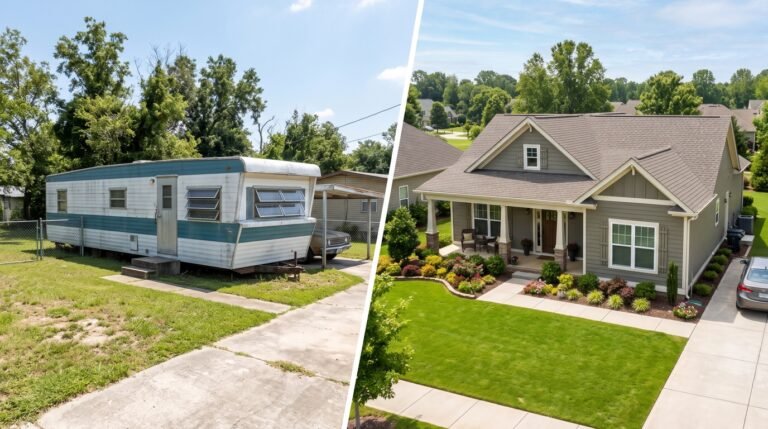
55+ Mobile Home Communities: The Complete Guide for Retirees

0

Disclosure: Senior Affair may earn a commission when you buy through links on this page, at no extra cost to you. It never changes our rankings or what we tell you.

Quick answer

A 55+ mobile home community is a park where most homes are occupied by at least one resident 55 or older. Under the federal Housing for Older Persons Act, at least 80% of occupied units must have a resident 55+. You typically own the home and rent the lot, paying monthly lot rent that often covers amenities, common areas, and some utilities. It’s one of the most affordable ways to retire, especially in Florida and Arizona, but lot rent increases and park rules matter as much as the home price.

How 55+ mobile home communities work

  • Own the home, rent the land: most common. You pay for the home plus monthly lot rent.
  • Resident-owned communities (ROCs): residents own the park together through a co-op or HOA, which can give more control over rent.
  • Own the lot: some communities sell the land with the home. Expect HOA dues instead of lot rent.

What it costs

CostWhat to expect
Home priceResale homes vary widely; a new single-section home averages roughly $85,000 to $89,000 and a double-section about $162,000 (Census, 2025)
Lot rentSeveral hundred dollars to over $1,000 a month, depending on location and amenities
InsuranceSeparate policy for the home; costs more in hurricane zones
UtilitiesSome included in lot rent, some billed separately

See our full breakdown: the cost of buying a mobile home.

Price insurance before you buy

Insurance can change your monthly budget more than you expect, especially in Florida. Get quotes before making an offer.

Compare home insurance

Coverage and availability vary by state and home age.

Pros and cons

Pros
– Lower purchase price than most site-built homes
– Single-level living
– Built-in social life: clubhouses, pools, activities
– Less yard work

Cons
– Lot rent can rise every year
– Homes may lose value, especially older ones
– Financing is harder; many loans are chattel loans with higher rates
– Park rules on pets, guests, and home appearance

Protect your budget from repairs

A home warranty can cover appliances, HVAC, and plumbing repairs, which helps when you’re living on a fixed income.

Compare home warranties

See our picks for the best home warranties for seniors.

Questions to ask before you buy

  1. How much has lot rent gone up in each of the last five years?
  2. What does lot rent include?
  3. Is the park owned by an investor group or residents?
  4. What are the rules on pets, guests, and rentals?
  5. Can I see the prospectus or rules in writing?
  6. How old is the home, and was it built after June 15, 1976 (the HUD Code)?

In Florida, parks with 10 or more rented lots must give buyers a prospectus and 90 days’ written notice of lot rent increases under Chapter 723. Read our guide to Florida mobile home park laws.

Is a 55+ mobile home community right for you?

It works well if you want lower housing costs, community, and single-floor living. If you may need more care later, compare it with senior living options.

Weighing your options?

Compare independent living, assisted living, and other options near you.

Compare senior living

Free service; partner communities may pay Caring.com.

Frequently asked questions

What does 55+ mean in a mobile home park?

At least 80% of occupied homes have a resident 55 or older, under the federal Housing for Older Persons Act.

Can someone under 55 live in a 55+ mobile home community?

Often yes, as a spouse, caregiver, or within the 20% allowance, depending on park rules.

Do you pay rent if you own a mobile home?

Usually yes. If you own the home but not the land, you pay monthly lot rent to the park.

Are 55+ mobile home communities a good investment?

They’re usually a lifestyle and affordability choice. Older homes often lose value, and rising lot rent affects resale.

Keep reading: Manufactured vs. mobile homes | Florida mobile home lot rent | Best home warranty for seniors

Sources

  • HUD, Housing for Older Persons Act (hud.gov)
  • U.S. Census Bureau, Manufactured Housing Survey (census.gov)
  • Florida Statutes Chapter 723 (leg.state.fl.us)

This article is for general education and is not financial, investment, or legal advice. Rates, fees, and offers change often; confirm current terms with the provider before you apply.

Manufactured Home vs. Mobile Home: What’s the Difference?

0

Disclosure: Senior Affair may earn a commission when you buy through links on this page, at no extra cost to you. It never changes our rankings or what we tell you.

Quick answer

A “mobile home” is a factory-built home made before June 15, 1976. A “manufactured home” is built after that date to the federal HUD Code, which sets standards for construction, fire safety, energy efficiency, and wind resistance. A modular home is also factory-built but meets the same local building codes as a site-built house. The difference affects financing, insurance, and resale value.

Side-by-side comparison

Mobile homeManufactured homeModular home
BuiltBefore June 15, 1976After June 15, 1976Any time
StandardNone federalHUD CodeState and local codes
ChassisPermanentPermanent steel chassisNone; set on foundation
FinancingHardestChattel, FHA, some conventionalConventional mortgage
Resale valueUsually lowestVaries; often holds better on owned landSimilar to site-built

Why the HUD Code matters

  • Safety: fire, wind, and structural standards
  • Financing: many lenders won’t finance pre-1976 homes
  • Insurance: older homes can be harder or costlier to insure
  • Look for the red HUD label on the exterior and the data plate inside

Financing options

  • Chattel loans: for the home only (not land); usually higher rates
  • FHA Title I and Title II loans
  • Conventional loans when the home sits on owned land with a permanent foundation
  • VA loans for eligible veterans in some cases
Insurance first

Get quotes on the specific home before you buy, especially for older homes or coastal areas.

Compare insurance quotes

Availability depends on home age, location, and condition.

Which is right for a retiree?

  • Manufactured home in a 55+ community: lowest cost of entry with built-in community. See 55+ mobile home communities.
  • Modular home on your own land: costs more but holds value like a traditional house.
  • Pre-1976 mobile home: cheapest, but harder to finance, insure, and resell.

Frequently asked questions

Is a manufactured home the same as a mobile home?

Not officially. Homes built after June 15, 1976 to the HUD Code are manufactured homes. Older ones are mobile homes.

How can I tell if a home meets the HUD Code?

Look for the red HUD certification label on the outside and a data plate inside, often in a kitchen cabinet or closet.

Do manufactured homes lose value?

Many do, especially on rented lots. Homes on owned land with a permanent foundation tend to hold value better.

Can I get a mortgage on a manufactured home?

Yes, if it’s on land you own and meets lender rules. Homes on rented lots usually need a chattel loan.

Keep reading: The cost of buying a mobile home | Best home warranty for seniors

Sources

  • HUD, Manufactured Housing and Standards (hud.gov)
  • Consumer Financial Protection Bureau, Manufactured housing loans (consumerfinance.gov)

This article is for general education and is not financial, investment, or legal advice. Rates, fees, and offers change often; confirm current terms with the provider before you apply.