

Home Blog Page 28

Why Taking A Zinc Supplement Could Be The Best Choice For You

0
Mature woman holding glass of fresh water, taking dietary supple
Mature woman holding glass of fresh water, taking dietary supplements. Elderly healthcare, medication concept.

Taking care of ourselves and our bodies is one of the most important aspects of life. Choosing the right supplements can be a difficult task with all the different options available. Zinc supplements are a great choice as they provide numerous health benefits. This blog post will explore why taking a zinc supplement could be the best choice for you, covering what zinc is, its many benefits, tips on choosing the right supplement, and potential side effects to consider. 

Introduction

Are you looking for ways to improve your health and overall well-being? If so, taking a zinc supplement could be the best choice for you. Zinc is an essential mineral that plays a major role in cell metabolism, immune system function, and wound healing – just to name a few of its benefits. In this blog post, we’ll discuss why it may be wise to consider incorporating zinc supplements into your daily routine to help keep you healthy. We’ll also look at potential side effects and provide some tips on how to safely use zinc supplement products. Let’s get started! 

What Is Zinc?

Zinc is an essential mineral that plays a crucial role in supporting overall health. It helps the body to absorb other important vitamins and minerals, assists with healing wounds, boosts immunity, and maintains healthy skin. Zinc can be found naturally in foods like seafood, eggs, nuts and seeds, whole grains, and legumes. Unfortunately for some people, these food sources may not provide enough of this vital nutrient which is why supplementing with zinc could be the best choice for you if you think you may be deficient. 

Benefits Of Taking A Zinc Supplement

Zinc is an essential mineral that plays a key role in the proper functioning of your body. Taking a zinc supplement can provide many health benefits, including the support of a healthy immune system, improved wound healing, and reduced severity of colds. Zinc also helps maintain normal levels of hormones, such as testosterone, which can contribute to improved sexual health. Additionally, zinc has been found to be beneficial in reducing inflammation associated with some skin conditions and preventing age-related macular degeneration. As if this wasn’t enough, research even suggests that supplementing with zinc may help improve cognition and reduce anxiety. Therefore, it’s well worth considering taking a zinc supplement when looking to optimize your overall health and well-being. 

Viva Naturals
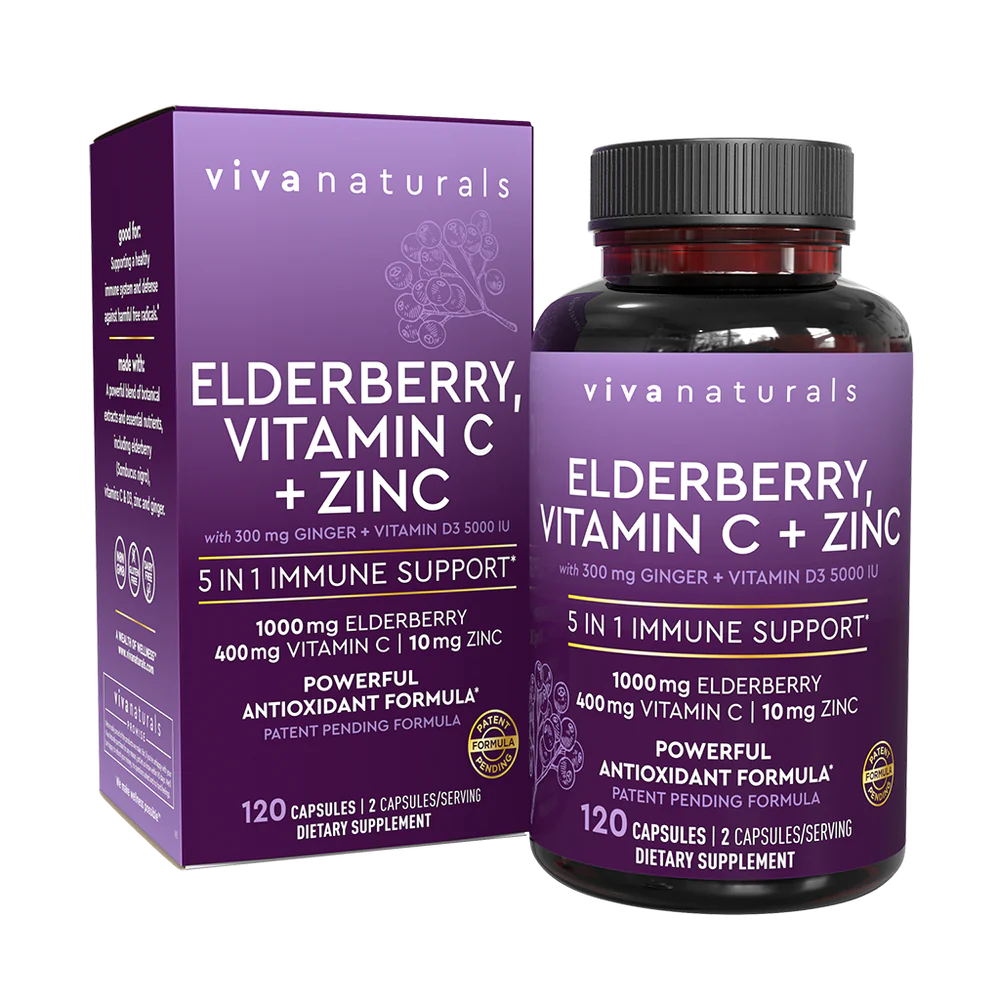
viva Naturals zinc supplements 1

Viva Naturals Elderberry, Vitamin C + Zinc supplements combine the power of nature and science to provide optimal immune support. This meticulously crafted formula is designed to boost your body’s defenses and help you maintain overall wellness.

Each serving of Viva Naturals Elderberry, Vitamin C + Zinc supplements delivers a potent blend of elderberry extract, vitamin C, and zinc, known for their immune-boosting properties. Elderberry, a rich source of antioxidants, has been used for centuries to support a healthy immune system. Vitamin C plays a crucial role in immune function and promotes collagen synthesis for healthy skin and tissues. Zinc is an essential mineral that aids in immune response and cellular growth and repair.

These supplements are made with premium, high-quality ingredients that are free from artificial colors, flavors, and preservatives. The vegetarian capsules are easy to swallow and gentle on the stomach. With regular use, Viva Naturals Elderberry, Vitamin C + Zinc supplements provide the immune support you need to thrive in today’s challenging environment. Boost your defenses and embrace a healthier lifestyle with this exceptional supplement.

Wellness Resources

Wellness resources strengthener plus


Wellness Resources Strengthener Plus Zinc Formula for Hair, Skin, Nails is a premium dietary supplement designed to promote healthy hair, vibrant skin, and strong nails. This carefully formulated blend combines essential vitamins, minerals, and botanical extracts to nourish and support optimal beauty from within.

With its key ingredient, zinc, this formula plays a vital role in maintaining the health of hair, skin, and nails. Zinc aids in collagen synthesis, which is essential for maintaining the integrity and elasticity of the skin. It also contributes to the formation of keratin, a protein that strengthens hair and nails.

The supplement also includes a powerful blend of vitamins such as biotin, vitamin C, and vitamin E, which work synergistically to support healthy hair growth, improve skin texture, and promote nail strength. Additionally, botanical extracts like horsetail and saw palmetto provide further nourishment and support for these beauty-enhancing benefits.

Wellness Resources Strengthener Plus Zinc Formula for Hair, Skin, and Nails is a convenient way to supplement your beauty regimen, ensuring you provide your body with the nutrients it needs to maintain healthy and radiant hair, skin, and nails. Incorporate this supplement into your daily routine to unleash your inner beauty and enhance your overall wellness.

Potential Side-Effects Of Taking A Zinc Supplement

When it comes to choosing the right zinc supplement for you, there are several factors to consider. The form of zinc supplement, as well as the dosage, should be carefully selected based on your individual needs. Zinc is available in many different forms such as tablets, capsules, drops, and lozenges. Talk with a doctor or nutritionist about what form and dosage is best for you. Additionally, compare the ingredients in different brands of supplements to make sure that you are getting the appropriate level of zinc for your body’s specific needs. Taking a zinc supplement could be an effective way to ensure that your body gets the right amount of this essential nutrient. 

Conclusion

In conclusion, taking a zinc supplement can be an excellent choice for those looking to boost their overall health. Zinc is essential for our body’s immune system and has been found to help in the prevention of many common illnesses and diseases. Furthermore, it also helps improve your hair, skin, and nails as well as giving you more energy throughout the day. Taking a zinc supplement can help make sure that you get enough of this vital mineral each day and could be a great addition to any daily health routine.


Why Investing In Long-Term Care Insurance Is A Good Idea

0
Why Investing In Long-Term Care Insurance Is A Good Idea

Investing in long-term care insurance can be an important part of your financial plan for the future. It is designed to provide financial support if you need assistance with everyday activities due to a chronic illness or disability.

In this blog post, we will explore the benefits of investing in long-term care insurance, the cost of long-term care in the United States, what is covered by long-term care insurance, when to start investing in long-term care insurance, and considerations before purchasing it. With all these factors in mind, you can decide whether this type of insurance would be beneficial for your current and future needs. 

Introduction

Good long-term care can help us age with dignity and provide a sense of security for ourselves and our loved ones. Investing in long-term care insurance is one way to plan for the future, providing financial protection for you and your family in the event of an unexpected health issue or disability.

This blog post will examine why investing in long-term care insurance is a good idea, from the security it provides to understanding how policies work. With this information in hand, you’ll be better equipped to make informed decisions about your long-term care planning. 

Benefits Of Investing In Long-Term Care Insurance

Investing in long-term care insurance is a wise decision for many people. It protects against hefty costs associated with long-term care should the need arise. This can include nursing homes, assisted living, or at-home care services. Long-term care insurance also helps to protect your retirement savings and assets, so you can pass something on to your family.

Unlike traditional health insurance plans, long-term care policies often don’t require that you demonstrate ill health before benefiting from them; they recognize the inevitability of aging and provide support when it’s needed most.

Additionally, some states offer discounts when two people share a policy – such as spouses or domestic life partners – making it an even more attractive financial option. Investing in long-term care insurance can provide you with peace of mind that you have a plan if the unexpected happens. 

The Cost Of Long-Term Care In The United States

Long-term care in the United States is expensive and can strain a person’s financial resources. The median cost for home health care is about $4,000 per month, while a semiprivate room in a nursing home averages around $7,500 per month. Assisted living facilities range from $3,000 to over $8,000 per month depending on the services and amenities offered.

Investing in long-term care insurance can help reduce or eliminate the costs associated with long-term care such as medical bills, medications, therapy sessions, nursing homes, and more. Long-term care insurance also provides peace of mind that your loved ones will have access to necessary services in their time of need without breaking the bank. 

What Is Covered By Long-Term Care Insurance?

Long-term care insurance is a type of insurance that provides coverage for care beyond what traditional health insurance plans typically provide. It compensates costs associated with services such as nursing home care, assistance with activities of daily living and in-home health care.

In addition to assisting with the physical needs of an individual, long-term care can also cover the cost of social support services, such as adult daycare or companionship services. By investing in long-term care insurance, you are ensuring that you are financially prepared to manage any long-term medical needs that may arise in your senior years. 

When To Start Investing In Long-Term Care Insurance

For those who are trying to plan for the future, investing in long-term care insurance is something that should not be overlooked. Long-term care insurance provides financial security for individuals who will one day need assistance with daily activities due to old age or disability.

When is the best time to start investing in long-term care insurance? As soon as possible is ideal, since premiums tend to increase with age. It’s also important to note that many insurers have enrollment limits depending on health and a person’s age, so it’s important to investigate your options sooner rather than later. 

Considerations Before Purchasing Long-Term Care Insurance

When deciding if long-term care insurance is right for you, there are several important considerations to take into account. First, you should carefully evaluate your health and financial needs as they pertain to potential future needs. You should also consider the cost of long-term care in your area, which can vary widely depending on the type of care necessary and where you live.

Additionally, it is essential to make sure that any policy you choose includes all of the services that would be beneficial to you or a family member in need of assistance. Finally, ensure that the coverage level meets your expectations for coverage and fits within your budget. Investing in long-term care insurance can provide peace of mind knowing that your future medical expenses are taken care of. 

Conclusion

In conclusion, long-term care insurance is a wise investment for anyone looking to ensure that they are well taken care of in the event of illness or injury. Long-term care can be an expensive and time-consuming endeavor, and without insurance coverage it can become a financial burden on those who require such services. With long-term care insurance, you have the peace of mind of knowing that your needs will be met should the need ever arise.

How to Find Local Dining Experiences Abroad: A Senior Traveler’s Food Guide

How to Find Local Dining Experiences Abroad: A Senior Traveler's Food Guide

Food is one of the deepest windows into a culture—and for many senior travelers, dining well is at the heart of any memorable trip. Here’s how to go beyond tourist-trap restaurants and find genuine local experiences, wherever you’re traveling.

Eatwith: Dine in a Local’s Home

Eatwith is the most unique dining platform for travelers. It connects you with local hosts — home cooks, professional chefs, and passionate food enthusiasts — who host dining experiences in their homes or private spaces. The format varies: some are intimate dinner parties for 6–8 guests; others are cooking classes where you prepare and eat a traditional meal together.

Why it’s perfect for seniors: the pace is relaxed, portion sizes are usually generous home-cooking style, dietary needs can be accommodated in advance, and you’ll leave knowing real people from your destination rather than just having checked off tourist attractions.

Eatwith operates in 130+ cities worldwide, with particularly strong listings in Italy, France, Spain, Israel, Japan, and the U.S.

KKday Cooking Classes

KKday offers professionally organized cooking classes throughout Asia and Europe—Thai cooking in Chiang Mai, pasta-making in Bologna, and sushi rolling in Tokyo. These structured classes are well-paced for seniors, usually include market tours, and result in a meal you’ve prepared yourself. They’re memorable, educational, and genuinely delicious.

Finding Great Local Restaurants (Without Getting Tourist-Trapped)

  • ✅ Eat at lunch, not dinner: Local restaurants in Europe serve their best food at the midday meal for a fraction of dinner prices. “Menú del día” in Spain and “menu du jour” in France are fixed-price lunch menus—often 3 courses with wine for €12–18.
  • ✅ Look for where locals eat: If the menu is only in English, you’re in the wrong restaurant. Look for menus in the local language with handwritten daily specials.
  • ✅ Ask your hotel concierge for a neighborhood recommendation — specifically ask for where local families eat, not where tourists go.
  • ✅ Use Google Maps in “Nearby” mode to find restaurants with high local review counts, not just tourist reviews.
  • ✅ Arrive early for dinner — in many European countries, restaurants start filling up at 8–9pm. Seniors who arrive at 6:30–7pm get better service and quieter tables.

Dietary Needs While Traveling

  • Translation cards: Download a food allergy translation card for your destination language at AllergyEats or similar resources—show these to restaurant staff
  • Communicate through your hotel: Ask the concierge to call ahead to a restaurant and confirm they can accommodate your dietary needs—this works far better than trying to explain in a foreign language at the table
  • Eatwith hosts: When booking through Eatwith, message the host directly before booking to discuss any dietary restrictions—they’re almost always accommodating

Drinking Water Safety

  • In Western Europe, UK, Australia, Japan, Canada, and Scandinavia—tap water is safe
  • In most of Asia, Latin America, Africa, and Eastern Europe—drink bottled water; don’t brush teeth with tap
  • When uncertain, ask your hotel front desk

Related Articles: Ultimate Senior Travel Checklist | Best Tours & Activities Platforms | International Travel Checklist

Disclosure: This article contains affiliate links. We may earn a commission when you sign up through our links, at no extra cost to you.

Travel Safety Tips for Senior Solo Travelers

Travel Safety Tips for Senior Solo Travelers

Solo travel after 55 is one of the most liberating experiences available to modern seniors — and with the right preparation, it’s also one of the safest. Here’s how to minimize the risks while maximizing the freedom.

Before You Leave: Preparation Is Your Best Safety Tool

  • ✅ Register with the U.S. Embassy via the STEP program at step.state.gov—they’ll notify you of safety alerts and can assist if something goes wrong
  • ✅ Purchase travel insurance with emergency medical evacuation before every trip—compare plans at VisitorsCoverage or Insubuy
  • ✅ Share your full itinerary with a trusted person at home—hotel names, addresses, flight numbers, and contact information
  • ✅ Set up AirHelp for automatic flight delay compensation — register here
  • ✅ Install NordVPN on your phone and laptop for secure public WiFi use — get NordVPN

Physical Safety While Traveling

  • ✅ Keep valuables in a money belt worn under clothing, not in a purse or fanny pack
  • ✅ In crowded areas, carry your bag in front of you
  • ✅ Don’t display expensive jewelry, cameras, or electronics on the street
  • ✅ Use ATMs inside bank branches rather than street ATMs, especially at night
  • ✅ Pre-book transportation rather than hailing street taxis—use Welcome Pickups or GetTransfer from airports
  • ✅ Research your neighborhood before choosing a hotel — read reviews from other solo senior travelers

Digital Security While Traveling

  • ✅ Use NordVPN every time you connect to public WiFi
  • ✅ Install your eSIM before departure so you’re not dependent on hotel WiFi—see Best eSIM for International Travel
  • ✅ Enable two-factor authentication on all banking and email accounts
  • ✅ Don’t use public USB charging stations (they can steal your data — use your own charger)
  • ✅ Don’t log into sensitive accounts from shared hotel computers

Common Scams Targeting Senior Travelers

  • “Friendship bracelet” scam: Someone puts a bracelet on your wrist and demands payment—just walk away immediately
  • Taxi meter scam: Drivers claim the meter is broken and charge a fixed (inflated) rate—always use pre-booked transfers or rideshare apps
  • “Dropped wallet” scam: One person distracts you while another picks your pocket—stay alert in crowded tourist areas
  • Fake WiFi hotspots: “Hotel Free WiFi” networks set up by criminals—always verify the network name with hotel staff and use a VPN.

Emergency Contacts to Save Before Every Trip

  • Your travel insurance 24/7 emergency line
  • U.S. Embassy number for each destination country
  • Your bank’s international collect call number (on back of card)
  • Your primary care physician
  • A trusted family member or friend at home

Related Articles: Ultimate Senior Travel Checklist | Travel Insurance for Seniors | VPN for Senior Travelers | Phone Setup for International Travel

Disclosure: This article contains affiliate links. We may earn a commission when you book through our links, at no extra cost to you.

Best Tours & Activities Booking Platforms for Senior Travelers

Best Tours & Activities Booking Platforms for Senior Travelers

Pre-booking tours and activities is one of the highest-value things a senior traveler can do. Top museums, cooking classes, and guided tours sell out weeks or months in advance. Walking up without a reservation at peak season means being turned away from the places you most wanted to see. Here’s how to book smart.

Top Activities Booking Platforms Compared

Klook — Best for Asia-Pacific and City Experiences

Klook is the dominant activities platform across Asia—Japan, South Korea, Thailand, Singapore, Hong Kong, Bali, and beyond—and increasingly strong in Europe and the Americas. The platform offers skip-the-line tickets, hop-on-hop-off bus passes, day tours, and cultural experiences. Mobile ticket delivery is instant. Customer service is responsive if plans change.

KKday — Best for Unique Cultural Experiences

KKday specializes in unique, locally curated experiences—traditional cooking classes, private small-group tours, cultural workshops, and outdoor adventures. If you want something beyond the typical tourist circuit, KKday’s selection of authentic local experiences is excellent. Particularly strong in Taiwan, Japan, and Southeast Asia.

Tiqets — Best for European Museums and Attractions

Tiqets is the go-to platform for European museum and attraction tickets—the Louvre, Colosseum, Sagrada Família, Anne Frank House, Van Gogh Museum, and hundreds more. Mobile ticket delivery means no printing, and many Tiqets bookings include skip-the-line access—invaluable for seniors who can’t stand in long queues.

Eatwith—Best for Food & Dining Experiences

Eatwith connects travelers with local hosts for unique dining experiences—a dinner in a local’s home, a cooking class in a Florentine kitchen, a street food tour in Bangkok. These experiences are not just meals; they’re cultural immersions that create lasting memories. Highly recommended for senior travelers who prioritize authentic connection over tourist sites.

Ticketmaster — Best for Concerts and Live Events

If your trip includes attending a concert, theater production, or sporting event, Ticketmaster has the widest inventory of live events globally. Book as early as possible—popular events sell out months in advance.

Tips for Senior Travelers Booking Tours

  • ✅ Filter for “easy” or “suitable for seniors” when available — many platforms include mobility ratings
  • ✅ Read recent reviews specifically mentioning seniors—look for comments about walking distance, stairs, and pace
  • ✅ Book skip-the-line tickets for major attractions—queue time at the Colosseum or Louvre can be 2+ hours without them
  • ✅ Check cancellation policies before booking — many tours offer free cancellation 24–48 hours before the experience
  • ✅ Ask the operator about group size—smaller group tours (under 12 people) move more slowly and comfortably

Related Articles: Ultimate Senior Travel Checklist | Local Dining Experiences Abroad | International Travel Checklist

Disclosure: This article contains affiliate links. We may earn a commission when you book through our links, at no extra cost to you.

Travel Insurance Guide for Seniors 55+: What You Need, What to Skip

Travel Insurance Guide for Seniors 55+: What You Need, What to Skip

Travel insurance is the most important thing on your pre-trip checklist that most seniors either skip or underestimate. Here’s the honest picture: Medicare pays almost nothing for international medical care, a single emergency room visit in Europe can cost $5,000–$20,000 out of pocket, and medical evacuation back to the U.S. can run $100,000–$250,000. Travel insurance eliminates that financial risk for typically $30–$150 for a two-week trip.

What Medicare Covers (and Doesn’t) Abroad

Original Medicare (Parts A and B) does not cover medical care outside the United States — with extremely narrow exceptions near the Canadian and Mexican borders. If you have a Medicare Supplement (Medigap) plan, some plans include limited foreign travel emergency coverage (usually 80% of costs after a $250 deductible, up to a $50,000 lifetime limit). Even with a Medigap plan, $50,000 covers only a fraction of a serious medical event abroad.

Types of Travel Insurance Coverage

Travel Medical Insurance (Essential)

Pays your medical bills if you get sick or injured abroad. Look for plans with at least $100,000 in coverage, ideally $500,000. Also confirm whether pre-existing conditions are covered—this varies by plan and is particularly important for seniors.

Emergency Medical Evacuation (Essential)

Pays for transport to the nearest adequate medical facility or to return you to the U.S. for treatment. Without this, a medical evacuation flight costs $100,000–$250,000. This coverage is non-negotiable for international senior travel.

Trip Cancellation / Interruption (Recommended)

Reimburses non-refundable trip costs if you have to cancel before departure or cut a trip short due to a covered reason (illness, family emergency, natural disaster, etc.). Particularly valuable for expensive trips or non-refundable bookings.

Baggage Loss / Delay (Nice to Have)

Reimburses essential purchases if your luggage is lost or significantly delayed. Usually a modest benefit; not a priority if budget is a concern.

Where to Compare and Buy Senior Travel Insurance

VisitorsCoverage — Best Insurance Marketplace

VisitorsCoverage is a specialized travel insurance marketplace that shows side-by-side comparisons of medical and travel plans from multiple insurers. Their filtering tools let you compare by coverage amount, pre-existing condition coverage, and budget. Many seniors find the interface the easiest to navigate.

Insubuy — Best for Comprehensive Coverage Options

Insubuy specializes in visitor and travel insurance with a particularly strong selection of plans that include emergency medical evacuation and repatriation of remains—both especially important for seniors. Their plans are available for travelers up to age 99.

When to Buy Travel Insurance

Buy your travel insurance immediately after booking your flight. Why? “Cancel for any reason” (CFAR) policies require purchase within 10–21 days of your initial trip deposit to be eligible. Trip cancellation coverage also typically begins from the policy purchase date, not the travel date.

FAQ: Travel Insurance for Seniors

Does Medicare cover international travel?

No. Medicare pays almost nothing for international medical care. Purchase a travel medical policy from VisitorsCoverage or Insubuy before every international trip.

How much does travel insurance cost for seniors?

Typically $30–$150 for a 2-week trip, depending on age, destination, and coverage level. Compare at VisitorsCoverage.

Do seniors need medical evacuation coverage?

Yes — without it, a medical evacuation flight can cost $100,000–$250,000. Every senior traveling internationally should have at least $500,000 in evacuation coverage.


Related Articles: Ultimate Senior Travel Checklist | International Travel Checklist | Senior Travel Health Checklist | What to Do If Your Flight Is Delayed

Disclosure: This article contains affiliate links. We may earn a commission when you book through our links, at no extra cost to you.

Hotel vs. Vacation Rental vs. Airbnb for Senior Travelers: Which Is Best?

Hotel vs. Vacation Rental vs. Airbnb

Where you stay shapes your entire travel experience. Hotels offer predictability and services; vacation rentals offer space and a “home away from home” feel; boutique platforms offer personality. Here’s how to decide what’s right for your trip.

Hotels: When They’re the Right Choice

Book through: Hotels.comBooking.com, or Agoda (best for Asia)

Hotels are the best choice when:

  • You want 24/7 front desk support for any issue
  • You’re in an unfamiliar destination and want professional staff who can help navigate
  • You have mobility needs—hotels can be pre-screened for accessible rooms, elevators, and ground-floor access
  • Daily housekeeping matters to you
  • The trip is short (under 5 days)

Hotels.com advantage: Every 10 nights stayed earns a free reward night. If you travel multiple times a year, the loyalty benefit adds up quickly.

Booking.com advantage: The widest global inventory and flexible cancellation policies. Their “Free cancellation” filter is particularly useful for senior travelers whose health plans may change.

Vacation Rentals: When They’re the Right Choice

Book through: Vrbo

Vacation rentals (entire homes or apartments) are the best choice when:

  • You’re staying 7+ days and want to feel “at “home”—a full kitchen, laundry, living room
  • You’re traveling with a spouse, family, or a group and need multiple bedrooms
  • You have dietary restrictions and prefer cooking some meals
  • The destination is a resort town or beach location where hotel options are limited or overpriced

Vrbo focuses on whole-property rentals (no room-share situations) — every booking is an entire home or condo, which many senior travelers prefer for privacy and security. Filter listings by “elevator,” “single story,” or “accessible” to find senior-friendly properties.

Agoda: Best for Asia-Pacific

Agoda specializes in Southeast Asia and the Pacific—Thailand, Bali, Vietnam, Japan, South Korea, and Australia. If any portion of your trip includes this region, Agoda typically offers better rates and more inventory than Western platforms. Their price filter, review system, and cancellation policies are senior-friendly.

Casino Hotels: A Senior Favorite

For trips within the U.S. or to Las Vegas-style destinations, Caesars Rewards Hotels offers excellent value—large rooms, entertainment, dining, and loyalty rewards that build across multiple stays. Many seniors find casino hotel prices surprisingly competitive.

Booking Tips That Apply to All Accommodation

  • ✅ Always read recent reviews (last 3 months) — not the overall star rating
  • ✅ Filter for “free cancellation” on first search
  • ✅ Call the property directly after booking to confirm accessibility needs
  • ✅ Screenshot your booking confirmation and save it offline
  • ✅ Check the exact address — and confirm how to get there from your airport transfer

Related Articles: Ultimate Senior Travel Checklist | Airport Transfer Guide | Travel Insurance for Seniors | Best Car Rental Apps

Disclosure: This article contains affiliate links. We may earn a commission when you purchase through our links, at no extra cost to you.

Train & Bus Travel in Europe for Seniors

Train & Bus Travel in Europe for Seniors

European trains are one of the great travel experiences—city-center arrivals, spacious seating, scenic countryside views, and no security theater. For senior travelers, rail travel is often more comfortable than flying short European routes. Here’s everything you need to know to book smart.

Why European Trains Beat Short-Haul Flights

RouteFlight (door-to-door)Train (door-to-door)Winner
Paris → London~4.5 hours (incl. airports)~3.5 hours (Eurostar)🚆 Train
Paris → Amsterdam~4 hours~3.5 hours (Thalys)🚆 Train
Rome → Florence~4 hours~1.5 hours (Frecciarossa)🚆 Train (by far)
Madrid → Barcelona~3.5 hours~2.5 hours (AVE)🚆 Train

How to Book European Trains: Omio

Omio is the most comprehensive European travel search platform — it compares trains, buses, and flights across 37 countries in one search. You can book rail tickets on Omio directly, managing your itinerary from one app. It covers all major rail operators: Eurostar, Deutsche Bahn, SNCF, Renfe, Trenitalia, Thameslink, and more.

Senior Rail Discounts in Europe

Many European rail operators offer significant senior discounts (typically 25–50% off) for travelers 60 or 65 and over. These discounts are usually available when booking directly with national rail operators — check the rail operator’s website for your destination country after finding your route on Omio.

  • UK: Railcard for ages 60+ — one-time fee, then 1/3 off all journeys
  • Germany: BahnCard 50 or senior day tickets offer significant savings
  • France: SNCF Senior pass for travelers 60+
  • Italy: Trenitalia offers senior discount cards
  • Spain: Renfe senior discount for ages 60+

Rail Pass vs. Point-to-Point Tickets

A Eurail pass gives you a set number of travel days across multiple countries — useful if you’re planning many routes over 3+ weeks. For focused itineraries (2–3 destinations), point-to-point tickets booked in advance through Omio are usually cheaper.

Senior Comfort Tips for Train Travel

  • ✅ Book a reserved seat (required on high-speed trains, optional on regional trains)
  • ✅ Choose a first-class ticket on long journeys—the price difference is often modest and the comfort is significantly better
  • ✅ Request assistance at the station if needed — most major European stations have staff for boarding assistance
  • ✅ Store your ticket digitally in the Omio app — no need to print
  • ✅ Board near the front of the train — luggage racks fill up quickly

Related Articles: How to Book International Flights | Best Car Rental Apps | Airport Transfer Guide | Ultimate Senior Travel Checklist

Disclosure: This article contains affiliate links. We may earn a commission when you book through our links, at no extra cost to you.

Airport Transfer Guide for Senior Travelers

Airport Transfer Guide for Senior Travelers

Landing in a foreign airport is overwhelming enough without having to negotiate with unlicensed taxi drivers, figure out a confusing bus system, or wait for a rideshare in an unfamiliar pickup zone. Pre-booking your airport transfer is one of the smartest things a senior traveler can do — it’s often not much more expensive, and the peace of mind is worth every penny.

Why Pre-Book Your Airport Transfer?

  • A driver with your name on a sign is waiting when you clear customs—no searching, no negotiating
  • Fixed price agreed before you travel—no surge pricing surprises
  • The driver monitors your flight—if you’re delayed, they adjust automatically
  • Vetted, licensed drivers with passenger ratings
  • Door-to-door service eliminates the luggage-hauling through public transit

Best Airport Transfer Services for Senior Travelers

Welcome Pickups — Best for Europe, Americas & Asia

Welcome Pickups operates in 100+ cities across Europe, the Americas, and parts of Asia. Drivers are rated and vetted, prices are fixed and shown upfront, and the service monitors your flight for real-time delay adjustments. The Welcome Pickups app is simple and reliable — highly rated by senior travelers for its clear interface and professional drivers.

GetTransfer — Best for Widest Global Coverage

GetTransfer operates in an even wider network of destinations and lets you specify vehicle type — helpful if you need an SUV for luggage space, a minivan for a small group, or a wheelchair-accessible vehicle. Drivers submit bids on your transfer request, which can create competitive pricing.

Trip.com Transfers — Best When Bundling a Full Trip

If you’re booking your flight and hotel through Trip.com, airport transfers can be added at the same time for a bundled discount—convenient for one-stop trip management.

What to Tell Your Transfer Provider

  • Your flight number (so they can track delays)
  • Number of passengers and pieces of luggage
  • Any mobility requirements (wheelchair, walker, extra entry/exit time)
  • Your hotel name and address (confirm this is correct — even small address errors cause problems)
  • Your phone number with country code (they need to reach you if plans change)

When a Pre-Booked Transfer Isn’t Needed

A pre-booked transfer isn’t always necessary. If you’re arriving at a major hub with clear, well-marked taxi queues (London Heathrow, Tokyo Narita, and Zurich), an official taxi from the official queue is safe and usually reasonably priced. Avoid unofficial “taxi drivers” who approach you inside the terminal.


Related Articles: Ultimate Senior Travel Checklist | International Travel Checklist | Train & Bus Travel in Europe | Best Car Rental Apps

Disclosure: This article contains affiliate links. We may earn a commission when you book through our links, at no extra cost to you.

Best Car Rental Apps for Senior Travelers

Best Car Rental Apps for Senior Travelers

Renting a car gives senior travelers maximum flexibility — no bus schedules, no expensive taxis, and the freedom to explore countryside destinations that public transit can’t reach. Here’s how to book wisely and avoid the hidden fees that can turn a $35/day rental into a $150/day headache.

Top Car Rental Platforms for Seniors

Auto Europe — Best for Europe

Auto Europe has operated since 1954 and specializes exclusively in European car rentals. They work with all major rental companies (Hertz, Avis, Europcar, and Sixt) and negotiate wholesale rates that are typically lower than booking directly. Auto Europe also offers a rate-match guarantee. For European road trips, they’re the go-to.

EconomyBookings — Best for Global Coverage

EconomyBookings operates across 150+ countries with 20,000+ rental locations and 175,000+ vehicles. It’s excellent for destinations outside Europe where Auto Europe has fewer partners—the Middle East, Asia, Latin America, and Africa.

QEEQ — Best for Price Comparison

QEEQ is a price aggregator that compares rates across dozens of rental companies simultaneously, including local operators that major booking platforms miss. If you’re flexible on brand and just want the lowest price, QEEQ often finds rates 15–25% below direct booking.

Trip.com — Best for Bundled Savings

Trip.com offers car rentals as part of full trip bundles (flight + hotel + car). If you’re booking your whole trip in one place, the bundled discount often beats standalone car rental rates.

Senior Car Rental Tips: Avoiding Hidden Fees

  • ✅ Book with full coverage insurance included — rental company desk insurance is marked up 200–400%. Buy through your credit card’s car rental coverage or a third-party policy at booking.
  • ✅ Request an automatic transmission explicitly—many European rentals are manual by default
  • ✅ Check the age surcharge policy — some companies charge seniors 70+ (an additional daily fee, this varies by company and country)
  • ✅ Pre-pay for fuel if offered—returning the tank empty is cheaper than buying the rental company’s overpriced fuel
  • ✅ Photograph the car at pickup — document any existing damage before driving away

International Driver’s License: Do You Need One?

An International Driving Permit (IDP) is required by many countries and strongly recommended for others. You can obtain one at your local AAA office for $20 with your valid U.S. driver’s license and two passport photos. Get it before you travel — you cannot obtain an IDP abroad.

Countries where an IDP is typically required: Italy, Greece, Japan, South Korea, most of Southeast Asia, most of Africa, and the Middle East. Countries where it’s recommended but not strictly required: Germany, France, and the UK (they accept U.S. licenses, but an IDP provides a translated version).


Related Articles: Ultimate Senior Travel Checklist | Train & Bus Travel in Europe | Airport Transfer Guide | Travel Insurance for Seniors

Disclosure: This article contains affiliate links. We may earn a commission when you book through our links, at no extra cost to you.