


Home Blog Page 60

Complete Guide to Hormone Replacement Therapy (HRT): Everything You Need to Know

0
Complete Guide to Hormone Replacement Therapy (HRT): Everything You Need to Know

Hormone replacement therapy (HRT) has helped millions of women navigate the challenges of menopause and hormonal changes. If you’re experiencing hot flashes, night sweats, mood changes, or other symptoms of hormone decline, understanding your treatment options is the first step toward feeling like yourself again.

This comprehensive guide covers everything you need to know about HRT, from how it works to potential benefits and risks, helping you make an informed decision about whether it’s right for you.

What is Hormone Replacement Therapy?

Hormone replacement therapy is a medical treatment that supplements or replaces hormones your body no longer produces in adequate amounts. As women approach menopause, typically in their late 40s or early 50s, the ovaries gradually produce less estrogen and progesterone. This natural decline triggers a cascade of symptoms that can significantly impact quality of life.

HRT works by reintroducing these hormones into your system, either through estrogen alone (for women who’ve had a hysterectomy) or a combination of estrogen and progesterone (for women with an intact uterus). The treatment can alleviate many menopause symptoms while also providing protective benefits for bone health and cardiovascular function when started at the appropriate time.

The decision to start HRT is highly personal and should be made in consultation with a healthcare provider who understands your medical history, risk factors, and treatment goals. Getting started with HRT is now easier than ever with telemedicine platforms like DirectCare.ai, which connects you with experienced providers who can evaluate your symptoms and create a personalized treatment plan from the comfort of your home.

Types of Hormone Replacement Therapy

Understanding the different types of HRT helps you have more productive conversations with your healthcare provider about which option might work best for your situation.

Estrogen-Only HRT

This type of HRT is typically prescribed for women who have had a hysterectomy (surgical removal of the uterus). Since there’s no risk of uterine cancer without a uterus, these women can safely take estrogen alone, which is the most effective treatment for menopause symptoms.

Estrogen-only therapy comes in several forms including pills, patches, gels, creams, and vaginal preparations. The delivery method affects how the hormone is absorbed and metabolized, which can influence both effectiveness and side effect profiles.

Combined HRT (Estrogen + Progesterone)

Women who still have their uterus need progesterone along with estrogen. This combination is crucial because estrogen alone can cause the uterine lining to thicken excessively, increasing the risk of endometrial cancer. Progesterone protects the uterus by preventing this overgrowth.

Combined HRT can be taken in several ways: – Continuous combined: Taking both hormones daily with no breaks – Sequential combined: Taking estrogen daily with progesterone added for part of each month – Continuous long-cycle: Taking estrogen daily with progesterone every three months

Bioidentical vs. Synthetic HRT

Bioidentical hormones are chemically identical to the hormones your body produces naturally, while synthetic hormones have a slightly different molecular structure. Both types are created in laboratories—“bioidentical” doesn’t mean natural or plant-derived, though some are sourced from plant compounds.

The debate over bioidentical versus synthetic HRT continues, with advocates on both sides. What matters most is finding a formulation that effectively manages your symptoms with minimal side effects, which is where personalized medical guidance becomes essential.

The Benefits of HRT

HRT offers numerous benefits beyond symptom relief. Understanding these advantages helps you weigh the potential value against any risks.

Immediate Symptom Relief

The most noticeable benefits appear within weeks to months of starting treatment:

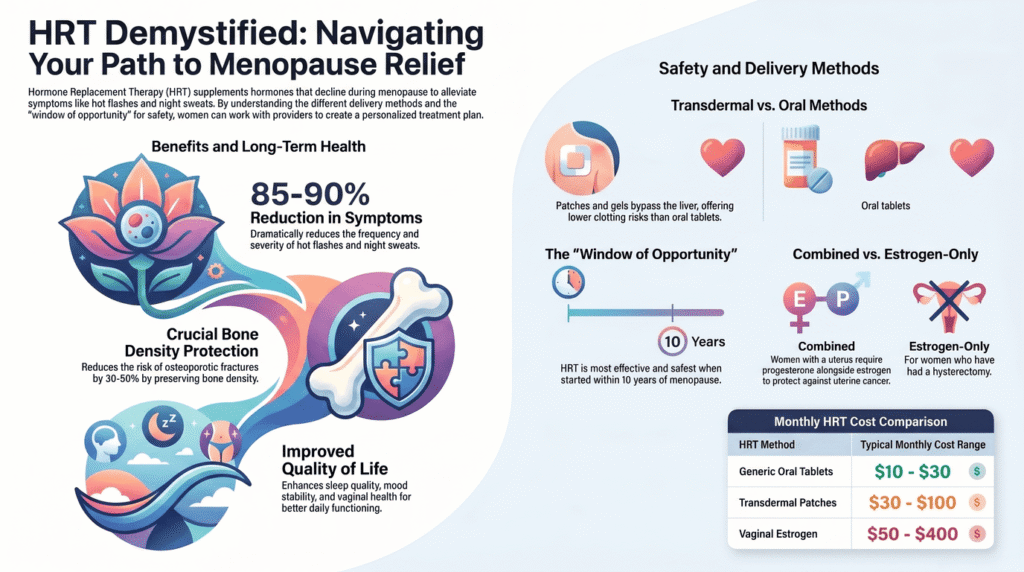
Hot Flashes and Night Sweats: HRT reduces the frequency and severity of vasomotor symptoms by up to 85-90%. Many women report dramatic improvements in sleep quality once night sweats subside, which positively affects energy, mood, and cognitive function.

Sleep Disturbances: Better sleep is one of the most life-changing benefits women report. When you’re not waking up drenched in sweat multiple times per night, your body can complete proper sleep cycles, leading to better mental clarity and emotional stability.

Vaginal and Urinary Symptoms: Estrogen prevents vaginal atrophy (thinning and drying of vaginal tissues), reducing discomfort during intercourse, urinary urgency, and recurrent infections. This aspect of HRT can significantly improve intimate relationships and overall comfort.

Mood Changes: While HRT isn’t a treatment for clinical depression, many women notice improved mood stability, less irritability, and reduced anxiety when hormone levels stabilize. The improvement in sleep quality also contributes to better emotional regulation.

Long-Term Health Protection

Beyond symptom management, HRT provides important protective benefits when started during the “window of opportunity” (typically within 10 years of menopause onset or before age 60):

Bone Health: Estrogen plays a crucial role in maintaining bone density. Women can lose up to 20% of bone density in the first five years after menopause, significantly increasing fracture risk. HRT effectively preserves bone density and reduces the risk of osteoporotic fractures by 30-50%.

Cardiovascular Benefits: When started early in menopause, HRT may offer cardiovascular protection, though this benefit is timing-dependent. Recent research suggests that women who start HRT within 10 years of menopause may have reduced risk of heart disease compared to those who don’t use HRT.

Cognitive Function: Some studies suggest HRT may support cognitive function and potentially reduce dementia risk when started during the menopausal transition, though research is ongoing in this area.

If you’re experiencing menopause symptoms and wondering whether HRT could help, DirectCare.ai offers convenient virtual consultations with providers who specialize in women’s hormone health. Their telehealth platform makes it easy to discuss your symptoms, get lab work ordered if needed, and receive a personalized treatment recommendation.
hormone replacement therapy infographic

How to Get Started with HRT

Beginning HRT involves several steps to ensure the treatment is safe and appropriate for your specific situation.

Initial Consultation

Your journey starts with a comprehensive medical evaluation. Your healthcare provider will review:

  • Your complete medical history, including any history of blood clots, heart disease, stroke, or hormone-sensitive cancers
  • Current medications and supplements
  • Family history of breast cancer, ovarian cancer, or cardiovascular disease
  • Severity and impact of your menopause symptoms
  • Your treatment goals and concerns

This conversation helps your provider assess whether HRT is appropriate and which type might work best for you.

Lab Testing and Assessments

While menopause is often diagnosed based on symptoms and age, some situations warrant hormone level testing:

  • Women experiencing premature menopause (before age 40)
  • Unclear diagnosis or atypical symptoms
  • Specific medical conditions requiring baseline measurements

Additional tests might include mammography, lipid panels, blood pressure checks, and bone density screening, depending on your age and risk factors.

Choosing Your HRT Regimen

Your provider will recommend a specific hormone type, dose, and delivery method based on:

  • Whether you have a uterus (determining estrogen-only vs. combined therapy)
  • Your symptom severity
  • Personal preferences regarding administration method
  • Medical conditions that might favor one delivery method over another
  • Cost and insurance coverage considerations

Most providers follow the principle of using the lowest effective dose for the shortest necessary duration, though many women safely use HRT for many years.

Monitoring and Adjustments

HRT isn’t a “set it and forget it” treatment. Expect follow-up appointments at:

  • 3 months: Assess initial response, side effects, and need for dose adjustments
  • 6-12 months: Evaluate ongoing effectiveness and any concerns
  • Annually: Comprehensive review including mammogram reminders and health screenings

Finding the right HRT regimen sometimes requires patience and adjustments. With DirectCare.ai, follow-up consultations are straightforward and convenient, allowing you to discuss how you’re responding to treatment without the hassle of scheduling in-person appointments weeks in advance.

HRT Delivery Methods

The way you take HRT significantly affects how your body processes the hormones, which can influence both effectiveness and side effects.

Oral Tablets

Pills are the most common form of HRT. You take them daily, typically at the same time each day for consistency.

Advantages: – Convenient and familiar – Well-studied with decades of data – Often covered by insurance

Considerations: – Pass through the liver (first-pass metabolism), which affects clotting factors – May not be ideal for women with certain liver conditions or increased clotting risk – Can affect cholesterol levels (sometimes beneficially)

Transdermal Patches

Patches deliver hormones through your skin directly into the bloodstream, bypassing the liver.

Advantages: – Avoid first-pass liver metabolism – Steady hormone levels with fewer peaks and valleys – Lower risk of blood clots compared to oral HRT – Only need changing once or twice weekly

Considerations: – Can cause skin irritation at application site – Visible on skin (though newer patches are quite discreet) – May not stick well if you exercise heavily or live in humid climates

Topical Gels and Creams

These are applied daily to the skin, usually on the arms, shoulders, or thighs.

Advantages: – Flexible dosing adjustments – Avoid liver metabolism like patches – No visible patch

Considerations: – Must be applied daily – Need to let dry before dressing or contact with others – Potential for transfer to partners or children through skin contact

Vaginal Preparations

Low-dose estrogen creams, tablets, or rings inserted into the vagina treat local symptoms effectively.

Advantages: – Highly effective for vaginal and urinary symptoms – Minimal systemic absorption with low-dose preparations – Can be used alone or combined with systemic HRT

Considerations: – Doesn’t address hot flashes or other systemic symptoms – Requires vaginal application (though rings stay in place for months)

Other Methods

Additional options include vaginal rings (systemic), skin sprays, and subcutaneous pellets, though these are less commonly used.

Understanding the Risks of HRT

No medical treatment is without risks, and HRT has received considerable attention regarding potential health concerns. Understanding these risks in context helps you make informed decisions.

Breast Cancer Risk

The relationship between HRT and breast cancer is complex and depends on multiple factors:

  • Type of HRT: Estrogen-only therapy shows little to no increased breast cancer risk and may even reduce it slightly. Combined HRT (estrogen plus progesterone) shows a small increased risk that becomes detectable after about 5 years of use.
  • Duration: Risk increases with longer duration of use, particularly beyond 5-10 years.
  • Baseline risk: Your personal breast cancer risk before starting HRT matters significantly. Women with family history or other risk factors need more careful consideration.

The absolute risk increase is small—roughly an additional 1-2 breast cancer cases per 1,000 women using combined HRT per year. For context, obesity, excessive alcohol use, and lack of exercise each carry similar or greater breast cancer risks.

Cardiovascular Risks

HRT’s effect on heart health is highly timing-dependent:

  • Early initiation: Starting HRT within 10 years of menopause (or before age 60) appears neutral or potentially protective for heart health.
  • Late initiation: Starting HRT more than 10 years after menopause increases cardiovascular risk and is generally not recommended.
  • Delivery method: Transdermal HRT (patches, gels) carries lower clotting and stroke risk than oral HRT.

Women with existing cardiovascular disease, history of blood clots, or multiple risk factors require careful evaluation before starting HRT.

Blood Clot Risk

Oral estrogen increases the risk of venous thromboembolism (blood clots in legs or lungs), particularly in the first year of use. This risk is higher for women who:

  • Are overweight or obese
  • Smoke
  • Have a personal or family history of blood clots
  • Have clotting disorders
  • Are immobile for long periods

Transdermal HRT (patches and gels) doesn’t increase clotting risk and is the preferred choice for women with elevated risk factors.

Stroke Risk

The stroke risk associated with HRT is small but increases with age and in women with cardiovascular risk factors. Again, transdermal preparations carry lower risk than oral forms.

Putting Risks in Perspective

For healthy women starting HRT during the appropriate window (within 10 years of menopause or before age 60), the absolute risks are quite small, especially when weighed against the quality-of-life benefits and bone protection HRT provides.

Your personal risk profile determines whether HRT is appropriate for you. DirectCare.ai providers conduct thorough risk assessments during consultations to ensure HRT is safe for your individual situation, taking into account your complete medical history and risk factors.

Who Shouldn’t Take HRT?

While HRT is safe for many women, certain conditions make it inappropriate or require extreme caution:

Absolute contraindications: – Known or suspected breast cancer – Other hormone-sensitive cancers – Undiagnosed vaginal bleeding – Current or history of blood clots – Active liver disease – History of heart attack or stroke – Known pregnancy

Relative contraindications (requiring careful evaluation): – Endometriosis – Uterine fibroids – Gallbladder disease – Migraine with aura – Strong family history of breast cancer – Elevated cardiovascular risk

If you have any of these conditions, discuss alternatives with your healthcare provider. Low-dose vaginal estrogen, non-hormonal medications, or lifestyle modifications might be appropriate alternatives.

Alternatives to HRT

If HRT isn’t suitable for you, or you prefer to try other approaches first, several alternatives exist:

Non-Hormonal Medications

  • SSRIs/SNRIs: Low-dose antidepressants can reduce hot flashes by 40-60%
  • Gabapentin: An anti-seizure medication effective for hot flashes
  • Fezolinetant (Veozah): A newer non-hormonal medication specifically for hot flashes
  • Vaginal moisturizers: Over-the-counter products for vaginal dryness

Lifestyle Modifications

  • Layered clothing and breathable fabrics
  • Maintaining healthy weight
  • Regular exercise
  • Stress reduction techniques
  • Avoiding triggers (spicy food, alcohol, caffeine)
  • Maintaining cool bedroom temperature

Complementary Approaches

  • Cognitive behavioral therapy for managing symptoms
  • Clinical hypnotherapy
  • Acupuncture (some evidence for hot flash reduction)

Supplements

While popular, most supplements lack strong evidence for menopause symptoms. Some women report benefits from: – Black cohosh – Soy isoflavones – Red clover

Always discuss supplements with your provider as they can interact with medications.

Cost of HRT

HRT costs vary significantly based on type, dosage, and whether you have insurance coverage.

Typical monthly costs: – Generic estrogen pills: $10-30 – Brand-name estrogen pills: $50-200 – Patches: $30-100 – Gels: $50-200 – Vaginal estrogen: $50-400 – Compounded bioidentical hormones: $100-500+

Additional costs: – Initial consultation: $100-300 (or insurance copay) – Follow-up visits: $50-150 each – Lab tests: $50-300 depending on what’s tested – Annual monitoring and screenings

Most insurance plans cover FDA-approved HRT formulations, though you may pay less with generic versions. Compounded bioidentical hormones are typically not covered by insurance and cost significantly more.

Prescription discount programs like GoodRx can reduce costs substantially if you’re paying out of pocket or if the discount price is lower than your insurance copay.

How Long Should You Take HRT?

The duration of HRT use is highly individual and depends on your goals, response to treatment, and personal risk factors.

Current guidelines suggest: – No arbitrary time limits for women who benefit from HRT – Regular reassessment (at least annually) of continuing need – Lowest effective dose – Discontinuation if risk factors change significantly

Many women use HRT for 5-10 years or longer. Some stop once symptoms resolve, while others continue long-term for quality of life and bone protection. Women who stop HRT may experience symptom recurrence, though symptoms are often less severe than originally.

The decision about duration should be made collaboratively with your healthcare provider based on your ongoing symptom management needs and health status.

Making Your Decision

Deciding whether to start HRT requires weighing multiple factors:

Consider HRT if you: – Have moderate to severe menopause symptoms affecting quality of life – Are within 10 years of menopause or under age 60 – Don’t have contraindications – Are at increased risk for osteoporosis – Have tried lifestyle modifications without sufficient relief

Take more time to decide if: – Your symptoms are mild and manageable – You’re more than 10 years past menopause – You have significant risk factors for breast cancer or cardiovascular disease – You haven’t tried lifestyle modifications or non-hormonal options

Remember, starting HRT doesn’t lock you in permanently. You can try it and stop if it doesn’t work for you or causes unacceptable side effects. Most women who try HRT find significant relief and improved quality of life.

Conclusion

Hormone replacement therapy remains one of the most effective treatments for menopause symptoms, offering rapid relief from hot flashes, night sweats, and other changes that can significantly impact daily life. When started at the appropriate time and used with careful medical supervision, HRT also provides important protective benefits for bone health.

The key is finding a healthcare provider who takes time to understand your individual situation, discusses both benefits and risks thoroughly, and creates a personalized treatment plan that aligns with your health goals and concerns.

Modern telemedicine has made accessing knowledgeable HRT providers easier than ever. DirectCare.ai specializes in women’s hormone health and offers comprehensive virtual consultations, making it simple to get expert guidance on whether HRT is right for you—no matter where you live.

Your menopause journey doesn’t have to mean suffering through symptoms or accepting a diminished quality of life. With the right information and medical support, you can make confident decisions about managing this transition and maintaining your health and vitality for years to come.


Medical Disclaimer: This article is for informational purposes only and does not constitute medical advice. Always consult with a qualified healthcare provider before starting, stopping, or changing any medication or treatment. Individual results may vary.

Affiliate Disclosure: This article contains affiliate links. We may earn a commission if you click through and make a purchase, at no additional cost to you.

Brew Your Way to Better Health: Why You’ll Fall in Love with the Bruusta Home Kombucha System

0
Bruusta LOW_POUR

As we age, maintaining a healthy gut becomes more important than ever. We often hear about the benefits of probiotics and “living foods,” but many store-bought options are packed with hidden sugars or lose their potency sitting on a supermarket shelf.

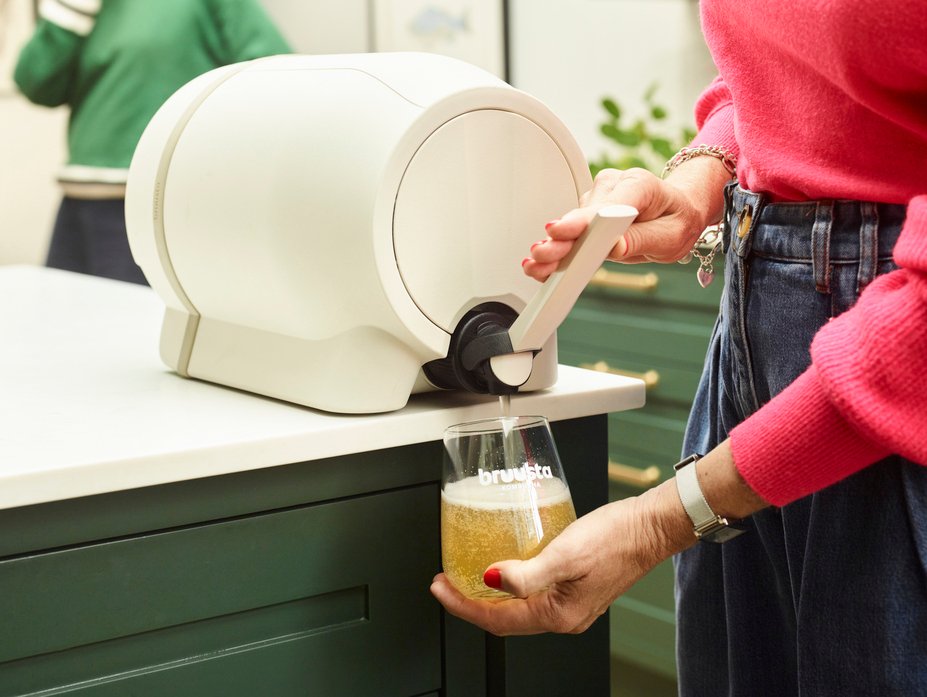
Enter Bruusta, a revolutionary home brewing system that will change the way you think about wellness. It’s no longer about a trip to the specialty grocery store; it’s about a fresh, fizzy, and fun ritual right on your kitchen counter.

What Exactly is Kombucha?

For those who haven’t tried it, kombucha is a fermented tea that has been enjoyed for centuries. It’s naturally effervescent and rich in organic acids, natural antioxidants, and probiotics.

For the health-conscious senior, it’s a fantastic alternative to sugary sodas or even a glass of wine. As one Bruusta user recently shared, “I’ve found a substitute drink for a glass of wine; my body is thanking me already.”

Bruusta LOW_POUR

The Bruusta Difference: What is a “Bruu Base”?

Traditional kombucha brewing can be a messy, “mad scientist” affair involving glass jars and a rubbery culture known as a SCOBY. Bruusta has simplified this entirely with the Bruu Base.

The Bruu Base is a specially formulated, organic-rich concentrate that removes the guesswork. You don’t need to worry about ratios or contamination. You simply add your Bruu Base (available in flavors like Original, Raspberry, or Ginger) to the system and let the device do the heavy lifting. It ensures every batch is low in sugar, high in nutrients, and perfectly balanced.

How It Works: Fresh Kombucha in Under 10 Minutes

The most common hurdle for older adults wanting to brew at home is the “fuss.” Bruusta has eliminated that. The process requires less than 10 minutes of hands-on time:

  1. Brew: Mix your Bruu Base in the Bruusta brewer and let it sit on your counter for 4 days.
  2. Chill: Move it to the fridge for 2 days to lock in the fizz.
  3. Enjoy: Dispense fresh, chilled kombucha right from the tap.

There are no heavy bottles to lug from the store and no risk of “exploding bottles” that can happen with DIY kits. As user Merritt M. noted, “I made kombucha in the past and had a bottle of pineapple explode… This system makes it so much better!”

Brusta Kombucha

Design Your Perfect Bundle

Ready to start your wellness journey? Bruusta makes it easy to Build Your Own Bundle starting from just $142.34. Here is how to customize your experience:

  • Step 1: The Bruusta System. The essential brewing device (currently 35% off for new customers with auto-delivery!).
  • Step 2: Pick Your Bases. Choose at least two (Original, Raspberry, or Ginger).
  • Step 3: Add Flavor Shots (Optional). Want to get creative? Add flavor shots like Strawberry & Blueberry or Carrot, Orange & Turmeric to customize each glass.
  • Step 4: The “Bruusta Buddy.” This optional add-on allows you to have one batch fermenting on the counter while you’re drinking another from the fridge—ensuring you never run out.
Bruusta whole package

Why We Recommend It for Senior Affair Readers

We love products that promote independence and health. The Bruusta system even comes with a helpful app that sends reminders so you never forget which day of the brew you’re on. It’s a “set it and forget it” hobby that rewards you with a delicious, health-boosting beverage.

Whether you’re a “minimalist” looking for a clean Original brew or a “flavor explorer” wanting to mix Yuzu and Matcha, the freedom to create is yours.

Special Offer: New customers can save 35% with Auto-Delivery, making it easier and more affordable than ever to keep your gut health on track.

Ready to start brewing? Visit Bruusta to build your bundle today and join the community of home brewers who are choosing fresh over store-bought.

Restoring the Golden Years: How Sunmed’s New CBN Gummies Are Changing the Sleep Game for Seniors

0
Sunmed full Spectrum Sleep CBN Gummies

For many seniors, the “golden years” are often interrupted by restless nights. Whether it’s a mind that won’t stop racing or the physical discomfort that comes with age, getting a solid eight hours can feel like a distant memory. Traditional options often come with a “hangover” effect, leaving you groggy the next morning.

Sunmed is changing that narrative with their best-selling Full Spectrum Sleep CBN Gummies. Backed by a rigorous clinical trial and a plant-first philosophy, these gummies are becoming a staple in senior wellness routines across the country.

The Science of the “Sleep Cannabinoid”

The secret to this formula’s success is a potent 18mg dose of CBN (Cannabinol). While CBD is well-known for its balancing properties, CBN is emerging in the scientific community as the premier “sleep cannabinoid.”

When paired with Full Spectrum CBD, these compounds create what experts call the “Entourage Effect.” This is a botanical synergy where the plant’s components work better together than they do in isolation, providing a deeper sense of calm for the body and mind.

Proven Results: The Clinical Edge

In a world of anecdotal “miracle cures,” Sunmed stands apart by putting their products to the test. They partnered with Radicle Science for a double-blind, placebo-controlled clinical trial involving 660 participants. The results were clear:

  • 86% of participants reported improved sleep.
  • 78% experienced a significant reduction in daytime fatigue.
  • 76% reported a decrease in daily anxiety.

For seniors, the most important takeaway is the reduction in fatigue. Unlike melatonin—which can sometimes disrupt the body’s natural hormone production—or heavy sedatives, Sunmed’s formula is designed to work with your natural circadian rhythm.

Sleep Gummies BS 30ct 3300131 1080x

Why It’s a Safer Choice for Seniors

Safety and transparency are non-negotiable when it comes to supplements. Sunmed ensures every batch is third-party lab tested, with results easily accessible to consumers.

  • No “Gummy Hangover”: The vegan, plant-rich formula is melatonin-free. This means no morning brain fog, allowing you to wake up feeling refreshed and ready for your morning walk or time with the grandkids.
  • Ease of Use: For those who struggle with swallowing large pills, these blueberry-flavored gummies are a delicious and simple addition to a nightly ritual.
  • Full Spectrum Benefits: Beyond just sleep, the full spectrum of cannabinoids helps support an overall sense of equilibrium in the body’s endocannabinoid system.

A Natural Path to Better Rest

Quality sleep is the foundation of healthy aging. It supports memory, mood, and immune function. If you’ve been looking for a way to reclaim your nights without relying on habit-forming prescriptions, Sunmed’s Full Spectrum Sleep CBN Gummies offer a science-backed, nature-driven alternative.

As we celebrate the milestones of a long life, we shouldn’t have to sacrifice our rest. Sometimes, the best way to move forward is to simply get a better night’s sleep.


To learn more about the clinical findings or to find a Sunmed location near you, visit GetSunmed.com.

Cherry Blossom Season in Kyoto: Senior Travel Guide to Japan 2026

0
Cherry Blossom Season in Kyoto

Japan’s cherry blossom season — called sakura — is widely considered the most beautiful natural spectacle in the world. For one to two weeks each spring, Japan’s ancient capital of Kyoto transforms into a dreamscape of pale pink and white blossoms against centuries-old temples, wooden machiya townhouses, and moss-covered stone gardens. For seniors who have always wanted to experience Japan, cherry blossom season is the finest possible introduction to one of the world’s most gracious travel destinations.

Kyoto’s sakura typically peaks in late March to early April — aligning beautifully with spring travel for retirees who have the flexibility to plan around the bloom forecast.

In This Article

Why Kyoto Is the World’s Finest Cherry Blossom Destination

Kyoto served as Japan’s imperial capital for over a thousand years, and the concentration of temples, shrines, gardens, and imperial villas within the city is unmatched anywhere in the world. With over 1,600 Buddhist temples and 400 Shinto shrines, Kyoto is a walking pilgrimage through one of humanity’s great civilizations. When cherry trees bloom among these ancient structures, the result is transcendent.

The city is also remarkably accessible by international standards — clean, safe, efficient public transportation, meticulous visitor signage in English, and a culture of exceptional hospitality toward older visitors (Japan deeply respects its elders, and this extends to visiting seniors from abroad).

Best Cherry Blossom Spots for Senior Travelers in Kyoto

  • Maruyama Park: Kyoto’s most popular hanami (flower viewing) park, centered on a magnificent weeping cherry tree that glows when lit at night. Flat, accessible paths throughout.
  • Philosopher’s Path (Tetsugaku-no-Michi): A 2 km canal-side path lined with hundreds of cherry trees. Gentle, flat, and one of Kyoto’s most beloved walks. Complete it in sections if needed.
  • Kiyomizudera Temple: Perched on a mountainside, this UNESCO site offers sweeping views of Kyoto with cherry trees in the foreground. The approach involves uphill walking — take it slowly and use the handrails.
  • Nijo Castle gardens: Flat, accessible gardens surrounding a 17th-century shogun’s castle with beautiful cherry tree plantings throughout.
  • Arashiyama district: Along the Oi River, framed by mountains and cherry trees. Accessible by taxi or rickshaw.

Accessibility in Kyoto for Senior Travelers

  • Transportation: Kyoto’s city buses and subway are highly accessible. Hire a taxi or use Uber Japan for flexible, accessible point-to-point travel.
  • Rickshaws (jinrikisha): Human-pulled rickshaws are widely available in tourist areas and are a wonderful, seated way to tour Arashiyama and the geisha district of Gion.
  • Temple terrain: Many Kyoto temples involve stone staircases and uneven paths. Research individual sites before visiting. Nijo Castle, Ryoanji (rock garden), and Kinkakuji (Golden Pavilion) have more accessible grounds than others.
  • Shoes: Wear slip-on shoes — you will remove them repeatedly when entering traditional buildings and temples.

Beyond the Blossoms: Kyoto’s Cultural Depth

  • The Golden Pavilion (Kinkakuji): One of Japan’s most iconic images — a Zen Buddhist temple covered in gold leaf, reflected in a mirror pond. Accessible grounds.
  • Ryoanji Rock Garden: The world’s most famous Zen garden — 15 stones arranged on raked gravel. A profoundly contemplative experience. Accessible viewing platform.
  • Nishiki Market: Kyoto’s “Kitchen” — a covered indoor market with 400 years of history, narrow but fascinating, full of local foods, pickles, and Japanese culinary culture.
  • Tea ceremony experience: Many Kyoto tea houses offer seated, guided tea ceremony experiences for visitors. A peaceful, culturally immersive afternoon activity.
  • Fushimi Inari Shrine: The famous tunnel of 10,000 vermilion torii gates. The full hike is strenuous, but the lower trails (first 15 minutes) are accessible and still spectacular.

Practical Japan Travel Tips for Seniors

  • IC Card (transportation card): Load an IC card (like ICOCA) at the airport for seamless transit across all Kyoto buses and subways — no fumbling for cash
  • JR Pass: If visiting multiple Japanese cities, the Japan Rail Pass offers excellent value for bullet train travel between Tokyo, Kyoto, Hiroshima, and Osaka
  • Cash culture: Japan remains largely a cash society. Bring sufficient yen — many smaller temples, restaurants, and shops do not accept credit cards
  • No tipping: Tipping is not customary in Japan and can cause embarrassment. Excellent service is simply the Japanese standard.
  • Medical considerations: Japan’s healthcare system is excellent. Purchase comprehensive travel insurance with medical coverage before departure.
  • Tour operators: Road Scholar and Overseas Adventure Travel both offer senior-focused Japan group tours with pace and accessibility considerations built in

Where to Stay in Kyoto for Cherry Blossom Season

  • Traditional Ryokan: A Japanese inn experience — sleeping on futons, wearing yukata robes, onsen (hot spring) bathing, and exquisite kaiseki meals. Many ryokan can accommodate Western beds on request.
  • Hyatt Regency Kyoto: Modern, luxurious, fully accessible, excellent English-speaking staff — one of the finest international hotels in Kyoto
  • Hotel Granvia Kyoto: Directly connected to Kyoto Station — the most convenient location for seniors, with easy access to all transportation

Cherry blossom season is peak travel in Japan. Book hotels at least 6–9 months in advance. Compare at Booking.com.

More International Senior Travel Guides

SeniorAffair.com is supported by affiliate partnerships.

Portugal Douro River Cruise: The Ultimate Senior Travel Guide 2026

0
Senior Travel Guide to Portugal 2026

If there is one travel experience that consistently tops senior travelers’ lists for comfort, cultural richness, and sheer beauty, it is a Douro River cruise through Portugal’s wine country. Designed from the ground up for ease, a Douro river cruise eliminates every logistical challenge of traditional travel: you sleep in the same comfortable cabin each night, your luggage never leaves your room, meals are included, and the world’s most beautiful wine country rolls past your panoramic window at a leisurely pace.

Portugal is one of the world’s most senior-friendly international destinations: no visa required for U.S. citizens for stays up to 90 days, English widely spoken in tourist areas, a strong U.S. dollar exchange rate, and a culture of warmth and hospitality toward older visitors. A Douro cruise is the finest way to experience it.

In This Article

Why the Douro River Cruise Is Perfect for Senior Travelers

  • Unpack once: Your cabin is your home for the entire journey — no repeated hotel check-ins or luggage hauling
  • Everything included: Meals, shore excursions, wine tastings, onboard lectures, and entertainment are typically all included in the cruise price
  • Manageable shore excursions: Douro shore excursions are generally low-impact — vineyard walks, village tours, tastings, and scenic drives. No strenuous hiking required.
  • Small ships: Douro river ships carry 100–200 passengers — dramatically more intimate than ocean cruises
  • Medical access: Ships carry medical staff or have protocols for accessing local hospitals at each port stop
  • No seasickness: River cruising on the Douro involves calm, smooth water — a significant advantage for seniors who find ocean motion challenging
  • Spectacular scenery from your deck: Terraced vineyards plunging to the river, medieval fortresses on ridgelines, and ancient stone villages — all visible from your ship’s sun deck without a single step off the boat

Best River Cruise Lines for Senior Travelers on the Douro

Viking River Cruises

Viking is consistently rated the top river cruise line for seniors 55 and older. Their ships are purpose-built for comfort, their excursions are thoughtfully paced for older travelers, and their onboard enrichment programming — lectures, cooking demonstrations, cultural presentations — is outstanding. Viking’s Douro itineraries typically run 8–10 days and include Porto, Régua, Pinhão, and the Spanish border region.

Avalon Waterways

Avalon’s Suite Ships feature open-air panoramic window suites that transform your stateroom into a floating balcony. Their Douro itineraries are excellent value and consistently receive high marks from senior travelers.

Tauck

Tauck’s Douro cruises include more exclusive access and smaller group experiences. At a higher price point, they offer an especially intimate and culturally rich experience.

Scenic

Scenic’s all-inclusive model covers virtually everything including premium beverages, butler service, and butler-drawn baths in the suites. Their “Space-Ships” feature an innovative design that makes the outdoor deck experience exceptional.

Compare Douro cruise packages at Expedia Cruises or contact a senior travel specialist. AARP Travel frequently negotiates group rates on river cruises.

Porto: The Douro Cruise Gateway

Most Douro cruises begin or end in Porto, one of Europe’s most beautiful and underrated cities. Porto (or Oporto) sits at the mouth of the Douro River, with its historic center — a UNESCO World Heritage Site — cascading down steep hillsides above the water.

The city is famous for its port wine cellars (lodges) in the Gaia district across the river from downtown, its magnificent azulejo tile facades, its magnificent Baroque churches, and its vibrant food scene. Allow at least 2–3 days in Porto before or after your cruise.

Must-See in Porto

  • Livraria Lello: Considered one of the world’s most beautiful bookshops. Often cited as a partial inspiration for Harry Potter’s Hogwarts.
  • Ribeira district: The riverside neighborhood, UNESCO-listed, with cafes, restaurants, and colorful facades along the waterfront
  • Port wine lodge tastings in Vila Nova de Gaia: Taylor’s, Graham’s, and Sandeman all offer accessible guided tasting experiences
  • Santa Justa Lift: A beautifully ornate iron elevator connecting the lower and upper parts of the city — accessible, charming, and a city icon

Shore Excursions for Senior Travelers on the Douro

  • Quinta (Vineyard) Tours: The Douro Valley’s wine-producing estates offer guided tours of the vineyards, winemaking facilities, and barrel rooms — mostly flat or gently sloped, with generous tasting sessions
  • Pinhão village: A tiny, beautiful Douro Valley wine village accessible by short walk from the dock. Famous for its azulejo-decorated train station.
  • Salamanca, Spain: Many Douro itineraries include a day trip to this stunning Spanish university city across the border. A UNESCO Heritage city of golden sandstone architecture.
  • Régua Wine Museum: An accessible, world-class museum dedicated to the history and culture of Douro wine production
  • Côa Valley rock art: UNESCO-listed prehistoric rock engravings — some of the oldest art in the world. Accessible guided tours available.

The Wine Culture of the Douro Valley

The Douro Valley is one of the oldest demarcated wine regions in the world, established by the Marquis of Pombal in 1756. It produces both port wine — the fortified dessert wine the region is famous for — and increasingly acclaimed dry red and white table wines.

For seniors who enjoy wine, the Douro offers a once-in-a-lifetime education and tasting experience. Ship sommelier programs, onboard wine pairing dinners, and vineyard tastings at multiple estates create a rich, immersive wine journey without requiring any particular prior knowledge.

Best Time of Year to Cruise the Douro

  • Spring (April–June): Wildflowers on the terraced hillsides, perfect temperatures (65–75°F), lower prices. One of the most beautiful seasons.
  • Summer (July–August): Peak season, higher prices, very warm (85–95°F) in the interior valley. Ships are air-conditioned throughout.
  • Harvest season (September–October): The most spectacular time to visit — the grape harvest (vindima) is underway, terraces are golden, and the atmosphere at the quintas is festive and vibrant. Highly recommended for seniors.
  • Winter (November–March): Fewer tourists, lowest prices, green countryside. Some cruise lines reduce Douro sailings in winter; check schedules.

More International Senior Travel Guides for 2026

SeniorAffair.com is supported by affiliate partnerships. Some links may earn us a commission at no additional cost to you.

Alaska State Fair 90th Anniversary 2026: Senior Travel Guide to Palmer, Alaska

0
The Alaska State Fair turns 90 in 2026

The Alaska State Fair turns 90 in 2026 — and this milestone event in Palmer, Alaska is one of the most uniquely American travel experiences available to senior travelers. Held annually in late August at the end of Alaska’s spectacular summer, the fair draws over 300,000 visitors to the Matanuska-Susitna Valley, one of the most scenically dramatic settings of any state fair in the country.

Giant vegetables grown in Alaska’s famous summer daylight, world-class country and rock concerts, Pioneer Peak framing the horizon, Alaska Native cultural demonstrations, and the last golden days of an Alaskan summer — this is an extraordinary reason to make the trip north. And for seniors pairing it with an Alaska cruise, the timing is perfect.

The 90th Anniversary: What’s Special in 2026

The fair’s 90th anniversary in 2026 brings expanded programming, special historical exhibitions on Palmer’s agricultural history, and a concert lineup honoring the fair’s musical legacy. The Borealis Concert Series — the fair’s headline music program — has confirmed multiple major acts for the anniversary edition.

The fair’s Giant Vegetable competitions are a beloved Alaska tradition: cabbages approaching 100 pounds, pumpkins over 1,000 pounds, and vegetables of every variety grown in the 20+ hours of daily summer sunlight. These competitions draw crowds from across the state and are a uniquely Alaskan spectacle.

Senior-Friendly Activities at the Alaska State Fair

  • Giant Vegetable Exhibition: Free with fair admission; flat, easy navigation; deeply entertaining
  • Alaska Native Cultural Presentations: Demonstrations of traditional dance, craft, and storytelling by Alaska Native artists
  • Borealis Concert Series: Reserved grandstand seating available; world-class performers in an outdoor mountain setting
  • Pioneer Village: A reconstructed historical village showcasing Alaska’s agricultural and homesteading history
  • Farm animal barns: A classic state fair experience — calm, accessible, and beloved by visitors of all ages
  • Fairground accessibility: Paved paths throughout; wheelchair rentals available at the main entrance; accessible restrooms

Extending Your Trip: Anchorage and the Matanuska Valley

Palmer is approximately one hour north of Anchorage — easily accessible by car or shuttle. An Alaska State Fair trip pairs beautifully with:

  • Denali National Park: A 3–4 hour drive north of Anchorage; accessible bus tours into the park offer stunning wildlife viewing without significant walking required
  • Kenai Fjords National Park (Seward): Glacier and wildlife cruises departing from Seward, 2.5 hours south of Anchorage. One of the finest scenic experiences in North America, entirely accessible from a boat deck.
  • Alaska Wildlife Conservation Center: A 200-acre sanctuary between Anchorage and Seward where visitors drive through to see brown bears, bison, musk ox, caribou, and wolves. Accessible from your vehicle.
  • Anchorage Museum: World-class art and history museum in downtown Anchorage. The Alaska Native collections are particularly outstanding.

Pairing the Alaska State Fair with an Alaska Cruise

August is the prime month for Alaska cruises — and the State Fair falls at the tail end of cruise season. For seniors interested in combining both experiences, consider:

  • A southbound cruise from Seward or Whittier (near Anchorage) following the fair
  • A roundtrip cruise from Seattle with Anchorage pre-cruise extension
  • Princess Cruises, Holland America, and Celebrity Cruises all offer Alaska itineraries with Anchorage connections

This combination — Alaska State Fair, scenic Anchorage extensions, and an Inside Passage cruise — makes for one of the finest senior travel itineraries available in the United States. Book Alaska cruise packages through Expedia or directly with cruise lines.

More Senior Travel Guides for 2026

SeniorAffair.com is supported by affiliate partnerships.

New Orleans Jazz & Heritage Festival 2026: Senior Travel Guide

0
New Orleans Jazz & Heritage Festival

Jazz Fest is one of the greatest music events in the world — and it is remarkably senior-friendly when approached with the right strategy. Held at the Fair Grounds Race Course over two four-day weekends in late April and early May, Jazz Fest combines world-class music across a dozen stages, the finest festival food in America, Louisiana craft traditions, and the irreplaceable soul of New Orleans culture.

Unlike Mardi Gras, Jazz Fest is ticketed, organized, and held in a single venue — making it far easier to navigate comfortably. For seniors who love music ranging from jazz to blues, gospel, R&B, Cajun, zydeco, and classic rock, the lineup consistently delivers once-in-a-lifetime performances.

Best Stages and Venues for Seniors at Jazz Fest

The Gospel Tent

Perhaps the finest single musical experience at Jazz Fest. A large covered tent with bleacher seating hosts continuous gospel performances from morning through afternoon. The music is transcendent, the shade is welcome, and the seated format is ideal for seniors. Plan to spend at least two hours here.

The Jazz Tent

Covered, climate-moderated, and featuring the finest jazz musicians in the world in an intimate setting. Consistently one of the most senior-friendly spaces at the festival.

The Heritage Stage

Traditional Louisiana music — Cajun, zydeco, bluegrass, Afro-Caribbean. The authentic cultural heart of Jazz Fest.

Congo Square Stage

Major headliners on the main outdoor stage. ADA viewing areas are designated and available — arrive early at these sections to secure a good spot.

The Food at Jazz Fest: A Senior’s Eating Guide

The food at Jazz Fest is not incidental — it is central. These are the essential dishes:

  • Crawfish Monica: Rotini pasta in a rich crawfish cream sauce. The festival’s most iconic dish, available only at Jazz Fest.
  • Cochon de Lait Po’Boy: Slow-roasted suckling pig on French bread. Extraordinary.
  • Creole cream cheese ice cream: A uniquely New Orleans flavor from local vendors.
  • Mango freeze: A refreshing frozen mango treat — essential on a warm afternoon.
  • Pheasant, quail and andouille gumbo: One of the finest versions of gumbo you will ever taste.

Pace your eating — the portions are generous and the temptation to try everything is real. Many seniors find that eating early (before noon) and at less-crowded food stations reduces wait times significantly.

Accessibility at the Fair Grounds

  • Designated accessible parking with golf cart shuttle to the festival entrance
  • ADA viewing areas at all major stages — these fill up; arrive 30–45 minutes before headliners
  • Accessible restrooms throughout the grounds
  • Wheelchairs and scooters are permitted on the grounds; paths are a mix of pavement and grass
  • Medical personnel on site throughout the festival
  • The Fair Grounds can reach temperatures of 85–90°F during afternoon hours in late April/early May — stay hydrated and seek shade regularly

Senior Tips for Jazz Fest Success

  • Attend on Thursday or Friday — significantly smaller crowds than weekends with identical programming
  • Arrive when gates open (11 a.m.) and leave by 4 p.m. to avoid peak heat and exit traffic
  • Bring a small folding seat or low-profile stadium chair — permitted in most areas
  • Wear comfortable shoes — the grounds involve walking on grass, which can be uneven
  • Review the full stage schedule before you go and prioritize your must-see performances — there are always conflicts worth planning around
  • Single-day tickets are the most flexible option; multi-day passes offer savings if attending multiple days

More Senior Travel Guides for 2026

SeniorAffair.com is supported by affiliate partnerships.

Philadelphia America 250th Celebration 2026: Senior Travel Guide

0

If Washington D.C. is the symbolic heart of America’s 250th birthday, Philadelphia is its birthplace. The Declaration of Independence was signed here. The Constitution was written here. Independence Hall, the Liberty Bell, and Congress Hall — the physical sites where the American republic was invented — are all within walking distance in Philadelphia’s Old City neighborhood. In 2026, Philadelphia is hosting its own extraordinary calendar of Semiquincentennial events, making it one of the most significant American travel destinations of the year for history-loving seniors.

Key Philadelphia 250 Events for Seniors

  • Independence National Historical Park: Expanded programming throughout 2026 including an expanded Independence Day celebration, reimagined December Crossing Reenactments, and upgrades to the Visitor Center Gallery. The park service plans significantly enhanced interpretive experiences throughout the anniversary year.
  • Penn Museum — First Americans Gallery: A major new gallery exploring Indigenous tribal history through 250 artifacts, opening in 2026 in close collaboration with Indigenous consulting curators.
  • Mann Center 50th Anniversary concerts: The beloved open-air music venue celebrates its own 50th anniversary with major performances, including the Philadelphia Orchestra. Accessible outdoor concert venue.
  • Philadelphia Juneteenth Parade & Festival (June 21): A powerful annual celebration of freedom and American history — particularly resonant in 2026’s anniversary context.

Essential Philadelphia Sites for Senior Travelers

  • Independence Hall: Free timed-entry tickets (book in advance) for guided tours of the room where both the Declaration and Constitution were created. Fully accessible.
  • Liberty Bell Center: Free, accessible, and one of the most emotionally resonant objects in American history. The bell’s crack and its history of abolitionist symbolism are explored in depth.
  • Museum of the American Revolution: World-class, purpose-built museum dedicated to the Revolutionary War period. Accessible throughout, excellent multimedia experiences.
  • Philadelphia Museum of Art: The “Rocky steps” museum houses one of America’s finest art collections. Senior discounts available. Accessible via elevator throughout.
  • Reading Terminal Market: One of America’s greatest indoor food markets — Pennsylvania Dutch baked goods, Amish cheeses, fresh seafood, and the best cheesesteaks in the city. Flat, accessible, extraordinary.

More Senior Travel Guides for 2026

SeniorAffair.com is supported by affiliate partnerships.

Smithsonian 250th Festival on the National Mall 2026: Senior Travel Guide (June 18 – July 12)

0
Smithsonian 250th Festival

For one month in the summer of 2026, the National Mall becomes the greatest free cultural event in American history. The Smithsonian’s 250th Anniversary Festival transforms Washington D.C.’s two-mile lawn — from the Capitol to the Washington Monument — into an outdoor celebration of American culture, science, creativity, and diversity. All free. All accessible. All extraordinary.

For seniors who grew up with the Smithsonian as America’s “attic,” this event is a deeply personal homecoming. This guide covers what to expect, how to manage the summer heat, and how to make the most of this once-in-a-generation event.

What to Expect at the Smithsonian 250th Festival

The Smithsonian Folklife Festival (the annual predecessor to this expanded event) traditionally draws 500,000+ visitors over two weeks. The 2026 edition runs for nearly four weeks and is significantly larger — featuring multiple themed pavilions representing every Smithsonian museum’s collections, live performances, interactive demonstrations, and featured storytellers.

Expect pavilions covering American music heritage, space exploration, Indigenous cultures, natural history, innovation and technology, food traditions, and fine art. Smithsonian scholars and curators will be present throughout for lectures, guided experiences, and direct conversation with visitors.

Senior Strategy for the Festival

  • Go on weekdays: Weekend crowds on the Mall during summer can be intense. Tuesday through Thursday offer the same programming with significantly fewer people.
  • Go in the morning: Washington D.C. summers are hot and humid. Arrive at 9–10 a.m., spend three to four hours, and return to an air-conditioned space by midday. Evening returns (after 5 p.m.) are also comfortable.
  • Use the Smithsonian museums as rest points: All Smithsonian museum buildings are free and air-conditioned. Plan your mall time between museum visits.
  • Accessible tram service: Check the festival website for accessible transportation between pavilions — the Mall’s length (about a mile) requires planning for seniors with limited mobility.
  • Hydration is critical: Bring water. D.C. summer heat combined with extensive outdoor walking is a serious consideration for older adults.

Pair the Festival with These D.C. Experiences

  • The National Museum of American History’s 250th anniversary exhibition (see our full D.C. guide)
  • The National Gallery of Art’s block party (weekend of June 6)
  • Evening concerts at the Kennedy Center (air-conditioned, world-class performances)
  • The National Cathedral’s summer concert series

More Senior Travel Guides for 2026

SeniorAffair.com is supported by affiliate partnerships.

Charleston Festival of Houses & Gardens 2026: Senior Travel Guide to South Carolina

0
Charleston Festival of Houses & Gardens 2026: Senior Travel Guide to South Carolina

Charleston, South Carolina is one of the most beautiful cities in America — and in spring, it becomes something almost impossibly lovely. Azaleas, camellias, and wisteria cascade over centuries-old garden walls. The air smells of salt marsh and Confederate jasmine. Antebellum mansions throw open their doors for tours. And the food — oh, the food.

The Charleston Festival of Houses and Gardens runs from March 18 through April 11, 2026. For seniors who love history, architecture, Southern culture, and magnificent gardens, this is one of the finest travel experiences in the eastern United States.

In This Article

The Festival of Houses and Gardens

Organized by the Historic Charleston Foundation since 1947, this three-week festival opens private antebellum homes, gardens, and plantations to the public — many of which are never otherwise accessible. Self-guided and docent-led tours wind through Charleston’s most historic neighborhoods, revealing interiors that preserve 18th and 19th-century decorative arts, furniture, and architecture.

For seniors who love American history and decorative arts, this festival is extraordinary. These are real homes — not museum recreations — that have survived the Revolutionary War, the Civil War, and nearly 300 years of Southern history. The stories told by docents are layered, nuanced, and unforgettable.

Tickets are available for individual home tours or combination packages. Many tours are walking-based through historic neighborhoods, so wear comfortable shoes. The Historic Charleston Foundation offers accessible tour options for visitors with mobility needs — contact them in advance.

Charleston in Spring: The Most Beautiful Season

March and April in Charleston bring mild temperatures (60–75°F), spring blooms across every garden and balcony, and lower humidity than the summer months. This is unambiguously the best time of year to visit the city — and it aligns perfectly with the festival.

The streets of the Historic District are lined with blooming azaleas in every shade of pink and red. The Battery (the waterfront promenade) is framed by ancient live oaks draped in Spanish moss. Rainbow Row — a series of 13 brightly painted Georgian row houses — glows in the spring light. Every corner photograph in Charleston in spring looks like a painting.

Charleston Neighborhoods to Explore

  • The Historic District (South of Broad): The heart of old Charleston — antebellum mansions, the Battery, Rainbow Row, White Point Garden. Best explored by carriage tour if walking is difficult.
  • French Quarter: Galleries, churches, and the Charleston City Market. The Gibbes Museum of Art is here, with an excellent collection of American portraiture.
  • Harleston Village: A quiet residential neighborhood ideal for gentle walking among historic homes and spring gardens.
  • King Street: Charleston’s shopping and restaurant corridor. Excellent boutiques, antique stores, and some of the city’s finest restaurants.

Dining in Charleston: A Senior Food Lover’s Paradise

Charleston has become one of America’s finest food cities, with a cuisine rooted in Lowcountry tradition and elevated by world-class chefs:

  • Husk: Arguably the most important Southern restaurant in America. Ingredients sourced entirely from the South. Reservations required.
  • FIG: Farm-to-table Lowcountry cuisine in a warm, unhurried atmosphere. One of Charleston’s most beloved restaurants.
  • Poogan’s Porch: Victorian house restaurant serving classic Southern comfort food — shrimp and grits, she-crab soup, biscuits. Perfect for seniors who want a traditional Charleston dining experience.
  • The Obstinate Daughter: On nearby Sullivan’s Island, this is one of the finest seafood restaurants in the region. Worth the 20-minute drive.
  • Callie’s Hot Little Biscuit: A Charleston institution. The cheese biscuits alone justify the visit.

Day Trips from Charleston

  • Magnolia Plantation and Gardens: One of America’s oldest public gardens, in bloom during the festival period. Accessible tram tours through the grounds.
  • Middleton Place: America’s oldest landscaped garden, dating to 1741. Stunning spring azalea blooms. Tram tours available.
  • Boone Hall Plantation: Famous for its Avenue of Oaks — a half-mile drive lined with moss-draped live oaks. Guided tours of the grounds and slave cabin interpretive exhibits.
  • Beaufort, SC (70 miles south): A smaller, quieter Lowcountry town with its own beautiful antebellum architecture and waterfront. A lovely day trip or overnight extension.

Accessibility Tips for Charleston

Charleston’s historic streets present some challenges:

  • Cobblestone streets in the historic district require careful footing. Wear sturdy shoes with grip.
  • Many historic homes have steps — inquire with the festival about homes with accessible ground-floor access
  • Carriage tours are the most accessible way to see the historic district without walking — available throughout the tourist season
  • CARTA (Charleston Area Regional Transportation Authority) operates accessible buses throughout the city
  • Rideshare (Uber/Lyft) is widely available and the most flexible option for seniors with mobility needs

Where to Stay in Charleston

  • The Planters Inn: In the heart of the historic district, elegant, boutique, and the home of Peninsula Grill — one of Charleston’s finest restaurants
  • Zero George Street: Boutique hotel in a restored historic home. Personalized service, beautiful rooms, excellent breakfast
  • Charleston Marriott: Across the Ravenel Bridge in North Charleston — modern, accessible, lower price point with easy access to downtown
  • Kiawah Island Golf Resort (30 minutes south): For seniors who want a resort experience combined with a Charleston visit — world-class golf, spa, and beach

Book at Booking.com and filter for accessible rooms. Spring dates fill quickly — book 3–4 months in advance.

More Senior Travel Guides for 2026

SeniorAffair.com is supported by affiliate partnerships.