
Disclosure: SeniorAffair may earn a commission when you buy through links on this page, at no extra cost to you.
Over-the-counter hearing aids cost far less than clinic-fitted devices, and you can lower the price further with tax-advantaged accounts, financing and trial periods.

Use FSA or HSA dollars
OTC hearing aids are an eligible medical expense. MDHearing accepts FSA and HSA payments at checkout through Truemed, which means you buy with pre-tax money.
Spread out the cost
MDHearing offers monthly payments through Affirm. Compare the APR to your credit card before choosing it.
Check Medicare Advantage benefits
Original Medicare does not cover hearing aids, but many Medicare Advantage plans include an allowance. Call your plan and ask whether OTC aids qualify.
Start with the lowest-cost model that fits
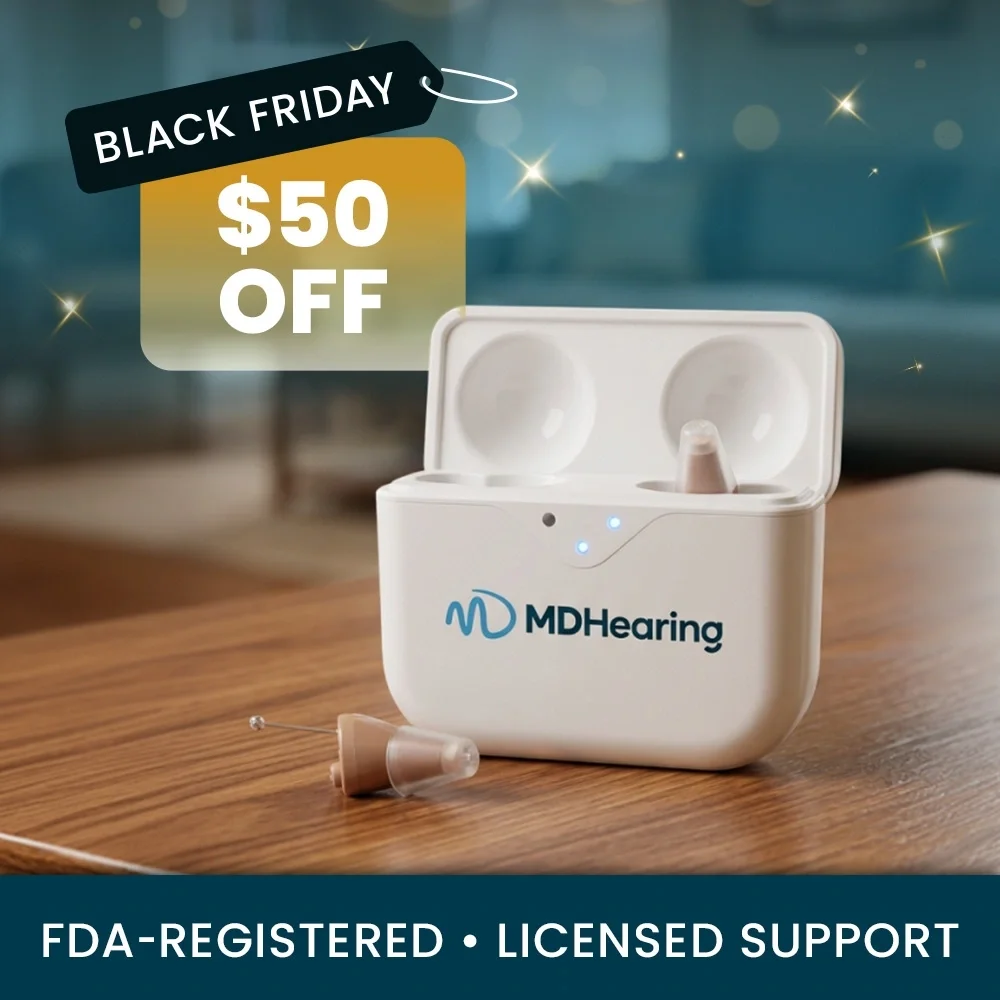
MDHearing NEO XS
List $297 per pair
Rechargeable, nearly invisible and the most affordable MDHearing model.
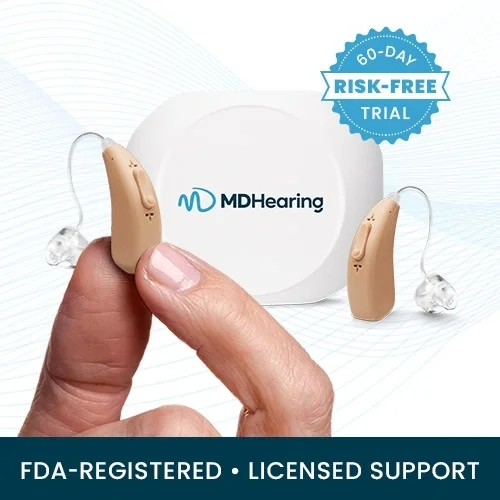
MDHearing VOLT 4
List $397 per pair
A budget behind-the-ear option with strong noise handling.
Use the trial period
Every MDHearing model includes a 60-day risk-free trial. Wear them in the places you struggle most, like restaurants and family dinners, before the window closes.
Frequently asked questions
Can I use my HSA for hearing aids?
Yes. Hearing aids are a qualified medical expense for HSA and FSA accounts.
Are OTC hearing aids tax deductible?
They can count toward medical expense deductions if you itemize and exceed the IRS threshold. Ask a tax professional.
Is financing worth it?
Only if the APR is low. Using FSA or HSA funds is usually the cheaper path.
Get guides like this in your inbox
Medicare changes, money tips, health guides and deals for adults 55+. Free, from Senior Affair Magazine.
Free. Unsubscribe anytime. Privacy policy.