
This is the single most common question we hear from older adults shopping NordicTrack’s lineup, and the honest answer is that neither machine is universally “better” — the right choice depends on your joints, your balance, your goals, and even how you like to spend twenty or thirty minutes of your day. Below is a straightforward, side-by-side look at how the 10 Recumbent Bike and AirGlide 16 Elliptical actually compare for someone over 55, without the marketing spin.
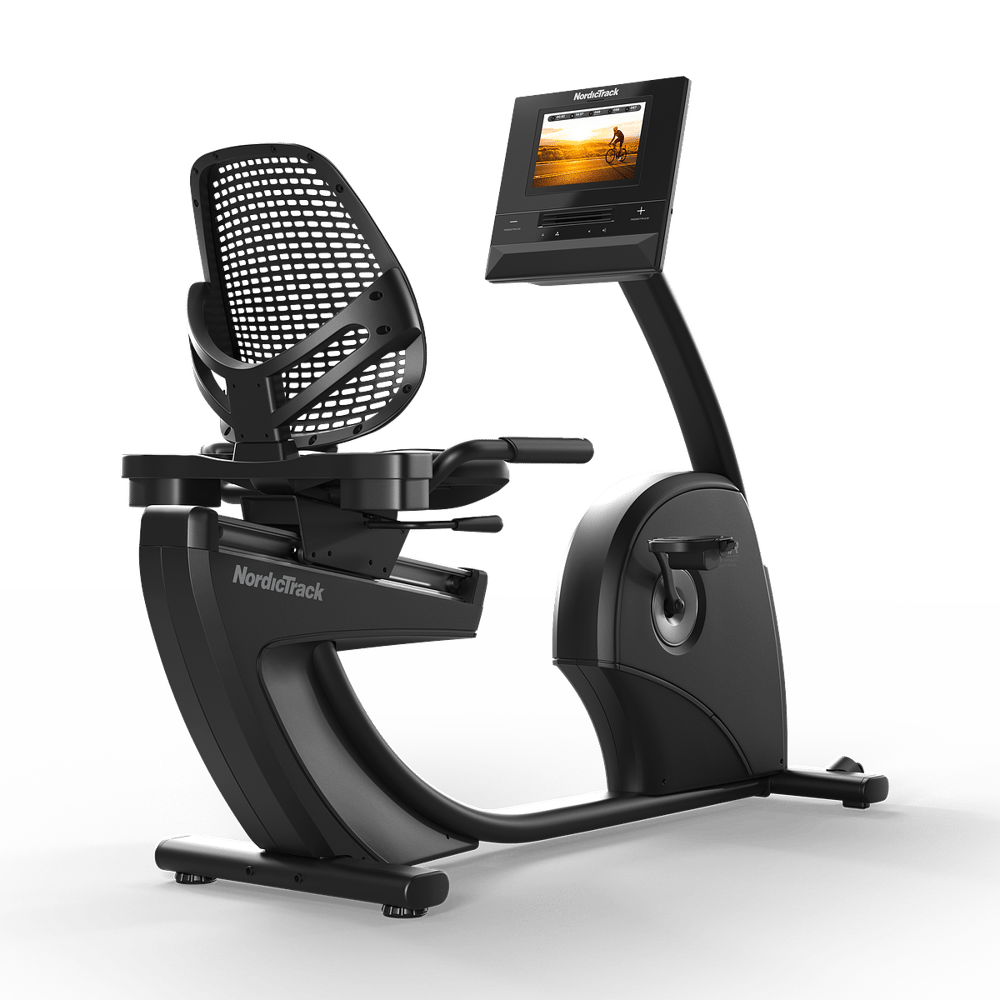
10 Recumbent Bike — $1,599.99
Seated, back-supported, the gentlest starting point.
Check Today’s Price →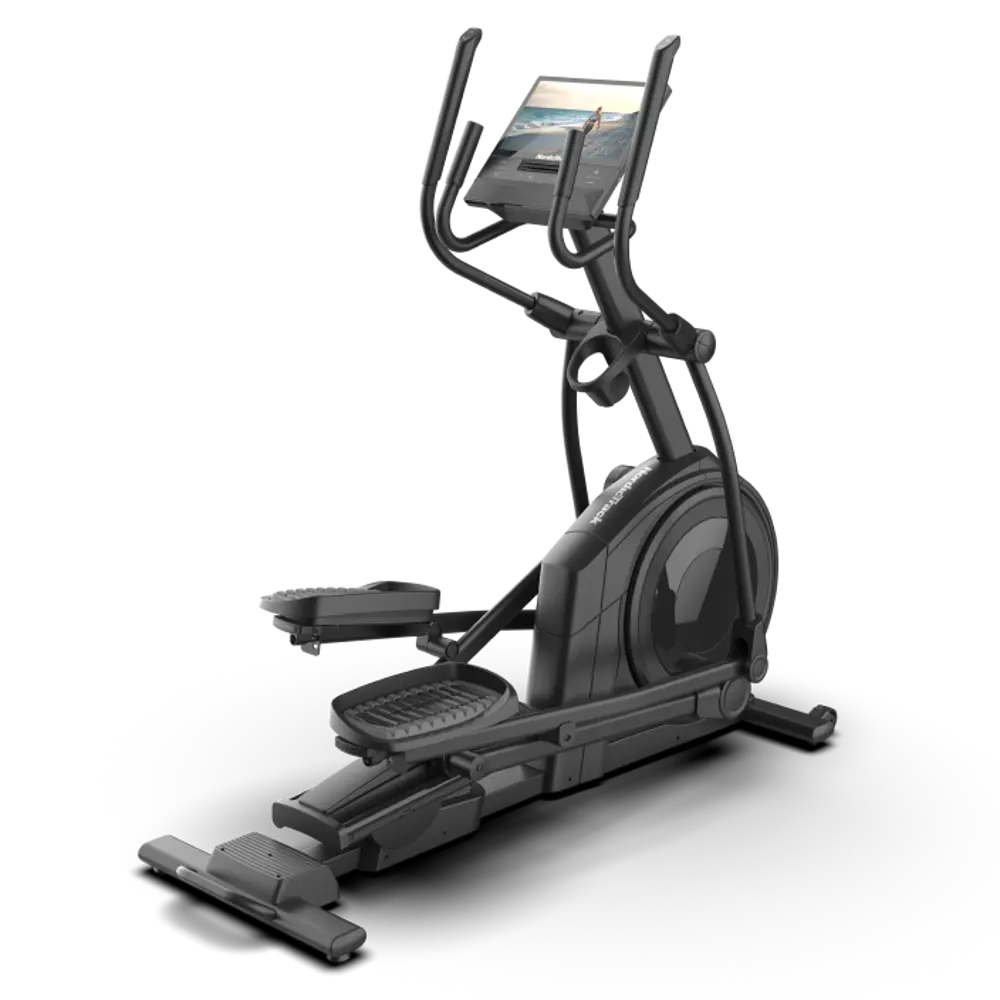
AirGlide 16 Elliptical — from $1,999.99
Standing, full-body, incline-driven intensity.
Check Today’s Price →Full Spec Comparison
| Feature | 10 Recumbent Bike | AirGlide 16 Elliptical |
|---|---|---|
| Price (typical) | $1,599.99 | $1,999.99–$2,799.99 |
| Position | Seated, back-supported | Standing |
| Touchscreen | 10″ HD tilting | 16″ HD tilting |
| Resistance | 26 levels, SMR | 26 levels, SMR |
| Incline | None | 15° incline to -5° decline |
| Weight capacity | 350 lbs | 300 lbs |
| Assembled weight | 186 lbs | 246 lbs |
| Warranty | 10-yr frame, 2-yr parts, 1-yr tablet/labor | 10-yr frame, 2-yr parts, 1-yr tablet/labor |
| Financing | $67/mo, 0% APR, 24 mo | $84/mo, 0% APR, 24 mo |
Impact on Joints
Both machines are considered low-impact compared to running or even brisk walking on pavement, but they aren’t identical. The 10 Recumbent Bike keeps your feet on pedals in a fixed, circular motion while you’re fully seated and supported, which means essentially zero jarring impact on the hips, knees, or lower back. This makes it the gentler option for anyone managing arthritis, recovering from a joint replacement, or dealing with chronic lower back pain.
The AirGlide 16 Elliptical is also low-impact — your feet never leave the pedals, so there’s no pounding the way there is with running — but it does require standing, weight-bearing balance, and a bit more range of motion through the hips and knees during the gliding stride. For most healthy older adults, this is perfectly manageable. For anyone with significant joint pain or recent surgery, it’s worth checking with a doctor or physical therapist first.
Balance and Coordination
This is where the two machines diverge the most. The 10 Recumbent Bike asks essentially nothing of your balance — you’re seated the entire time, supported by a backrest, with your feet on fixed pedals. The AirGlide 16 Elliptical asks you to stand, hold your own weight, and coordinate an opposite arm-and-leg movement, similar to cross-country skiing. If you’ve had a fall in the past year, experience dizziness when standing, or simply don’t feel confident on your feet for extended periods, the recumbent bike is the clearly safer choice.
See today’s pricing on both machines
Compare Models & Pricing →Calorie Burn and Cardiovascular Benefit
Because the AirGlide 16 engages your arms and core along with your legs, it typically burns more calories per minute than the 10 Recumbent Bike at a comparable effort level. For adults focused on weight management or building cardiovascular endurance as efficiently as possible, that’s a real advantage. That said, the recumbent bike ridden consistently and with resistance built up gradually still delivers meaningful cardiovascular benefit — consistency matters more than the machine’s calorie-burn ceiling.
Comfort, Weight Capacity, and Footprint
The 10 Recumbent Bike supports up to 350 lbs and has a smaller, more predictable footprint (67.2″L x 23.3″W) that doesn’t require you to keep your balance while stepping onto moving pedals. The AirGlide 16 Elliptical supports up to 300 lbs and needs a larger dedicated footprint (70.2″L x 24.6″W x 67.4″H) since it doesn’t fold. If weight capacity above 300 lbs matters to you and you still want an elliptical, NordicTrack’s step-up X16 Elliptical supports up to 375 lbs.
Which Should You Choose?
If you’re managing any joint pain, recovering from a health event, new to structured exercise, or simply want the most reliably comfortable option, start with the 10 Recumbent Bike. If you’re already active, steady on your feet, and want a more efficient full-body workout, the AirGlide 16 Elliptical is worth the slightly higher demands it places on balance and coordination, plus the higher price tag. And if you’re torn, remember this isn’t a permanent decision — plenty of people own both, using the recumbent bike on lower-energy days and the elliptical when they’re feeling strong.
Not sure which is right for you? See today’s pricing on the AirGlide 16 Elliptical.
See the AirGlide 16 →A Week in the Life: Two Sample Routines
Seeing how each machine actually fits into a week can make the decision feel more concrete than specs alone. A typical recumbent-bike-first routine for someone easing back into exercise might look like: Monday, Wednesday, and Friday sessions of 20-25 minutes at low-to-moderate resistance on the 10 Recumbent Bike, with Tuesday and Thursday reserved for a short walk or light stretching, and weekends off or optional light rides. Over two or three months, resistance and duration increase gradually as stamina builds.
An elliptical-forward routine for someone already comfortable on their feet might involve alternating between the AirGlide 16 and a recumbent bike — elliptical sessions on higher-energy days for a more complete workout, recumbent bike sessions on days when joints feel stiffer or energy is lower. This kind of mixed approach is common among owners who eventually acquire both machines, and it illustrates why the “versus” framing can be a little misleading: many people over 55 end up using both, matched to how they feel that day rather than picking one permanently.
Cost Comparison Over Time
At current pricing, the 10 Recumbent Bike ($1,599.99) costs meaningfully less upfront than the AirGlide 16 Elliptical ($1,999.99–$2,799.99), and its financing payment is lower too ($67/mo vs. $84/mo at 0% APR over 24 months). Where cost differences also show up is in ongoing expenses: the optional iFIT subscription costs the same regardless of which machine you use it with, and neither machine requires expensive replacement parts under normal use, unlike a treadmill belt that eventually needs replacing. Factoring in the equipment’s expected 8-10+ year lifespan with reasonable care, both options represent solid long-term value compared to an ongoing gym membership.
What Doctors and Physical Therapists Generally Advise
While every individual situation is different and this isn’t a substitute for personalized medical advice, a few patterns come up consistently in guidance from physical therapists working with older patients. For anyone recovering from a hip or knee replacement, a recumbent bike like the 10 Recumbent Bike is almost universally recommended as an early-stage rehabilitation tool, often introduced well before a patient is cleared for standing, weight-bearing cardio like the AirGlide 16. The controlled, seated pedaling motion helps rebuild range of motion and strength without risking the joint during the vulnerable early recovery window.
For patients managing osteoarthritis without a recent surgery, therapists often recommend either machine, with the choice coming down to comfort and personal preference more than clinical necessity — though the recumbent bike is still usually suggested as the safer starting point if balance or significant pain is a concern. For generally healthy older adults without joint issues who are simply looking to maintain fitness, either machine is considered appropriate, and the decision genuinely comes down to which type of workout you’re more likely to stick with consistently.
Making the Switch Later
If you start with the 10 Recumbent Bike and later want to add or transition to the AirGlide 16 Elliptical, there’s no fixed timeline — it depends entirely on your own progress, confidence, and any relevant medical clearance. Signs that you might be ready include feeling steady and confident during daily activities like walking on uneven surfaces or climbing stairs without a railing, tolerating recumbent bike sessions comfortably at a moderate resistance, and general clearance from your doctor if you’re working through a specific recovery. Many people find that easing into elliptical use with short 5-10 minute sessions, alongside continued recumbent bike use on other days, is a comfortable way to build confidence with the new movement pattern without abandoning the routine that’s already working.
What Our Readers Tell Us
Among the older adults who write to us after purchasing one machine or the other, a consistent pattern emerges: satisfaction has less to do with which machine they chose and more to do with whether they picked the one that matched their actual comfort level and lifestyle, rather than the one that seemed more impressive on paper. Readers who chose the 10 Recumbent Bike specifically because of joint concerns almost universally report sticking with their routine, citing the low barrier to starting each session. Readers who chose the AirGlide 16 because they wanted a more complete workout, and who were genuinely steady on their feet beforehand, report similarly high satisfaction and note the added benefit of feeling like a “fuller” workout in less time.
Where dissatisfaction shows up is almost always in mismatches — someone with real balance concerns who bought the elliptical anyway because it seemed more impressive, or someone who wanted a vigorous full-body workout but ended up with a recumbent bike that, while comfortable, didn’t fully satisfy that specific goal. The takeaway is straightforward: be honest with yourself about your current physical reality, not the fitness level you remember having twenty years ago or hope to return to eventually.
The Bottom Line
Both machines are genuinely good options for adults over 55 — the decision isn’t about finding the objectively superior piece of equipment, but about matching the machine to your body, your current fitness level, and your goals. The 10 Recumbent Bike offers the gentlest, most forgiving path into consistent cardio at the lower price point. The AirGlide 16 Elliptical offers a more complete, efficient workout for those ready for it, with a higher price to match. Either way, the biggest predictor of success isn’t which machine you choose — it’s whether you use it consistently, week after week.
Frequently Asked Questions
Is the 10 Recumbent Bike or AirGlide 16 Elliptical gentler on the knees?
The 10 Recumbent Bike is generally gentler on the knees because it’s fully seated with no weight-bearing impact. The AirGlide 16 Elliptical is still low-impact but requires standing and more knee range of motion.
Can I switch from the recumbent bike to the elliptical later?
Yes. Many older adults start with the 10 Recumbent Bike to build strength and confidence, then add or switch to the AirGlide 16 Elliptical once balance and stamina improve, often with a doctor’s or physical therapist’s guidance.
Which burns more calories, the 10 Recumbent Bike or AirGlide 16 Elliptical?
The AirGlide 16 Elliptical typically burns more calories per minute at a similar effort level because it engages the arms and core in addition to the legs.
Which costs more, the 10 Recumbent Bike or the AirGlide 16 Elliptical?
The 10 Recumbent Bike is typically less expensive, priced around $1,599.99, compared to $1,999.99–$2,799.99 for the AirGlide 16 Elliptical, depending on current promotions.
Can I use both machines in the same routine?
Yes, and many older adults do exactly this — using the recumbent bike on lower-energy or stiffer-joint days and the elliptical when they’re feeling stronger, which adds variety while still respecting how their body feels day to day.
Get guides like this in your inbox
Medicare changes, money tips, health guides and deals for adults 55+. Free, from Senior Affair Magazine.
Free. Unsubscribe anytime. Privacy policy.