

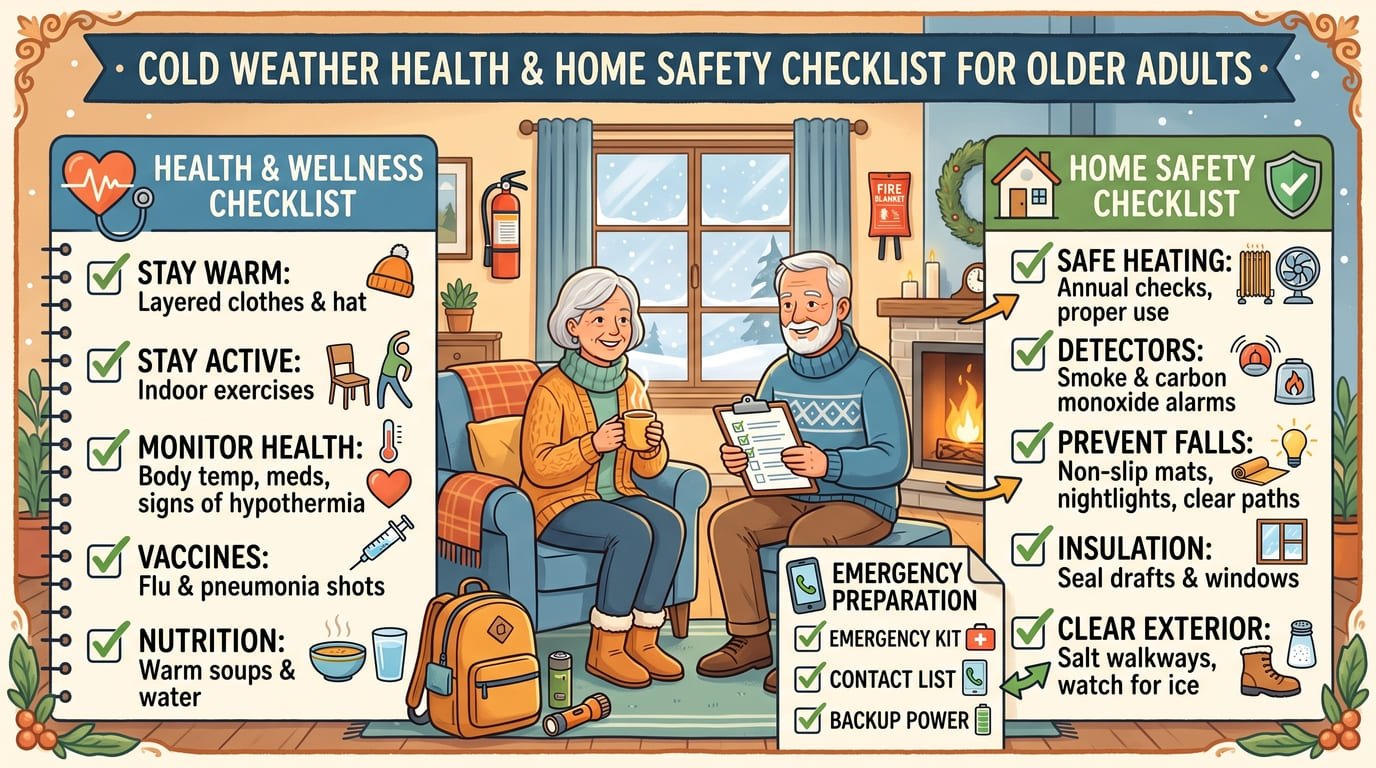
A little preparation in October saves a lot of stress in January. Here’s the room-by-room checklist for getting a home ready for winter safely.
Cold weather brings specific, well-documented risks for older adults—from an increased risk of falls on icy surfaces to the cardiovascular strain that cold exposure can place on the body. Most of these risks are manageable with some preparation before the first hard freeze. This checklist walks through the home room by room, plus a few whole-house and health-related items worth addressing before winter fully sets in.
Heating System & Energy Safety
- Have the furnace or heating system inspected before the season starts—a pre-winter service call is far cheaper than an emergency one in January.
- Replace furnace filters and check that vents aren’t blocked by furniture.
- Test carbon monoxide detectors and replace batteries; CO risk rises in winter as heating systems and space heaters see heavier use.
- Review space heater safety — keep them at least three feet from anything flammable, and never leave one running unattended or overnight.
- Check for drafts around windows and doors and weatherstripping as needed to keep heating costs manageable.
Entryways, Steps & Walkways
| Area | What to Check |
|---|---|
| Front and back steps | Secure handrails on both sides; add non-slip treads if steps are smooth or wooden |
| Driveway and walkways | Have ice melt or sand on hand before the first freeze, not after |
| Outdoor lighting | Ensure entry points are well-lit for shorter winter days and early darkness |
| Doormats | Use slip-resistant mats to catch snow and wet tracked in from outside |
Fall Prevention Starts at the Front Door
Non-slip step treads, secure handrails, and good outdoor lighting are some of the highest-impact, lowest-cost upgrades for winter fall prevention.
Indoor Fall Prevention
- Secure or remove loose area rugs that can slip on hard flooring
- Add grab bars near tubs, showers, and toilets if not already installed
- Ensure hallways and stairwells are well-lit, including nightlights for overnight bathroom trips
- Keep frequently used items within easy reach to avoid unnecessary reaching or step-stool use
Emergency Preparedness
Winter storms can knock out power for hours or days, which carries added risk for anyone relying on medical equipment, refrigerated medication, or a home heating system that requires electricity. A basic winter emergency kit should include:
- Flashlights and extra batteries (avoid candles as a primary light source due to fire risk)
- A battery-powered or hand-crank radio for weather updates during outages
- A several-day supply of any critical medications
- Extra blankets and warm layers in case heating is temporarily lost
- A charged battery pack for phones in case of extended outages
- A list of emergency contacts, including any home healthcare providers
Stay Connected During Winter Outages
A medical alert system with cellular backup keeps working even if the home phone or internet service goes down during a winter storm—one less thing to worry about.
Health Considerations for Cold Weather
Cold exposure places extra strain on the cardiovascular system, and older adults are more susceptible to both hypothermia and cold-related complications from existing conditions like arthritis or circulatory issues. A few practical steps: keep the thermostat at a consistent, safe temperature (many experts recommend at least 68°F for older adults); dress in layers even indoors on especially cold days; and avoid overexertion when shoveling snow, which is a well-documented cardiac risk—consider hiring help or using a lightweight snow tool designed to reduce strain.
Vehicle Readiness
If you’re still driving through winter, a few checks matter: tire tread depth, working defrosters, an emergency kit in the car (blanket, flashlight, phone charger, basic supplies), and a full tank of gas during storm warnings in case of unexpected delays.
A Simple Pre-Winter Timeline
| Timeframe | Priority Tasks |
|---|---|
| Early October | Schedule furnace inspection, test detectors, and order ice melt/sand |
| Late October | Install outdoor lighting fixes, secure handrails, and weatherstrip doors/windows |
| Early November | Assemble emergency kit, review medication supply plan |
| Before first freeze | Final walk-through of steps, walkways, and entry points |
Frequently Asked Questions
What’s the most important home safety upgrade before winter?
Securing handrails and adding non-slip treads to outdoor steps tends to have the highest safety impact for the lowest cost, since falls on icy or wet steps are one of the most common winter injuries for older adults.
What temperature should the thermostat be kept at for older adults in winter?
Many health guidelines recommend keeping indoor temperatures at 68°F or above for older adults, since cold indoor environments are linked to increased cardiovascular strain and hypothermia risk.
How can I prepare for a winter power outage?
Keep flashlights, a battery or hand-crank radio, extra blankets, a several-day medication supply, and a charged phone battery pack on hand. A medical alert device with cellular backup is also worth considering, since it continues working even if home phone or internet service is disrupted.




![This is sponsored content. SeniorAffair.com has partnered with Care.com, and this post contains affiliate links. If you make a purchase or sign up through these links, we may earn a commission at no additional cost to you. As always, our recommendations reflect what we genuinely believe will help our readers. Quick answer: Care.com is an online marketplace where you can search for in-home senior caregivers by the exact skills your family needs—companionship, meal prep, medication reminders, dementia support, and more—compare rates and reviews, and message or video-interview candidates before hiring. You can even search for senior living communities. Every individual caregiver starts with a required background check, though families should still do their own additional vetting. Care.com membership starts at $12.99/month. Key Takeaways Care.com lets you filter caregivers by specific skills—meal prep, transportation, personal care, dementia support, and more. Every individual caregiver starts with a required background check, plus Care.com offers a 24/7 safety hotline. Membership starts at $12.99/month. The Senior Care Advisor service pairs you with a master's-level social worker for a personalized care plan if you're not sure what type of care is right for your loved one. It usually happens fast. A fall in the kitchen. A diagnosis that changes everything. A phone call from a hospital you weren't expecting. One day you're checking in on Mom or Dad the way you always have, and the next you're trying to figure out, in a matter of days, who's going to help them get dressed, remember their medication, or simply not be alone all day. If that sounds familiar, you're not alone—and you're not behind. Most families who search for senior care do so under pressure, not because they waited too long, but because caregiving needs rarely arrive on a convenient timeline. The good news is that the search itself doesn't have to be another source of stress. Here's how Care.com can help, and what to know before you start. What Is Care.com, and How Does It Help With Senior Care? Care.com is an online marketplace that connects families with caregivers for in-home senior care, along with options like senior living communities and adult day programs. Instead of working through a stack of business cards from a hospital discharge folder or asking around your neighborhood group chat, you can search caregiver profiles by the specific skills your family needs, plus get additional safety and hiring tools to make the process easier. Whether your loved one needs help with meal prep, transportation, light housekeeping, personal care, medication reminders, companionship, or dementia support, you can search for caregivers who list that exact experience, then compare hourly rates, bios, and ratings and reviews left by other families. [INTERNAL LINK: our guide to signs a parent needs in-home care] How Do You Search for a Caregiver on Care.com? The process is straightforward: post a job describing your family's needs, and caregivers apply directly to you. You can search by skills, experience, and hourly rate to find a care that fits your needs and your budget. You must be a member to message and hire. Video interviews are built into the platform, so you can screen someone before sharing your address or inviting them into your parent's home. You can compare multiple caregivers side by side before making any commitment—no pressure to decide on the spot. Is Care.com Safe? What the Required Background Check Covers Every individual caregiver on Care.com's platform starts with a required background check. Care.com also monitors job posts and messages, operates a 24/7 safety hotline, and provides tips and resources to help families make safer hiring choices—you can learn more at care.com/safety. That said, a background check is an important start—not the full picture. We always encourage families to conduct their own additional vetting: talk with caregivers directly, check references, ask detailed questions about experience with your loved one's specific needs, and trust your instincts during video interviews before anyone sets foot in the home. It's also worth taking a few minutes to verify the details in any caregiver profile or job posting, since families are ultimately responsible for confirming that information is accurate. What Does Care.com Cost for Senior Care? As of 2026, Care.com's premium membership for families starts at $12.99/month, depending on the length of the plan you choose—you can search by skills, experience, and hourly rate to find care that fits your needs and your budget. What Is the Care.com Senior Care Advisor Service? For families who feel stuck before they've even started—who don't know whether Mom needs a few hours of help a week or a full conversation about assisted living—Care.com also offers Senior Care Advisor. For a one-time fee, you get 90 days of access to a dedicated advisor, a master's-level social worker, who gets to know your family's situation on a consultation call and then delivers a personalized care plan by email, along with researched local resources and next steps. The intake process is short—about five minutes to answer a handful of questions ahead of time—followed by a 30-minute consultation. From there, your advisor sends a detailed plan within a few days that covers everything from in-home care and senior living communities to navigating Medicare, Medicaid, and veteran's benefits, and even how to have hard conversations with siblings about splitting responsibilities. [INTERNAL LINK: our Medicare/Medicaid senior care coverage guide] It's designed for exactly the moment so many of us find ourselves in: knowing something has to change, but not knowing where to begin—and not wanting to figure it out completely alone. → Learn more about the Senior Care Advisor on Care.com You're Not the Only One Feeling This If you're the adult child juggling this search alongside a job, your own kids, and a life that already felt full, the guilt of "should I be doing this myself" is real. So is the exhaustion of not knowing where to even start looking. Those feelings are common, not a sign you're falling short. Having a structured way to search—filtered by the specific help your loved one needs, backed by reviews from families who've been exactly where you are—takes some of that weight off, even if it doesn't remove it entirely. How to Get Started on Care.com You don't need to have everything figured out to start searching. You can browse caregiver profiles freely, get a feel for who's available in your area, and filter by exactly what your family needs—whether that's someone a few hours a week for companionship or more consistent daily support. When you're ready, you can become a member to message caregivers, schedule video interviews, and compare your options side by side before hiring. Caregiving decisions are personal, and they rarely feel simple. But having a clear, organized way to search—instead of piecing it together from scratch—can make a genuinely hard season a little more manageable. Because while you want to care for everyone you love, it can't always be you. When it's not you, it's Care.com™. Frequently Asked Questions About Care.com for Senior Care Is Care.com legit for finding senior care? Yes. Care.com is a long-running online marketplace connecting families with caregivers, including for senior and adult care. Every individual caregiver starts with a required background check, and the platform offers safety monitoring and a 24/7 safety hotline—though families should still do their own vetting before hiring. How much does Care.com cost for senior care? As of 2026, a Care.com membership starts at $12.99/month, depending on the length of the plan you choose. Does every caregiver on Care.com have a background check? Yes—every individual caregiver on Care.com's platform starts with a required background check. Families are still encouraged to do additional vetting, such as checking references and conducting video interviews, since a background check is a starting point rather than a full screening on the family's behalf. What is Care.com Senior Care Advisor? It's a paid, one-time service that gives you 90 days of access to a dedicated advisor—typically a master's-level social worker—who builds a personalized care plan for your family, covering options like in-home care, senior living, and navigating Medicare and Medicaid. It also includes 90 days of Care.com membership. Can I find caregivers with memory care or dementia experience on Care.com? Yes. You can search for memory care and dementia experience and compare reviews from other families who've hired caregivers for similar needs. Does Care.com offer senior living community listings? Care.com's core search focuses on in-home caregivers, but it also provides information on options outside the home, including senior living communities and adult day programs. → Start your search on Care.com Disclaimer: Care.com does not employ or place caregivers, provide medical advice, diagnosis, or treatment, or engage in any conduct that requires a professional license, including in connection with certain senior caregiving services. Families are encouraged to verify the accuracy of information in caregiver profiles, job postings, and other areas of the site. Pricing is subject to change; confirm current rates on Care.com directly. "Care.com" and "When it's not you, it's Care.com™" are service marks or registered service marks of Care.com, Inc](https://senioraffair.com/wp-content/uploads/2026/09/How-to-Find-Senior-Care-for-a-Parent-A-Practical-Guide-to-Getting-Started-218x150.jpeg "How to Find Senior Care for a Parent: A Practical Guide to Getting Started")