

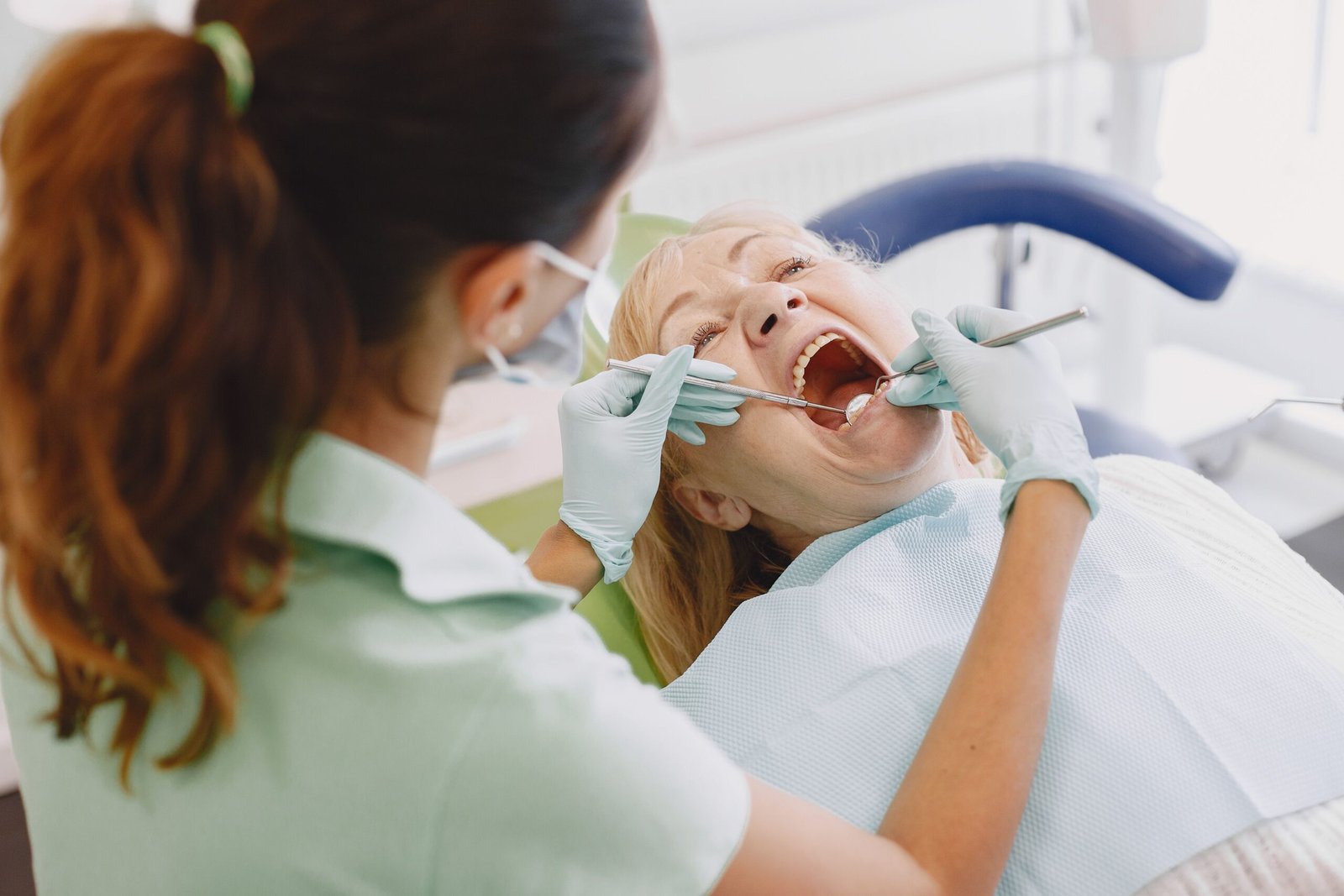
The best dental savings plan for seniors without insurance in 2026 is Dentalplans.com, which provides access to over 100,000 dentists nationwide at discounts of 20–60% on cleanings, fillings, crowns, dentures, and more—with no waiting periods, no annual maximums, and no claim forms.
If you’re on Medicare and shocked to find it covers almost nothing dental-related, you’re discovering what millions of retirees find out too late. This guide explains your real options—and why a dental savings plan almost always beats doing nothing (or avoiding the dentist entirely).
Why Most Seniors Over 65 Have No Dental Coverage
Here’s the uncomfortable truth: Original Medicare (Parts A and B) does not cover routine dental care. No cleanings. No fillings. No crowns. No dentures.
Medicare Advantage plans (Part C) sometimes include basic dental, but coverage is typically limited to $500–$1,500 per year—nowhere near enough for major work like implants ($3,000–$6,000 each) or full dentures ($1,500–$3,500).
As a result, approximately 70% of Medicare beneficiaries have no meaningful dental coverage, according to the KFF Health Policy Research. Many simply stop going to the dentist, leading to a cascade of health problems: gum disease linked to heart disease, infections spreading to the jaw and neck, and nutritional deficiencies from the inability to chew properly.
The good news: dental savings plans fill this gap well—and cost a fraction of traditional insurance.
Dental Insurance vs. Dental Savings Plans: What’s the Difference?
Many people confuse dental savings plans with dental insurance. They’re very different:
| Feature | Dental Insurance | Dental Savings Plan |
|---|---|---|
| Monthly premium | $30–$60/month | $8–$30/month |
| Annual maximum | $1,000–$2,000 | No maximum |
| Waiting period | 6–12 months for major work | None—use it immediately |
| Claim forms to file | Yes | No forms |
| Covers pre-existing conditions | Often excluded | Yes |
| Network size | Varies widely | Often 100,000+ dentists |
| Works for dentures/implants | Limited | Yes, discounted |
For most seniors without employer coverage, a dental savings plan wins on almost every dimension—especially if you need anything beyond two cleanings per year.
Best Dental Savings Plans for Seniors in 2026
1. Dentalplans.com — Best Overall for Seniors (Our Top Pick)
What it is: Dentalplans.com is not a single plan—it’s a marketplace of dental savings plans from leading providers, allowing you to compare and pick the one with the best network in your specific zip code.
Why it works for seniors:
- Over 30 plans to compare side by side
- Find in-network dentists before you sign up (enter your zip code, see your own dentist)
- Discounts of 20–60% on virtually all procedures
- No waiting period—activate and use within days
- No annual maximum—use as much as you need
- Plans start around $80–$150 per year (less than $15/month)
- Covers dentures, implants, orthodontics, oral surgery
Real-world example of savings:
| Procedure | Average Without Plan | With Dentalplans.com | Savings |
|---|---|---|---|
| Cleaning & exam | $200 | $80–$120 | Up to 60% |
| Filling (composite) | $250 | $100–$150 | Up to 60% |
| Crown (porcelain) | $1,400 | $600–$900 | Up to 45% |
| Full upper denture | $1,800 | $900–$1,200 | Up to 50% |
| Tooth extraction | $300 | $100–$175 | Up to 65% |
What users say: “I needed two crowns and three fillings. I was quoted $4,200 without insurance. I joined Dentalplans.com for $119, went back the same week, and paid $2,100. Paid for itself on day one.” — Verified member, 71-year-old retiree
👉 Compare Dental Savings Plans in Your Area
Enter your zip code and see if your current dentist is already in-network. No obligation.
2. Spirit Dental — Best for Comprehensive Coverage Including Major Work
Spirit Dental offers true dental insurance (not a savings plan) with no waiting periods—rare in the dental insurance world. If you need major work like implants or full-mouth reconstruction and want the structure of insurance rather than a discount plan, Spirit is worth comparing.
Key advantage: Annual maximums increase each year you’re enrolled (up to $5,000 in Year 3), making it a strong option if you’re planning significant dental work over multiple years.
Drawback: Monthly premiums are higher ($40–$60/month) than a discount plan. Run the numbers based on what work you actually need.
3. AARP Dental Insurance (Through Delta Dental) — Best Brand Trust for AARP Members
AARP’s dental plans through Delta Dental are widely trusted and offer access to one of the largest dental networks in the country. If AARP membership is important to you, this is a reputable option.
Key advantage: Huge Delta Dental network, brand credibility, AARP member discounts.
Drawback: Standard waiting periods apply for major work (up to 12 months), and there are annual maximums like traditional insurance.
How to Choose the Right Plan in 5 Minutes
Follow these steps to find the right option quickly:
Step 1: Check if your dentist is in-network.
Go to Dentalplans.com, enter your zip code, and search for your current dentist. If they’re in-network, you’re already 80% done.
Step 2: List what work you need in the next 12 months.
Cleanings only? A savings plan is clearly better than insurance. Major work (implants, crowns, dentures)? Calculate whether a savings plan’s discounted rate still beats insurance after premiums.
Step 3: Check for waiting periods.
If you need work done soon, a dental savings plan has zero waiting period. Traditional dental insurance often makes you wait 6–12 months for anything beyond a cleaning.
Step 4: Do the math.
Plan annual cost + discounted procedure costs vs. full price. Most seniors with any dental needs beyond two cleanings break even in the first appointment.
What Dental Procedures Cost Without Coverage (2026 National Averages)
Understanding baseline costs helps you calculate savings accurately:
- Routine cleaning + exam: $150–$250
- X-rays (full mouth): $150–$300
- Filling (composite/tooth-colored): $200–$350 per tooth
- Crown (porcelain-fused): $1,200–$1,800 per tooth
- Root canal (molar): $900–$1,500
- Tooth extraction (simple): $150–$300
- Tooth extraction (surgical/impacted): $300–$600
- Full upper denture: $1,500–$3,000
- Dental implant (single): $3,000–$6,000
- Deep cleaning (per quadrant): $200–$350
A single crown without coverage can cost more than a full year’s membership to a dental savings plan—plus three or four additional crowns at a discount.
Special Dental Concerns for Adults Over 55
Dental needs change significantly as we age. Here’s what seniors face more frequently—and why coverage matters more, not less:
Dry mouth (xerostomia): Many medications commonly taken by seniors (blood pressure meds, antidepressants, antihistamines) cause dry mouth, which dramatically increases cavity risk. Seniors on multiple medications often need more frequent cleanings.
Gum disease (periodontitis): Gum disease becomes more prevalent and severe with age. Left untreated, it’s linked to diabetes complications and heart disease. Deep cleaning (scaling and root planing) can cost $800–$1,400 without coverage.
Tooth loss and dentures: About 27% of adults over 65 have lost all their natural teeth. Dentures, implant-supported dentures, and partial dentures are significant costs—ones that traditional Medicare does not cover.
Root decay: As gums recede with age, tooth roots become exposed and are more vulnerable to decay than the harder enamel surfaces they previously protected.
Oral cancer: The risk of oral cancer increases significantly after age 55. Regular dental checkups include oral cancer screenings—a reason not to skip appointments.
Tips for Getting the Most from a Dental Savings Plan
1. Confirm your dentist accepts the plan before signing up. Most plan marketplaces let you search by provider. If your dentist isn’t in-network, call them—many dentists will join a network when a patient asks.
2. Schedule your cleanings immediately. There’s no waiting period. Don’t wait until you have a problem—preventive care is always cheaper than reactive care.
3. Ask for a treatment plan estimate before any procedure. Ask the dental office to run the estimate through your discount plan before you approve any work. You should know the discounted cost before the appointment.
4. Use the plan for your spouse too. Many plans cover households, not just individuals. A family plan for two seniors often costs the same or slightly more than an individual plan.
5. Plan major work in the same calendar year. Since dental savings plans have no annual maximum, you’re free to bundle multiple procedures in a single year without worrying about caps.
Frequently Asked Questions
Does Medicare cover dental care?
Original Medicare (Parts A and B) does not cover routine dental care, including cleanings, fillings, crowns, dentures, or implants. Some Medicare Advantage (Part C) plans include limited dental, typically capped at $500–$1,500 per year. For most seniors, this is not enough to cover significant dental needs.
What is a dental savings plan, and how is it different from insurance?
A dental savings plan is a membership that gives you access to a network of dentists who agree to charge discounted fees to plan members. Unlike insurance, there are no claim forms, no waiting periods, no annual maximums, and no deductibles. You pay the discounted rate directly to the dentist at the time of service.
How quickly can I use a dental savings plan?
Most dental savings plans, including those available through Dentalplans.com, are active within 1–3 business days of enrollment. There is no waiting period—you can schedule an appointment immediately.
Are dental savings plans worth it for seniors?
Yes, for most seniors without comprehensive dental insurance. The math is clear: a plan costs $80–$150/year, and the average discount per cleaning is $60–$100. Two cleanings alone often cover the cost of membership, and any additional work generates significant savings.
What’s the best dental plan if I need dentures?
Dentalplans.com is the best place to compare options, as many of their member plans offer 30–50% discounts on full and partial dentures. Because there’s no annual maximum, you can complete the full denture process—upper and lower arches—without hitting a coverage ceiling.
Can I use a dental savings plan if I have pre-existing dental problems?
Yes. Unlike dental insurance, dental savings plans do not exclude pre-existing conditions. If you need fillings, crowns, gum treatment, or extractions, a savings plan applies immediately regardless of prior dental history.
Bottom Line
If you’re on Medicare without meaningful dental coverage—which describes the majority of Americans over 65—a dental savings plan is one of the simplest, most immediate ways to protect both your oral health and your wallet.
Dentalplans.com gives you the ability to compare plans, check if your current dentist is already in-network, and activate coverage in days with no waiting period and no annual caps.
Don’t let cost be the reason you skip the dentist. The downstream health consequences are far more expensive.
👉 Compare Dental Plans — Enter Your Zip Code, No Obligation
Takes 2 minutes. See plans that include your dentist before signing up.
This article contains affiliate links. If you purchase through our links, we may earn a commission at no additional cost to you. Cost data reflects 2026 national averages; actual costs vary by location and provider. This content is for informational purposes only and is not a substitute for advice from a licensed dental professional.