
Home Blog Page 6

NordicTrack 10 Recumbent Bike Review for Seniors: Is It Right for You After 55?

RECUMBENT BIKE REVIEW

If you’ve started shopping for a recumbent bike, NordicTrack’s current lineup has simplified things: the 10 Recumbent Bike is their standalone recumbent model, and it’s built to appeal to exactly the kind of rider who wants a comfortable, low-impact way to stay active at home. We went through the full spec sheet, the seat design, the resistance system, and the iFIT features with one question in mind: does this actually make sense for someone over 55?
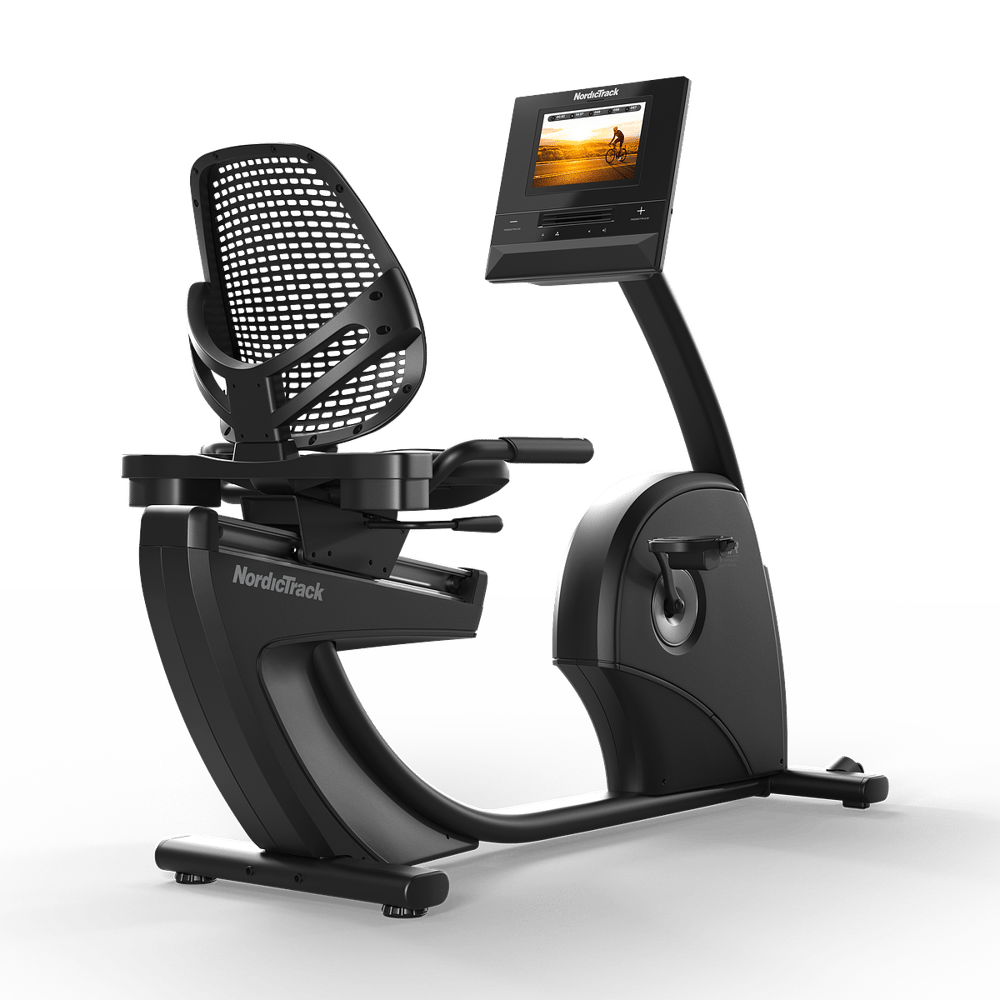
Quick Answer: Yes, for most older adults. The 10 Recumbent Bike has a step-through frame, an adjustable cushioned seat with lumbar support, 26 levels of Silent Magnetic Resistance, and a 350-lb weight capacity — all for around $1,599.99 with 0% APR financing available. It’s the most comfortable, lowest-barrier way to start a consistent cardio habit that we’ve reviewed in this price range.
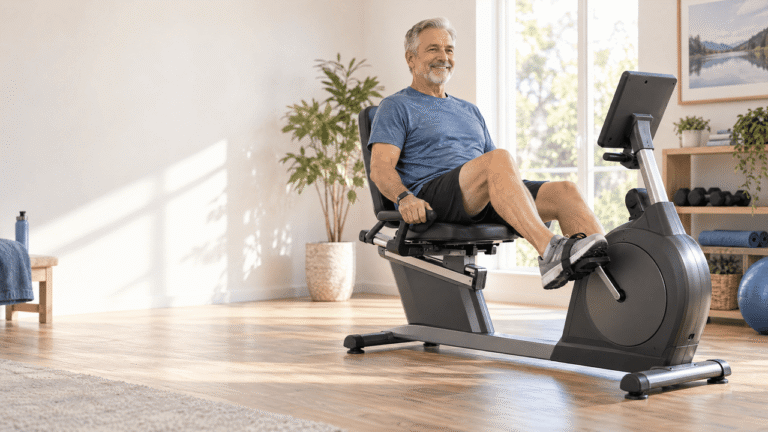
NordicTrack 10 Recumbent Bike with tilting HD touchscreen

NordicTrack 10 Recumbent Bike (NTEX14925)

$1,599.99 $1,799.99

Or $67/mo at 0% APR for 24 months. Free shipping, 30-day in-home trial included.

  • Touchscreen10″ HD tilting display
  • Resistance26 levels, Silent Magnetic (SMR)
  • SeatAdjustable, cushioned, lumbar support
  • PedalsWide, adjustable straps
  • Footprint67.2″L x 23.3″W x 51.9″H
  • Weight capacity350 lbs
  • In-box weight186 lbs
  • Warranty10-yr frame, 2-yr parts, 1-yr tablet/labor

Comfort and Seating: Where It Matters Most

The seat is the single biggest factor in whether a recumbent bike actually gets used, and it’s where the 10 Recumbent Bike earns its recommendation. The cushioned seat adjusts to fit your leg length and includes real lumbar support, which keeps pressure off the lower back rather than the more upright posture you’d get on a cheaper bike. Combined with the step-through frame — which sits low enough that you essentially walk into the seat rather than swinging a leg over anything — getting on and off is genuinely easy, even on days when your knees or hips are stiffer than usual.

Resistance and Ride Feel

Resistance runs across 26 levels using NordicTrack’s Silent Magnetic Resistance (SMR) system, which means no chain noise and a smooth, consistent pedal feel from the lightest setting up. That range matters more than people expect: a bike that only offers 8 or 10 resistance levels often has a noticeable jump between settings, which can be uncomfortable on sensitive knees. With 26 levels, you can nudge intensity up in small, forgiving increments as your stamina improves over weeks and months, and the resistance and volume controls are built right into the handles, so you’re never fumbling for a button mid-ride.

Pros
  • Step-through frame, genuinely easy to mount and dismount
  • Adjustable, cushioned seat with real lumbar support
  • 26 resistance levels, quiet Silent Magnetic Resistance
  • Handle-integrated resistance and volume controls
  • Financing available, HSA/FSA eligible
Cons
  • No power incline (elliptical territory if you want that)
  • iFIT Pro subscription required for full smart features
  • 186 lbs assembled — plan for help moving it into place

See today’s price and financing on the 10 Recumbent Bike

Check Today’s Price →

The Touchscreen and iFIT Experience

The 10″ HD touchscreen tilts for a comfortable viewing angle and is large enough to read without straining your eyes. It runs iFIT, giving you access to more than 10,000 trainer-led workouts, including low-impact and recovery-focused programming. SmartAdjust intelligently adapts resistance to your fitness level based on adjustments you make during your own workouts, and Follow Trainer automatically matches your bike’s resistance to your instructor’s pace, so you’re not reaching for buttons mid-class. There’s also a beta AI Coach feature that schedules workouts and keeps you accountable from your phone, plus streaming service support so you can watch your own shows on the screen if you’d rather skip guided classes entirely. You can also ignore all of that and just pedal in manual mode while watching your own TV — the bike works fully without a subscription.

Built-In Comfort Extras

A few smaller details add up over a long ride. An AutoBreeze fan automatically adjusts its intensity to match your effort, which is genuinely useful once you’re 15-20 minutes into a session. There’s a USB-C charging port and Bluetooth headphone connectivity so you can listen to your own audio without cables, plus two built-in speakers with decent audio quality if you’d rather skip headphones altogether. The wide pedals with adjustable straps keep your feet secure throughout the ride, which matters if you have any reduced sensation in your feet.

How It Compares on Price

What You GetDetail
Price$1,599.99 (list $1,799.99), or $67/mo at 0% APR for 24 months
ShippingFree standard delivery, up to $249 value
Trial period30 days in-home, full refund minus return shipping
Warranty10-year frame, 2-year parts, 1-year tablet and labor
Payment optionsPay in full, 0% APR financing, or HSA/FSA funds
Setup tip: Have the bike assembled in the room where you’ll actually use it — at 186 lbs assembled, recumbent bikes are heavy and awkward to move once built. Have it near an outlet if you plan to use the touchscreen and iFIT regularly, and budget 30-60 minutes for assembly with a second person to help.

What Real Users Over 55 Say Matters Most

Talking to older adults who’ve owned recumbent bikes for six months or more, a few themes come up again and again. The seat comfort matters far more than any spec sheet suggests — several people specifically mentioned that a well-padded, supportive seat was the difference between using the bike daily and letting it become a clothes rack. The quietness of the SMR resistance system also comes up often, since it means you can pedal early in the morning or during a phone call without disturbing anyone else in the house.

The other recurring theme is how much the iFIT trial actually gets used at first, and how many people eventually switch to manual mode after a few months — which is worth knowing if you’re deciding whether the ongoing subscription cost is necessary for you personally.

Compare today’s deals on the 10 Recumbent Bike

See Current Pricing →

How This Compares to Other Recumbent Bike Brands

It’s worth understanding where NordicTrack sits relative to competitors before committing, since price alone doesn’t tell the whole story. Budget recumbent bikes from lesser-known brands often cut costs in ways that matter most to older users specifically: narrower seats without lumbar support, fewer resistance levels with bigger jumps between them, and dim, small consoles with tiny text. They may look similar in a product photo, but the day-to-day experience of getting on, adjusting resistance, and reading your stats tends to be noticeably rougher.

Mid-range competitors from brands like Schwinn or Sunny Health & Fitness are reasonable options if budget is the primary concern, and some offer decent step-through frames. Where the 10 Recumbent Bike tends to pull ahead is console quality, resistance range, and the depth of NordicTrack’s warranty — a 10-year frame warranty is considerably longer than what you’ll find on most sub-$1,000 recumbent bikes, which matters more the longer you use the machine.

Maintenance and Long-Term Ownership

Recumbent bikes are relatively low-maintenance compared to treadmills, since there’s no belt to replace and magnetic resistance systems have no physical contact points to wear down the way friction-based systems do. That said, a few habits extend the life of your machine and keep it running smoothly for years. Wipe down the seat and console after each use, particularly if you exercise in a warm room — sweat and moisture are the most common cause of premature wear on padding and electronics. Periodically check that all bolts remain tight, since normal use can gradually loosen hardware over months of regular pedaling.

The included warranty covers the frame for 10 years, with 2 years on parts and 1 year on the tablet and labor — worth confirming at the time of purchase, since promotions and warranty terms shift. If you do run into an issue, NordicTrack’s customer support can usually diagnose common problems (a console that won’t power on, resistance that won’t adjust) over the phone before recommending an in-home repair visit.

Assembly and Getting Started

The bike arrives partially assembled, typically requiring you to attach the seat, console mast, and pedals to a pre-built base frame. Most owners report assembly taking somewhere between 30 and 60 minutes with basic household tools, though having a second person around to help lift and hold pieces in place while bolting them together makes the process considerably easier and safer given the bike’s 186-lb assembled weight. NordicTrack includes printed instructions, and video walkthroughs are also available for those who prefer a visual guide.

Once assembled, take a few minutes to adjust the seat position for your leg length before your first ride — your knee should have a slight bend at the furthest point of the pedal stroke, not be fully locked out or overly bent. This single adjustment does more for comfort and joint safety than almost anything else you’ll configure on the machine, and it’s worth rechecking if more than one person in the household uses the same bike.

What to Expect in the First Few Sessions

Your first few rides will likely feel easier than you expect at the lowest resistance settings, and that’s by design — the wide resistance range exists precisely so beginners have room to start gently. Don’t be discouraged if 10 minutes feels almost too easy at first; that’s a reasonable starting point that lets your body adapt without excessive soreness. Pay attention to how your lower back and hips feel both during and the day after a ride, since that feedback is more useful than the resistance number itself for gauging whether you’re progressing at the right pace.

Most riders find that by the second week, the seat and pedaling motion feel noticeably more natural, and it’s common to want to increase resistance or duration around this point. Resist the urge to jump too far too fast — small, steady increases sustained over months build genuine fitness far more reliably than an aggressive ramp-up that risks discomfort or burnout in the first few weeks.

Who Should Skip This Bike Entirely

Even a well-designed recumbent bike isn’t the right fit for everyone. If you have significant difficulty bending your hips or knees to a seated pedaling position, or if you’re managing an acute injury that hasn’t yet been evaluated by a doctor, it’s worth getting clearance before starting any new equipment-based routine, regardless of how gentle the marketing claims it to be. Similarly, anyone with severe balance issues that make even seated transfers difficult should consider whether a stationary recumbent step or chair-based exercise program might be a more appropriate starting point, introducing a recumbent bike later once mobility improves.

For the vast majority of older adults without these specific concerns, though, the 10 Recumbent Bike represents a genuinely low-risk, high-benefit way to build cardiovascular fitness, with a comfortable seat and a resistance range that will keep pace with your progress for years.

Frequently Asked Questions

Is the NordicTrack 10 Recumbent Bike good for beginners over 55?

Yes. Its 26 resistance levels allow very gradual progression, and its step-through frame is genuinely easy to get on and off, even for someone new to structured exercise.

Does the 10 Recumbent Bike require an iFIT subscription?

No. It works fully in manual mode without any subscription. iFIT adds guided classes and automatic resistance changes but isn’t required for basic operation.

How noisy is the NordicTrack 10 Recumbent Bike?

It uses Silent Magnetic Resistance, which is notably quiet compared to older chain-driven bikes — most users can comfortably watch TV or talk on the phone while pedaling.

What’s the weight capacity of the 10 Recumbent Bike?

350 pounds, on a wide, low-profile frame designed to minimize wobble.

How much does the 10 Recumbent Bike cost?

At the time of writing, it’s priced around $1,599.99 (list $1,799.99), or $67/month with 0% APR financing over 24 months. Pricing changes with NordicTrack’s regular promotions.

If you’re looking for the gentlest, most comfortable way to build a consistent cardio habit at home, the 10 Recumbent Bike delivers a genuinely low-risk, joint-friendly option that can serve you well for years with reasonable care.
This article contains affiliate links. SeniorAffair may earn a commission if you make a purchase through these links, at no additional cost to you. Pricing is accurate as of publication and subject to change — click through for current pricing.

Best NordicTrack Recumbent Bike & Elliptical for Adults Over 55 (2026 Guide)

0
SENIOR FITNESS GUIDE

Staying active after 55 doesn’t have to mean pounding pavement or fighting for space at a crowded gym. For millions of older adults managing knee pain, hip replacements, arthritis, or simply a healthy respect for their joints, low-impact home cardio has become the most realistic path to a consistent exercise habit. We spent time going through NordicTrack’s current lineup with older adults specifically in mind, and two machines stood out clearly above the rest: the NordicTrack 10 Recumbent Bike and the NordicTrack AirGlide 16 Elliptical.

Quick Answer: The NordicTrack 10 Recumbent Bike is the best all-around pick for most adults over 55 — fully seated, lumbar-supported, and priced around $1,599.99 with a 350-lb weight capacity. If you’re steady on your feet and want a more complete workout that also engages your arms, the AirGlide 16 Elliptical adds a gentle 15° incline to -5° decline range for real-world variety at around $1,999.99–$2,799.99 depending on current promotions. Both include a 30-day in-home trial, a 10-year frame warranty, and iFIT’s guided, low-impact workout library.

This guide walks through both machines in real depth — not just spec sheets, but the things that actually matter to someone shopping for a machine after 55: how easy it is to get on and off, how readable the console is without your reading glasses, how forgiving the resistance feels when you’re easing back into exercise, and what it actually costs once you factor in financing and shipping.

Why These Two NordicTrack Machines Stand Out for Older Adults

Not every fitness brand designs with an aging body in mind. A lot of budget recumbent bikes and ellipticals are built primarily around price, which usually means smaller seats, wobbly frames, and consoles crammed with tiny buttons and dim displays. The 10 Recumbent Bike and AirGlide 16 Elliptical take a different approach for a few concrete reasons that matter more the older you get: a genuinely padded, lumbar-supported seat on the bike; a wide, cushioned pedal and gentle incline range on the elliptical; large tilting touchscreens on both; and 26 levels of Silent Magnetic Resistance (SMR) that let you start very gently and progress in small, forgiving increments.

Both machines also come with the same reassuring safety net: a 30-day in-home trial so you can genuinely test whether a machine fits your body before committing, a 10-year frame warranty backed by 2 years on parts and 1 year on the tablet and labor, and NordicTrack’s best price guarantee. Neither requires an ongoing subscription to function — iFIT adds guided coaching and automatic resistance changes, but manual mode works perfectly well on its own.

NordicTrack 10 Recumbent Bike with tilting touchscreen and cushioned seat

NordicTrack 10 Recumbent Bike

$1,599.99 $1,799.99

Our top pick for most adults over 55 — seated, supported, and gentle from the very first pedal stroke.

  • Touchscreen10″ HD tilting display
  • Resistance26 levels, Silent Magnetic (SMR)
  • SeatAdjustable, cushioned, lumbar support
  • PedalsWide, adjustable straps
  • Weight capacity350 lbs
  • Warranty10-yr frame, 2-yr parts, 1-yr tablet/labor
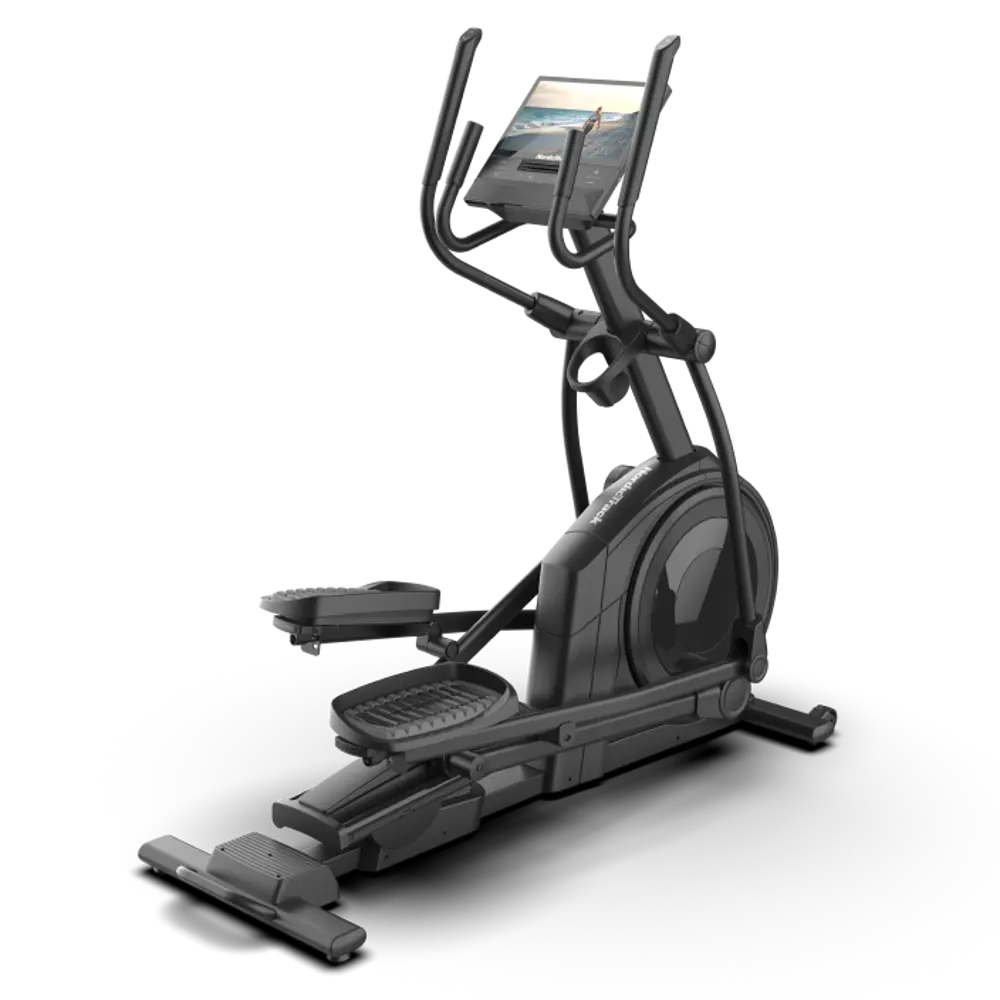
NordicTrack AirGlide 16 Elliptical with 16-inch tilting touchscreen

NordicTrack AirGlide 16 Elliptical

from $1,999.99 $2,799.99

For adults who are steady on their feet and want a fuller, gym-style workout at home.

  • Touchscreen16″ HD tilting display
  • Resistance26 levels, Silent Magnetic (SMR)
  • Incline range15° incline to -5° decline
  • Stride19″, auto-adjustable
  • Weight capacity300 lbs
  • Warranty10-yr frame, 2-yr parts, 1-yr tablet/labor
NordicTrack 10 Recumbent Bike

10 Recumbent Bike

The gentle, seated starting point most older adults should try first.

Check Today’s Price →
NordicTrack AirGlide 16 Elliptical

AirGlide 16 Elliptical

A fuller, low-impact workout for those confident on their feet.

Check Today’s Price →

NordicTrack 10 Recumbent Bike: A Closer Look

The 10 Recumbent Bike is built around one idea: let you sit back comfortably and work at your own pace. The adjustable cushioned seat has real lumbar support, which keeps your spine in a neutral position rather than the more upright, unsupported posture you’d get on a cheaper bike — a meaningful difference if you have any history of lower back pain or sciatica. The 26 levels of Silent Magnetic Resistance mean there’s no chain noise and a smooth, consistent pedal feel from the lightest setting up, so you can nudge intensity up in small, forgiving increments as your stamina improves over weeks and months, rather than fighting big jumps between settings.

The 10″ HD touchscreen tilts for the perfect viewing angle and runs iFIT, giving you access to more than 10,000 trainer-led workouts, including lower-intensity, recovery-focused programming. Resistance and volume controls are built right into the handles, so you never have to let go mid-workout to make an adjustment — a small detail that matters more than it sounds once you’re actually riding. An AutoBreeze fan automatically adjusts to keep you cool as your effort changes, and wide pedals with adjustable straps keep your feet secure throughout the ride.

NordicTrack AirGlide 16 Elliptical: A Closer Look

The AirGlide 16 adds more variety to a low-impact routine without adding joint stress. Its 15° incline to -5° decline range lets you train for real-world terrain — a gentle downhill glide, a flat cruise, or a more demanding incline push — simply by adjusting the incline rather than relying on resistance alone, which many users find gentler on the knees while still raising the heart rate. The 19″ auto-adjustable stride and oversized cushioned pedals keep the motion smooth and controlled, and the 16″ tilting HD touchscreen is the largest in this comparison, which matters if you’re relying on it to read iFIT’s on-screen coaching cues.

Like the recumbent bike, the AirGlide 16 has incline, decline, and resistance controls built into the handles, an AutoBreeze cooling fan, and full iFIT compatibility with SmartAdjust, Follow Trainer, and the beta AI Coach feature that schedules workouts and keeps you accountable from your phone. If you specifically want a 3-in-1 machine that also handles stepper and treadmill-style movement, or need a higher 375-lb weight capacity, NordicTrack’s step-up X16 Elliptical is worth a look — but for most adults over 55 wanting a genuinely low-impact, joint-friendly elliptical, the AirGlide 16 is the one we recommend first.

Ready to see today’s pricing and financing on both machines?

View the 10 Recumbent Bike →

How to Choose Between the Two

The honest answer comes down to three things: your joints, your balance, and your goals. The 10 Recumbent Bike is almost always the gentler choice — you’re seated, supported, and the pedaling motion is naturally low-impact on the hips and knees. It’s the better starting point if you’re returning to exercise after surgery, managing arthritis, or simply prefer sitting down for your workout.

The AirGlide 16 Elliptical, by contrast, gets more of your body moving and typically burns more calories in the same amount of time, but it requires standing balance and a bit more coordination. If you walk comfortably without assistance and want a workout that also engages your arms and core, it’s well worth considering. Several readers who started on the recumbent bike tell us they eventually added the elliptical once their stamina and confidence improved — you don’t have to pick just one forever.

Safety Features Worth Prioritizing

  • Step-through or low step-up frame design — the 10 Recumbent Bike’s step-through frame lets you walk directly into the seat without lifting a leg high or swinging over a top bar.
  • Wide, non-slip pedals with straps — both machines use wide platforms with secure straps, especially important if you have neuropathy or reduced sensation in your feet.
  • Large, high-contrast console text — 10″ on the bike, 16″ on the elliptical, both tilting touchscreens you shouldn’t need reading glasses to use.
  • Handle-integrated controls — resistance, incline, and volume are all adjustable without letting go of the handles or handlebars.
  • A weight capacity with real margin — 350 lbs on the bike and 300 lbs on the elliptical, both well above what a wobbly budget machine typically offers.

What iFIT Adds for Older Users

Both the 10 Recumbent Bike and AirGlide 16 Elliptical include an iFIT trial, and it’s worth understanding what that actually gives you before deciding if the ongoing subscription is worth keeping. iFIT includes trainer-led classes filtered by intensity, and several instructors specifically program low-impact and joint-friendly routines. SmartAdjust intelligently adapts resistance (and incline, on the elliptical) to your fitness level based on the adjustments you make in your own workouts, and Follow Trainer automatically matches your machine’s settings to your instructor’s pace so you’re not fumbling with buttons mid-class. You can also simply use either machine in manual mode with no subscription at all, adjusting resistance yourself while watching TV or listening to a podcast — plenty of older users do exactly this after the free trial ends.

See today’s pricing and financing on the AirGlide 16 Elliptical

View the AirGlide 16 Elliptical →

Setting Realistic Expectations for Your First Month

One of the most common reasons home fitness equipment ends up gathering dust isn’t the equipment itself — it’s an overly ambitious start. If you haven’t exercised regularly in a while, resist the urge to jump straight into 45-minute sessions at moderate resistance. Start with 10 to 15 minutes at the lowest resistance setting, three or four times in your first week, and pay more attention to consistency than intensity. By the one-month mark, a routine of 25-30 minutes, four to five days a week, at a resistance level that feels moderately challenging but sustainable, is a realistic and genuinely beneficial target.

Where to Place Your Machine at Home

Placement affects how often you’ll actually use the equipment more than people expect. A machine tucked into a rarely-visited guest room or a chilly basement corner is far easier to skip than one positioned somewhere you naturally pass through during the day. Many older adults find success placing their recumbent bike or elliptical near a window with natural light, within view of a TV, or in a spot close enough to a main living area that starting a session doesn’t require a special trip. If you plan to use the touchscreen and iFIT regularly, make sure the machine’s final position is within reach of an outlet.

Financing and Budget Planning

Both machines qualify for NordicTrack’s 0% APR financing over up to 24 months — roughly $67/month for the 10 Recumbent Bike and $84/month for the AirGlide 16 Elliptical at current pricing, which is often a more manageable way to fit a higher-tier machine into a fixed or retirement income than paying the full amount upfront. Both are also HSA/FSA eligible, and free standard shipping (up to a $249 value) is included on either machine. It’s worth weighing the cost against a gym membership over time — a $50/month membership adds up to $600 a year before factoring in the time, gas, and motivation barrier of actually getting there, a barrier that tends to grow rather than shrink for a lot of people as the months go on.

Frequently Asked Questions

Is the NordicTrack 10 Recumbent Bike or AirGlide 16 Elliptical better for people over 55?

For most adults over 55, the 10 Recumbent Bike is the gentler and safer starting point because it’s low-impact, seated, and doesn’t require standing balance. The AirGlide 16 Elliptical offers a more complete workout for those who are steady on their feet and want to engage the upper body as well.

What is the weight capacity of the 10 Recumbent Bike and AirGlide 16 Elliptical?

The 10 Recumbent Bike supports up to 350 pounds. The AirGlide 16 Elliptical supports up to 300 pounds; NordicTrack’s step-up X16 Elliptical supports up to 375 pounds if you need a higher capacity.

Do I need the iFIT subscription to use these machines?

No. Both the 10 Recumbent Bike and AirGlide 16 Elliptical work in manual mode without a subscription — you control resistance (and incline, on the elliptical) yourself. iFIT adds guided classes and automatic adjustments but isn’t required for basic use.

Are these machines safe for people with balance issues?

The 10 Recumbent Bike removes standing balance from the equation entirely, since you’re seated throughout. The AirGlide 16 Elliptical requires standing balance, so anyone with significant balance concerns should consult their doctor or physical therapist first, or consider the recumbent bike instead.

How much does each machine cost, and is financing available?

At the time of writing, the 10 Recumbent Bike is priced around $1,599.99 (list $1,799.99) and the AirGlide 16 Elliptical ranges from about $1,999.99 to $2,799.99 depending on current promotions. Both offer 0% APR financing for up to 24 months. Pricing changes with NordicTrack’s regular promotions, so check the current price before buying.

This article contains affiliate links. SeniorAffair may earn a commission if you make a purchase through these links, at no additional cost to you. We only recommend products we believe add real value for older adults. Pricing and promotions are accurate as of publication and subject to change — click through for current pricing.

Harvest Hosts vs. Boondockers Welcome vs. Escapees: Which RV Membership Fits Your Retirement?

0

Disclosure: Senior Affair may earn a commission if you join through links on this page, at no extra cost to you. Prices were checked in November 2026 and can change; confirm the current rate at checkout.

Quick answer: Harvest Hosts ($99) is for overnight stays at wineries, farms and attractions. Boondockers Welcome ($79) is for free stays on private property, often for several nights. Escapees ($49.95) is a club for mail, domicile and discounts. If you travel often, Harvest Hosts All Access ($179) bundles all three plus golf course hosts and is the best value.

Side-by-Side Comparison

Harvest HostsBoondockers WelcomeEscapees RV Club
Price alone$99/yr$79/yr$49.95/yr
What it isOvernight stays at small businessesStays on private propertyRV club and services
Typical stay1 night1 or more nights, set by hostDiscounts at RV parks
HookupsRarelySometimes, small feeAt participating parks
Best forRoad trips and wine countryQuiet, longer stopsFull-timers and snowbirds

Which One Fits You?

Weekend and vacation RVers

Start with Harvest Hosts Classic. A few winery or farm nights a year cover the $99 fee and make the trip more memorable.

Budget-minded travelers taking long trips

Add Boondockers Welcome. Buying both separately costs $178, while the combined plan is $169. Private hosts give you multi-night options when you need a rest day.

Snowbirds and full-time RVers

Choose Harvest Hosts All Access at $179. It includes both stay networks, golf course hosts and an Escapees RV Club membership, which brings mail forwarding access, domicile help and campground discounts. Even using the combined two-network plan, buying Escapees separately would bring the total to about $219.

Not ready for overnight stays yet

If you mostly stay in RV parks, Escapees alone at $49.95 may be enough for the discounts, roadside help and community.

Price Math at a Glance

CombinationBought SeparatelyBundled
Harvest Hosts + Boondockers Welcome$178$169
Harvest Hosts + Boondockers Welcome + EscapeesAbout $228$179 (All Access, also adds golf hosts)

Requirements to Keep in Mind

  • Harvest Hosts and most Boondockers Welcome stays require a self-contained RV with its own toilet and water.
  • Stays are by request, so plan ahead on busy routes.
  • If you rely on powered medical equipment overnight, look for hosts offering electric or plan on solar or a generator.

Read our full reviews of Harvest Hosts, Boondockers Welcome and Escapees RV Club for more detail on each.

The Bottom Line

Most retirees who RV more than a few weeks a year get the best value from All Access. Occasional travelers can start with Harvest Hosts Classic and upgrade later.

Compare Harvest Hosts Plans

Frequently Asked Questions

What is the difference between Harvest Hosts and Boondockers Welcome?

Harvest Hosts locations are businesses such as wineries, farms and breweries, usually for one night. Boondockers Welcome hosts are private property owners who often allow multi-night stays.

Which RV membership is best for retirees?

Frequent travelers, snowbirds and full-timers usually get the most value from Harvest Hosts All Access at $179 per year, since it includes Harvest Hosts, Boondockers Welcome, golf hosts and Escapees RV Club.

Is Escapees included in Harvest Hosts All Access?

Yes. All Access includes an Escapees RV Club membership, which costs $49.95 per year on its own.

Can I upgrade from Harvest Hosts Classic later?

Yes. Members can upgrade to a higher plan from their membership account.

Escapees RV Club Review for Seniors (2026): Mail Service, Domicile and Discounts

0

Disclosure: Senior Affair may earn a commission if you join through links on this page, at no extra cost to you. Prices were checked in November 2026 and can change; confirm the current rate at checkout.

Quick answer: Escapees RV Club is one of the oldest RV membership organizations, best known for its mail forwarding and domicile service for full-time RVers. Membership is $49.95 a year in the U.S., with mail service as a paid add-on starting around $110 a year. It is also included free in the Harvest Hosts All Access plan. For retirees who RV full time or spend months on the road, it is close to essential.

What Is Escapees RV Club?

Escapees was founded in 1978 by full-time RVers Joe and Kay Peterson and has grown into a large community of travelers, many of them retirees. Members call themselves SKPs. The club offers practical services for life on the road plus rallies, local chapters and online education. Since 2025, Escapees has been part of the Harvest Hosts family.

See Escapees Membership

Key Benefits for Retirees

Mail forwarding and domicile

The Escapees Mail Service has operated since 1985. You get a physical street address in Texas, Florida or South Dakota, and the service holds, scans or forwards your mail wherever you are. Many full-timers use that address to establish legal residence for a driver’s license, vehicle registration and voting. Before you change domicile, review how the move affects your taxes, health insurance and Medicare plan options, since coverage networks are tied to where you live.

Campground discounts and SKP parks

Members get discounts at hundreds of participating RV parks plus access to Escapees-owned and co-op SKP parks, which are popular with snowbirds.

Roadside assistance and tire discounts

Escapees offers an RV roadside assistance program and tire savings, both valuable when you are far from home.

Escapees CARE Center

In Livingston, Texas, the CARE program gives older RVers who can no longer travel a place to live in their RV with meals and daily support, so they can stay in the community they know.

Community and education

Rallies like the annual Escapade, chapter gatherings, Boot Camps and RVers Online University help new retirees learn RV life from experienced members.

What Escapees Costs

OptionAnnual PriceNotes
Escapees membership (U.S.)$49.95Core club benefits
Escapees Mail ServiceFrom about $110Add-on; membership required
Harvest Hosts All Access$179Includes Escapees plus Harvest Hosts, Boondockers Welcome and golf hosts

If you were planning to buy Harvest Hosts and Boondockers Welcome anyway, Harvest Hosts All Access effectively adds Escapees for $10. Buying the two-network plan ($169) plus Escapees separately ($49.95) would cost about $219.

Who Should Join

  • Full-time RVers who need a reliable address and a legal domicile.
  • Snowbirds who are away from home for several months each year.
  • New retirees who want training, a community and support while learning RV life.

If you only take a few weekend trips a year and keep a home base, the mail and domicile services matter less, though the discounts may still cover the fee.

The Bottom Line

For retirees living on the road, Escapees solves the hardest practical problems: mail, residency and finding your people. Get it on its own for $49.95, or bundle it with Boondockers Welcome and Harvest Hosts through All Access. See our membership comparison to decide.

Join Escapees RV Club

Frequently Asked Questions

How much does Escapees RV Club cost?

U.S. membership is $49.95 per year. The mail service is an add-on starting around $110 per year. Escapees is also included in Harvest Hosts All Access at $179 per year.

Which states does Escapees offer domicile addresses in?

Escapees offers physical addresses in Texas, Florida and South Dakota, three states popular with full-time RVers.

Do I need an Escapees membership to use the mail service?

Yes. The mail forwarding service is available to Escapees members as a separate paid service.

What is the Escapees CARE Center?

It is a program in Livingston, Texas, that lets older RVers who can no longer travel live in their RV with meals and daily support services.

Is Escapees included with Harvest Hosts?

Yes. The Harvest Hosts All Access plan includes an Escapees RV Club membership.

Boondockers Welcome Review (2026): Free Private-Property RV Stays for Retirees

0

Disclosure: Senior Affair may earn a commission if you join through links on this page, at no extra cost to you. Prices were checked in November 2026 and can change; confirm the current rate at checkout.

Quick answer: Boondockers Welcome is a $79-a-year membership that lets you park your RV on private property hosted by other RVers and landowners, often for more than one night, with no camping fee. Some hosts offer water or electric hookups for a small charge. It is a strong fit for retirees who want quiet, friendly stops and longer stays than a typical winery overnight.

What Is Boondockers Welcome?

Boondockers Welcome started as a community of RVers who opened their driveways, acreage and farms to fellow travelers. It is now part of the Harvest Hosts family, and members book stays through the same app. The network has thousands of hosts across the U.S. and Canada.

Where Harvest Hosts is about businesses like wineries and farms, Boondockers Welcome is about people. Your host might be a retired couple with a big lot outside Tucson or a family farm in Vermont. Many guests say the conversations are the best part.

See Boondockers Welcome Memberships

How It Works

  1. Search the map for hosts along your route and read their notes on rig size, access and pets.
  2. Send a stay request through the app and wait for the host to approve.
  3. Arrive at the agreed time, park where your host directs, and follow their house rules.
  4. Leave the spot as clean as you found it and post a review.

Because hosts are private homeowners, stays are by request, not instant booking. Planning a few days ahead gives you the most options.

Cost and Membership Options

OptionAnnual PriceBest For
Boondockers Welcome only$79RVers who want private-property stays
Harvest Hosts + Boondockers Welcome$169Travelers who want both networks
Harvest Hosts All Access$179Frequent travelers; adds golf hosts and Escapees RV Club

Hosts can join free. If you own land and enjoy company, hosting is a nice way to meet travelers between your own trips.

Why Retirees Like It

  • Multi-night stays. Many hosts allow more than one night, which gives you a rest day instead of driving every morning.
  • Optional hookups. Some hosts offer water or electric for a modest fee, helpful in hot or cold weather.
  • Safety and comfort. Parking on a vetted member’s property can feel more secure than a rest area or big-box store lot.
  • Local knowledge. Hosts often share the best diner, pharmacy or mechanic in town.

Things to Know Before You Join

  • Your RV should be self-contained. Most hosts do not offer bathroom access.
  • Some driveways cannot fit large Class A rigs or long fifth wheels. Check size limits first.
  • Hosts can decline requests, so have a backup plan on busy travel days.

Boondockers Welcome or Harvest Hosts?

If you want wine-country nights and farm stands, start with Harvest Hosts. If you prefer quiet residential stops and the option to stay two or three nights, Boondockers Welcome is the better match. Many retirees end up with both. Our full comparison of Harvest Hosts, Boondockers Welcome and Escapees walks through which combination fits each travel style.

The Bottom Line

At $79 a year, Boondockers Welcome pays for itself in one or two nights compared with most RV parks. For retirees who value conversation, quiet and the chance to slow down, it is one of the best-value memberships in RVing.

Join Boondockers Welcome

Frequently Asked Questions

How much is a Boondockers Welcome membership?

A standalone guest membership is $79 per year. It is also included in the Harvest Hosts + Boondockers Welcome plan ($169) and Harvest Hosts All Access ($179).

Is Boondockers Welcome free for hosts?

Yes. Property owners can join as hosts for free.

How many nights can you stay with a Boondockers Welcome host?

It depends on the host. Many allow more than one night, and each listing shows the maximum stay.

Do Boondockers Welcome hosts provide hookups?

Some do, often for a small fee. Most stays are dry camping, so plan to be self-contained.

Is Boondockers Welcome part of Harvest Hosts?

Yes. Boondockers Welcome is owned by Harvest Hosts, and members use the Harvest Hosts app to find and request stays.

Harvest Hosts Review for Retirees (2026): Plans, Costs and Is It Worth It?

0

Disclosure: Senior Affair may earn a commission if you join through links on this page, at no extra cost to you. Prices were checked in November 2026 and can change; confirm the current rate at checkout.

Quick answer: Harvest Hosts is an annual membership that lets self-contained RVs park overnight at thousands of wineries, farms, breweries, museums and golf courses with no camping fee. Plans run $99 to $179 a year. For retirees who take several RV trips a year and enjoy local food, wine and small towns, it typically pays for itself in two or three nights.

What Is Harvest Hosts?

Harvest Hosts connects RV travelers with small businesses that welcome overnight guests. Instead of booking a campground, you park at a vineyard, orchard, alpaca farm or craft brewery, enjoy the place in the evening, and leave the next morning. There is no nightly fee. Hosts simply ask that you support them, usually by buying a bottle of wine, a dozen eggs, a meal or a tour.

For many travelers over 55, that trade is the appeal. You get quiet, scenic stops off the interstate and a chance to meet the people who run the place, rather than a crowded RV park next to a highway.

See Harvest Hosts Plans

How a Harvest Hosts Stay Works

  1. Find a host on the Harvest Hosts map or app along your route.
  2. Request your stay in the app. Many hosts ask for 24 hours or more of notice.
  3. Arrive self-contained. Your RV needs its own bathroom and fresh water tank. Most stays have no hookups, so plan to run on batteries, solar or a generator where allowed.
  4. Support your host. Shop, dine or take a tour during your visit.
  5. Leave on time the next morning and post a review to help other members.

Harvest Hosts Plans and Prices for 2026

PlanAnnual PriceWhat You Get
Classic$99Wineries, farms, breweries, distilleries and attractions
Harvest Hosts + Boondockers Welcome$169Classic hosts plus thousands of private-property hosts
All Access$179Everything above plus golf course hosts and an Escapees RV Club membership

All Access is the plan most full-time and snowbird RVers choose, because it bundles an Escapees RV Club membership (a $49.95 value) for only $10 more than the two-network plan. If you want a side-by-side breakdown, see our Harvest Hosts vs. Boondockers Welcome vs. Escapees comparison.

Does Harvest Hosts Pay for Itself?

In many parts of the country an RV park night runs $50 or more, and popular areas cost far more in peak season. At that rate, two nights at Harvest Hosts locations cover the $99 Classic plan. You will spend some money supporting each host, but that is money you would likely spend on wine, local food or an activity anyway.

Where it does not pay off: if you only take one short RV trip a year, or you strongly prefer full hookups, a pool and a laundry room every night.

Who Harvest Hosts Is Best For

  • Retired couples on road trips who like wineries, farm stands and small-town stops.
  • Snowbirds who need safe, quiet overnight stops while driving south and north each year.
  • RVers watching a fixed income who want to cut campground costs on travel days.

Skip it if you travel in a tent or car camper without a toilet, need daily electric hookups for medical equipment, or rarely leave home.

Tips for Your First Stay

  • Arrive during business hours so you can check in and shop.
  • Read each host’s notes for rig size limits, generator rules and pet policies.
  • Keep your awning, chairs and grill put away unless the host says otherwise.
  • Budget roughly what you would spend on a nice dinner out for your purchase.

A Note on Ownership

Choice Hotels announced in September 2026 that it is acquiring Harvest Hosts. Membership plans were unchanged at the time of writing, but it is worth checking the current terms when you join or renew.

The Bottom Line

For active retirees who spend several weeks a year on the road, Harvest Hosts is one of the easiest ways to lower travel costs while making the trip more memorable. Start with Classic if you mainly want winery and farm stays, or go with All Access if you travel often or full time.

Join Harvest Hosts

Frequently Asked Questions

How much does Harvest Hosts cost in 2026?

The Classic plan is $99 per year, Harvest Hosts + Boondockers Welcome is $169 per year, and All Access is $179 per year. Prices can change, so check the current rate at checkout.

Do you have to buy something at a Harvest Hosts location?

There is no camping fee, but hosts ask members to support their business during the stay, such as buying wine, produce, a meal or a tour.

Can I stay at Harvest Hosts without a bathroom in my RV?

No. Harvest Hosts requires a self-contained vehicle with its own toilet and water, since most hosts do not provide facilities.

How long can you stay at a Harvest Hosts location?

Most stays are one night. Some hosts allow longer stays, sometimes for a fee, as noted in their listing.

Is Harvest Hosts worth it for retirees?

It is usually worth it for retirees who take several RV trips a year. At typical campground rates, two or three nights cover the annual fee.

Physician’s CHOICE Probiotics for Women: A Guide for Women 55+

Disclosure: This article contains affiliate links. If you buy through them, Senior Affair may earn a commission at no extra cost to you. This article is for general information and is not medical or dental advice.

After menopause, changes in hormones can affect digestion and vaginal and urinary health. Probiotics made for women are one of the most popular supplements in this space. Here is what’s in Physician’s CHOICE Probiotics for Women and how to think about it after 55.

At a glance

  • Product: Physician’s CHOICE Probiotics for Women, 50 billion CFU
  • Price: $24.98 (checked November 3, 2026)
  • What’s in it: six probiotic strains, organic prebiotics and cranberry extract, according to the brand
  • Brand focus: digestive, vaginal pH and urinary tract health

Who it may suit

  • Women looking for one daily supplement that combines digestive and feminine-health probiotics.
  • Women who want to support gut health after a course of antibiotics, with their doctor’s okay.

Check with your doctor first if you

  • Have a weakened immune system, are on chemotherapy, or have a central line or serious illness.
  • Take blood thinners, since cranberry may interact with warfarin.
  • Have a history of kidney stones, as cranberry products contain oxalates.

When a probiotic isn’t enough

A probiotic is not a treatment for a urinary tract infection. See a doctor if you have burning, frequent urges or fever. In older adults, a UTI can also show up as sudden confusion or unusual tiredness, so take those signs seriously.

Tips if you try it

  • Take it at the same time each day and give it a few weeks.
  • Expect some gas or bloating at first. It usually settles.
  • Bring the bottle to your next appointment so your doctor knows what you take.

The bottom line

Physician’s CHOICE Probiotics for Women is an affordable, well-rounded option for women who want daily digestive and feminine-health support. Check the current price.

Made By Dentists UV Toothbrush Sanitizer Clip: A Travel-Health Guide for 55+

0

Disclosure: This article contains affiliate links. If you buy through them, Senior Affair may earn a commission at no extra cost to you. This article is for general information and is not medical or dental advice.

A toothbrush tossed into a travel bag or left by the sink picks up germs. UV-C sanitizers are a simple way to keep your brush cleaner between uses. Here is a look at the Made By Dentists PRO-X clip and who it suits.

At a glance

  • Product: Made By Dentists PRO-X UV Toothbrush Sanitizer Clip
  • Price: $34.99 (checked November 3, 2026)
  • Sale: $29.74 from November 19 to 26, then $27.99 from November 27 to December 1, as announced by the seller
  • Features: 5-minute UV-C cycle, about 30 days per charge, fits manual and electric toothbrushes, TSA-friendly, per the brand

How it works

The clip snaps over the head of your toothbrush and runs a short UV-C light cycle. UV-C light damages the genetic material of many bacteria and viruses, which is why it is used in hospitals and water treatment. The clip also covers the bristles, so your brush isn’t touching other items in a bag.

Who it suits

  • Frequent travelers and snowbirds who carry a toothbrush in a toiletry bag.
  • Anyone who shares a bathroom or keeps brushes close together.
  • People recovering from a cold or the flu who want an extra layer of hygiene.

What it won’t do

A sanitizer doesn’t replace good habits. Rinse your brush well, let it air-dry upright, and replace it every three to four months or when the bristles fray, as dentists recommend. Never look directly at UV-C light.

The bottom line

The PRO-X clip is a small, practical upgrade for travel and everyday hygiene, and the late-November sale brings it under $30. Check the current price.

Auraglow Teeth Whitening Kit: A Guide for Adults 55+

0

Disclosure: This article contains affiliate links. If you buy through them, Senior Affair may earn a commission at no extra cost to you. This article is for general information and is not medical or dental advice.

Teeth naturally darken with age as enamel thins and decades of coffee, tea and red wine add up. At-home whitening kits are a lower-cost alternative to the dentist’s chair. Here is what the Auraglow kit includes and what to know before using it after 55.

At a glance

  • Product: Auraglow Teeth Whitening Kit
  • Price: $48.00 (checked November 3, 2026)
  • What’s in it: an LED accelerator light, 35% carbamide peroxide gel and enough gel for 20+ treatments, according to Auraglow
  • Brand claim: up to 10 shades whiter in 7 days

How it works

You fill a mouth tray with whitening gel, place it over your teeth and switch on the LED light for the session. Carbamide peroxide breaks down into hydrogen peroxide, which lightens stains inside the enamel. Results vary with the type of staining. Yellowish stains from food and drinks usually respond best, while gray or brown tones can be harder to shift.

What to know after 55

  • Dental work won’t whiten. Crowns, veneers, bridges and tooth-colored fillings stay the same shade, so whitened natural teeth may stop matching them.
  • Sensitivity is common. Thinner enamel and receding gums can make teeth more sensitive. Start with shorter or fewer sessions and take breaks if it twinges.
  • Protect your gums. Wipe away any gel that gets onto the gums.
  • See your dentist first if you have gum disease, cavities, exposed roots, loose teeth or recent dental work.

Tips for better results

  • Brush gently before treatment, but not right before if your gums are tender.
  • Avoid coffee, tea and red wine for a few hours after each session.
  • Use a sensitivity toothpaste for a week or two before you start if your teeth are sensitive.

The bottom line

The Auraglow kit is a budget-friendly way to brighten natural teeth at home. Talk to your dentist first if you have dental work or sensitivity, and start slowly. Check the current price of the Auraglow kit.

LED Light Therapy at Home After 55: A Qure Device Guide

0

Disclosure: This article contains affiliate links. If you buy through them, Senior Affair may earn a commission at no extra cost to you. This article is for general information and is not medical advice.

LED light therapy has moved from the dermatologist’s office to the bathroom counter. Masks and panels that use red and near-infrared light are now a popular at-home option for fine lines and skin tone. Here is what LED devices can and can’t do after 55, plus three Qure products worth a look.

Deal note: The Qure LED face mask is on sale for $238 (regularly $388) through November 18, 2026. Prices were checked November 3 and may change.

Quick picks

What LED light therapy does

Different colors of light reach different depths of skin. Red and near-infrared light are the most studied for aging skin and are thought to support collagen. Blue light is mainly used for acne. Research on at-home devices is still growing, and results tend to be modest and gradual. Most people use a device several times a week for at least a couple of months before judging it.

1. Qure LED Light Therapy Mask

A full-face mask with five light settings (red, deep red, blue, amber and infrared) and short daily sessions. Qure says it is FDA-cleared for wrinkles and acne. It also has eye protection and an app. This is the best value in the lineup while the sale lasts.

Check the sale price on the Qure LED Mask

2. Qure Neck & Décolletage LED System

The neck and chest often show sun damage and crepiness before the face does, yet they get less attention. This flexible panel uses red (633 nm) and near-infrared (830 nm) light for that area.

Check the price on the Qure Neck LED System

3. Qure Micro-Infusion Under Eye Patches

Not an LED device, but a useful add-on. These patches use tiny dissolving points to deliver skincare ingredients to the under-eye area, aimed at fine lines and puffiness.

Good to know: Qure lists retinol among the ingredients, so introduce them slowly if your skin is sensitive, and skip them if you’re already using a prescription retinoid around the eyes.

Check the price on Qure Under Eye Patches

Who should check with a doctor first

  • Anyone taking light-sensitizing medication, such as some antibiotics, diuretics and acne treatments. Ask your pharmacist if you’re unsure.
  • People with eye conditions like macular degeneration or glaucoma, or recent eye surgery. Talk to your eye doctor before using a face mask.
  • Anyone with a history of skin cancer or a changing mole. Have a dermatologist look first.
  • People with lupus, rosacea or melasma, which can react to light.

Tips for getting results

  • Use it on clean, dry skin and follow the session length in the instructions.
  • Be consistent: a few times a week for 8 to 12 weeks before deciding.
  • Take a photo in the same light before you start so you can compare honestly.
  • Keep wearing sunscreen. No device makes up for daily sun damage.

The bottom line

LED devices won’t replace a dermatologist, but they are a gentle, low-effort option for people who want to do something extra for their skin at home. If you want to try one, the Qure LED Mask is the pick while it’s on sale through November 18.