
Not all home cardio equipment is built with an aging body in mind, and the difference isn’t always obvious from a product photo or spec sheet. Before you buy a recumbent bike, elliptical, or any other cardio machine after 55, it’s worth understanding exactly which features actually matter for safety and comfort — and which are just marketing. We’ll use the NordicTrack 10 Recumbent Bike and AirGlide 16 Elliptical as real-world examples throughout, since both check most of these boxes.
Frame Design and Entry Height
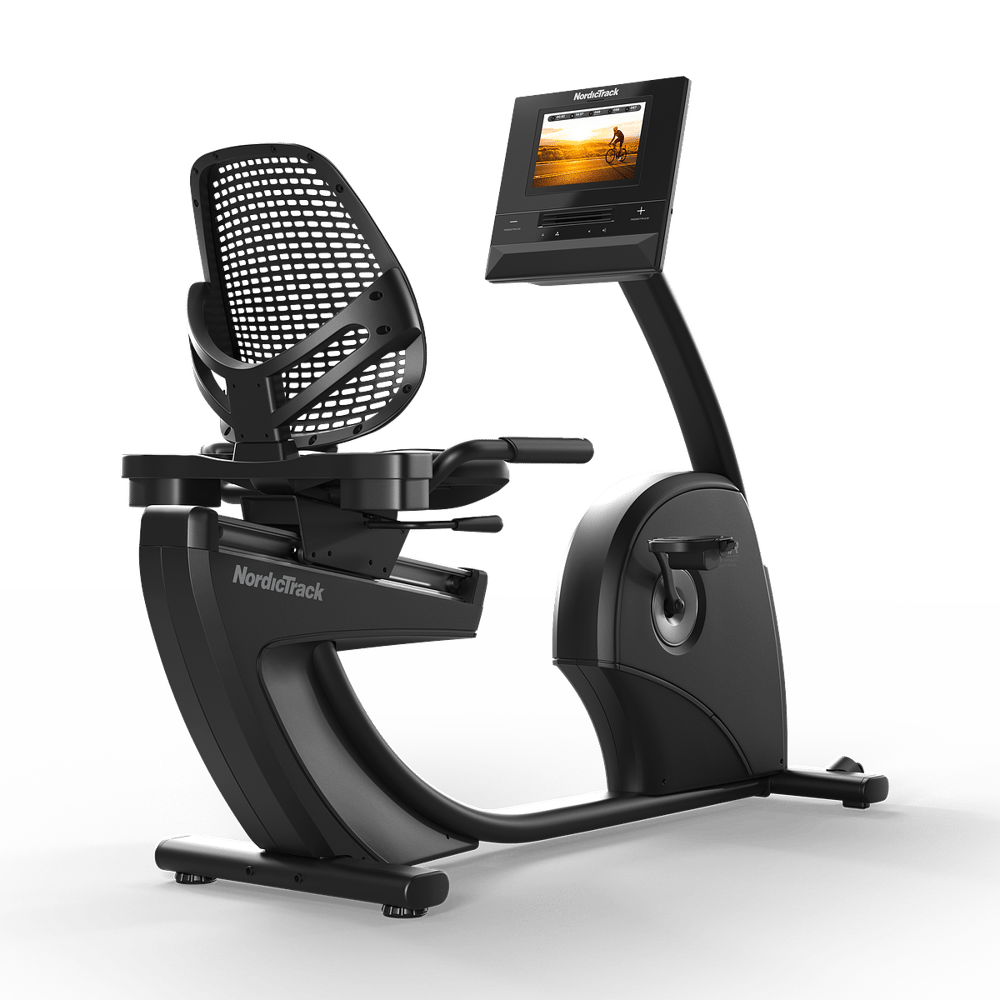
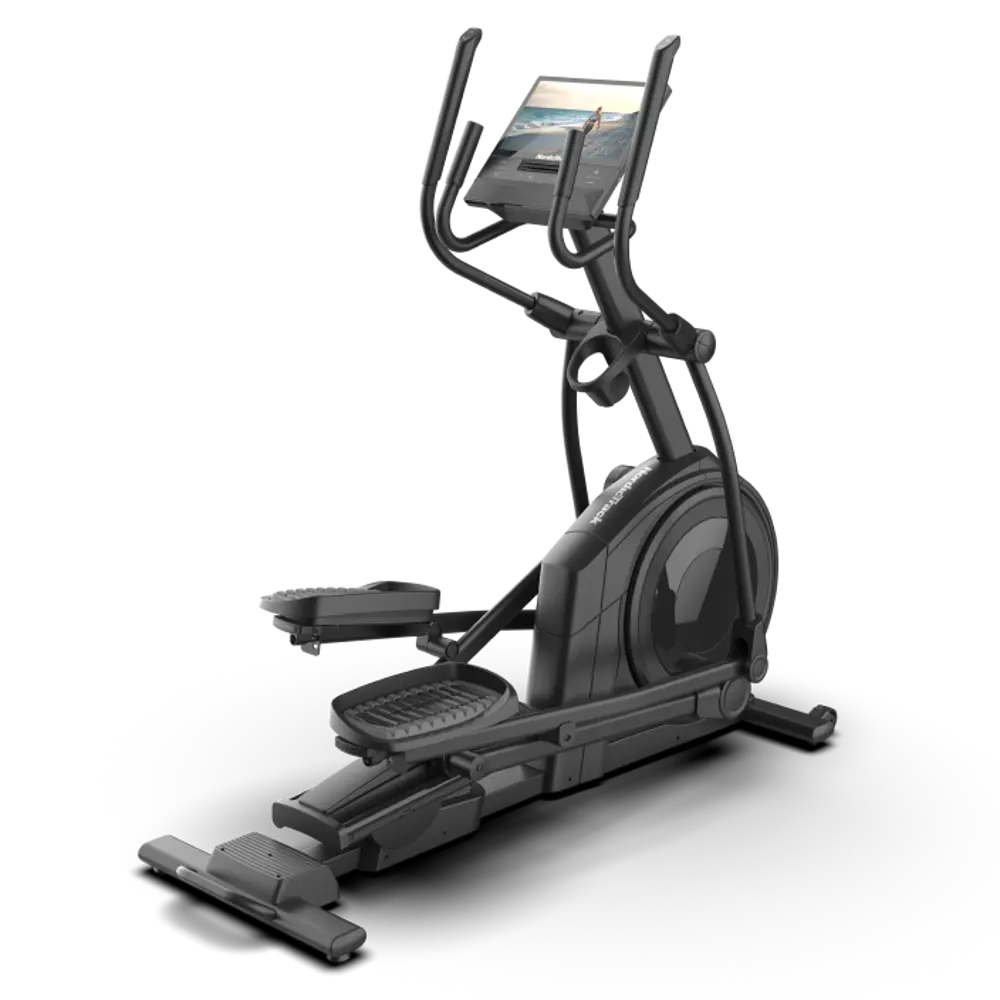
How you get on and off a machine matters just as much as how it feels once you’re using it — arguably more, since most falls and strains happen during mounting or dismounting, not mid-workout. Look for a step-through frame on recumbent bikes, which lets you walk directly into the seat rather than lifting a leg over a top tube — the 10 Recumbent Bike is built this way. On ellipticals, pay close attention to step-up height and oversized, stable pedals like those on the AirGlide 16.
Weight Capacity and Stability
A machine rated right at or just above your body weight will often feel wobbly and unstable, even if it technically “supports” you. Look for equipment with meaningful margin — a wide base, low center of gravity, and a weight capacity comfortably above your own. The 10 Recumbent Bike supports up to 350 lbs, and the AirGlide 16 Elliptical supports up to 300 lbs (NordicTrack’s step-up X16 Elliptical goes to 375 lbs if you need more margin). A sturdy, well-built frame won’t rock or shift when you shift your weight getting on, off, or during a workout, which matters enormously for confidence as much as literal safety.
- Step-through or low step-up design
- Weight capacity with real margin above your body weight
- Wide, low-profile base with no wobble when rocking side to side
- Non-slip floor contact points or included stability mat
See the 10 Recumbent Bike, built with these safety features in mind
View the 10 Recumbent Bike →Seating and Ergonomics
For recumbent bikes especially, seat design deserves real attention. The 10 Recumbent Bike’s adjustable, cushioned seat with lumbar support keeps the spine in a neutral position, which matters if you have any history of lower back pain. An adjustable seat position lets you fine-tune leg extension so your knees aren’t over-flexing or over-extending with each pedal stroke — either of which can cause discomfort or strain over repeated sessions.
Console Readability
This one is easy to overlook until you’re standing in front of a machine trying to read tiny text without your glasses. Look for large, high-contrast displays, ideally 7 inches or bigger, with simple menu navigation rather than a maze of small buttons. The 10 Recumbent Bike’s 10″ tilting touchscreen and the AirGlide 16 Elliptical’s larger 16″ tilting touchscreen are both good examples — touchscreens tend to be more forgiving than button-heavy consoles, since you can tap large on-screen icons rather than hunting for the right physical button.
Pedals, Grips, and Contact Points
Wide pedals with adjustable straps keep your feet secure throughout a workout, which is especially important if you have any reduced sensation in your feet from neuropathy or circulation issues. Both the 10 Recumbent Bike and AirGlide 16 Elliptical use this design. On ellipticals, check that handlebars — both stationary and moving — are within comfortable reach and provide a genuinely secure grip; the AirGlide 16’s handles also integrate incline, decline, and resistance controls so you don’t have to let go to make an adjustment.
| Feature | Why It Matters | 10 Recumbent Bike | AirGlide 16 Elliptical |
|---|---|---|---|
| Frame entry | Reduces fall/strain risk when mounting | Step-through design | Oversized cushioned pedals |
| Weight capacity | Stability and confidence | 350 lbs | 300 lbs |
| Seat/ergonomics | Comfort over longer sessions | Padded, adjustable, lumbar support | N/A (standing) |
| Console | Readability without strain | 10″ HD tilting touchscreen | 16″ HD tilting touchscreen |
| Pedals | Secure footing | Wide platform, adjustable straps | Oversized, cushioned |
| Handrails/handles | Balance support | Integrated resistance/volume controls | Integrated incline/decline/resistance controls |
| Warranty | Confidence in build quality | 10-yr frame, 2-yr parts, 1-yr tablet/labor | 10-yr frame, 2-yr parts, 1-yr tablet/labor |
Noise Level and Placement
Magnetic resistance systems (as opposed to older friction or chain-based designs) run much quieter, which matters if you’re placing the machine in a bedroom, near a shared wall, or want to use it during early morning or late evening hours without disturbing others in the house. Both the 10 Recumbent Bike and AirGlide 16 Elliptical use Silent Magnetic Resistance for exactly this reason.
Warranty and Support
A longer warranty, especially on the frame and motor, is a reasonable signal of how confident a manufacturer is in long-term durability. Both machines here carry a 10-year frame warranty with 2 years on parts and 1 year on the tablet and labor. Also check what kind of customer support and repair network is available — a machine that breaks down and takes weeks to service isn’t much use to a daily routine you’re trying to build.
Ready to see the AirGlide 16 Elliptical, built around these exact safety priorities?
Compare the AirGlide 16 →Room-by-Room Placement Considerations
Where you place a recumbent bike or elliptical affects safety just as much as the machine’s own design. Avoid tight corners or spaces where you’d need to squeeze past furniture to reach the machine — you want a clear, unobstructed path of at least a couple of feet on the side you typically mount and dismount from. The 10 Recumbent Bike needs roughly 67″ x 23″ of floor space, while the larger AirGlide 16 Elliptical needs about 70″ x 25″ plus overhead clearance for its 67″-tall frame. Carpeted rooms can add cushioning but may also make wheeled machines harder to reposition; a hard floor with a rubber exercise mat underneath often provides the best combination of stability and easy cleaning.
Lighting matters more than people expect. A well-lit space reduces the chance of misjudging a step or pedal position, especially during early morning or evening sessions. If your equipment will live in a basement or converted garage, make sure the space is climate-controlled enough for comfortable year-round use — extreme cold can make joints stiffer and less willing to warm up properly, while excessive heat and humidity increase fatigue and the risk of dehydration during longer sessions.
Red Flags to Avoid When Shopping
A few warning signs are worth watching for regardless of brand. Be cautious of extremely low-priced equipment that doesn’t list a specific weight capacity — this often signals the manufacturer hasn’t rigorously tested the frame for stability under real-world use. Vague or absent warranty information, particularly on the frame, is another red flag; reputable manufacturers are generally happy to specify multi-year frame coverage because they’re confident in their build quality, the way NordicTrack does with its 10-year frame warranty on both machines covered here.
Watch out too for consoles advertised with impressive-sounding features but no mention of text size or screen readability — a large spec sheet doesn’t guarantee an interface that’s actually comfortable to use without reading glasses. Finally, be wary of assembly requirements that seem unusually complex for the price point; a well-designed machine built with older users in mind typically ships with clear instructions and reasonable assembly time, since manufacturers know that a frustrating setup experience often means the equipment never gets used at all.
New vs. Used Equipment
Buying used home fitness equipment can seem like an appealing way to save money, but it comes with real trade-offs worth weighing carefully, especially for older buyers prioritizing safety. A used machine typically has no remaining manufacturer warranty, which means any frame, motor, or electronic issue becomes an out-of-pocket repair cost. You also can’t verify how well the previous owner maintained the machine, whether bolts have been kept tight, or whether the resistance system has begun to wear unevenly — issues that might not be obvious during a quick test but could affect stability or reliability down the line.
If a used machine is significantly discounted and comes with documentation of light use and good maintenance, it can still be a reasonable choice. But for safety-critical features like frame stability and weight capacity, buying new — with a full warranty, a 30-day in-home trial, and manufacturer support — generally offers more peace of mind, especially for a piece of equipment you’re relying on daily.
Getting Set Up for Success Before Your First Workout
Once your equipment arrives and is assembled, a short setup checklist goes a long way toward starting off safely and comfortably. Confirm the seat or stride position is adjusted correctly for your height before your first session, and do a few slow, low-resistance minutes to get a feel for the machine before increasing pace. Keep a water bottle within reach — the AirGlide 16 Elliptical even includes a built-in bottle holder — since dehydration can sneak up during even a moderate-intensity session, and make sure the area around the machine stays clear of clutter, cords, or pets that might create a tripping hazard during mounting or dismounting.
Finally, if you’re managing any chronic health condition, keep your doctor informed about your new routine, particularly if you’re tracking heart rate or blood pressure as part of an existing treatment plan. A quick conversation before you start, and periodic check-ins as your routine develops, help ensure your new equipment is working with your overall health picture rather than against it.
Involving Family in the Buying Decision
If adult children or other family members are involved in helping research or fund a fitness equipment purchase, it’s worth including them in the safety checklist review specifically, not just the general shopping process. Family members are often especially reassured by clear weight capacity margins, step-through frame design, and warranty coverage, since these directly address common worries about a parent or older relative using equipment independently at home. Sharing a simple checklist like the one in this guide can turn a vague worry (“is this safe?”) into a concrete, answerable conversation about specific features.
For family members purchasing equipment as a gift, involving the actual user in final model selection — even if surprising them with the general idea — tends to produce better long-term outcomes than choosing entirely independently, since comfort preferences like seat firmness or step height are genuinely personal and hard to guess correctly from a distance.
Final Thoughts on Making a Confident Choice
Buying home fitness equipment after 55 doesn’t need to be complicated, but it does deserve a bit more scrutiny than picking whatever’s cheapest or most heavily advertised. Working through this checklist — frame entry, weight capacity, seating, console readability, pedal security, handrails, and warranty — covers the factors that most directly affect both safety and whether you’ll actually enjoy using the equipment consistently. A machine that checks these boxes, like the 10 Recumbent Bike or AirGlide 16 Elliptical, is far more likely to become a genuine part of your routine than one that merely looked good in a photo.
A Quick Recap
Before you check out, run through the checklist one more time: step-through or low entry, real weight capacity margin, a comfortable and supportive seat or stride, a console you can actually read, secure pedals, sturdy handrails, and a warranty that reflects genuine confidence in the build. A machine that satisfies these criteria will almost always end up being the one you use consistently, year after year — which, in the end, is the entire point of buying it.
Frequently Asked Questions
What is the most important safety feature for seniors buying cardio equipment?
A step-through or low step-up frame is often the most important, since most injuries with home equipment happen during mounting and dismounting rather than during the workout itself.
How much weight capacity margin should I look for?
Aim for a machine rated comfortably above your own body weight rather than right at the limit — this improves both actual stability and the feeling of confidence while using it.
Are touchscreen consoles easier to use than button consoles?
Generally yes. Large, high-contrast touchscreens with simple navigation, like the 10″ and 16″ displays on the 10 Recumbent Bike and AirGlide 16 Elliptical, are typically easier to read and operate than consoles with many small physical buttons.
Should I buy equipment with a warranty for the motor and frame?
Yes, a solid warranty on major components is a good sign of build quality and gives you protection if something goes wrong after the return window closes. Both machines covered here carry a 10-year frame warranty.
Get guides like this in your inbox
Medicare changes, money tips, health guides and deals for adults 55+. Free, from Senior Affair Magazine.
Free. Unsubscribe anytime. Privacy policy.