
If your knees have started vetoing your workouts, rowing deserves a second look. It’s one of the few cardio exercises that works your legs, back, core, and arms at once—without pounding your joints the way running or the elliptical can. Aviron has become one of the most talked-about names in home rowers, thanks to a big touchscreen, video-game-style workouts, and a design that’s noticeably easier to get on and off than older rowing machines. We took a close look at whether it holds up for a 55+ audience specifically—not just fitness influencers in their 30s.
Bottom line up front: the Aviron is a genuinely well-built, low-impact rower with real accessibility advantages (higher seat, lower step-over, and guided coaching), but it’s a bigger investment than a basic rower and works best if you’ll actually use the touchscreen features. Here’s the full breakdown.
Why Rowing Makes Sense After 55
Before getting into the machine itself, it’s worth understanding why rowers keep coming up in conversations about senior-friendly fitness equipment.
Rowing is a seated, low-impact movement—your body weight never lands on your knees or hips the way it does with walking or jogging. The smooth, sliding motion increases blood flow to the joints, which can support mobility and help with everyday stiffness, and because it’s a weight-bearing exercise, it also helps maintain bone density. It’s a full-body workout, engaging roughly 80% of your muscle groups in a single session, which makes it efficient if you don’t want to be doing separate strength and cardio routines. Most guidance suggests 3-4 sessions a week, 15 to 30 minutes each, to see real benefit—a pace that’s realistic for most schedules.
That combination — cardio, strength, and joint-friendliness in one seated machine — is exactly why rowers have become popular with the 55+ crowd over the last few years.
Talk to your doctor before starting any new exercise routine, especially if you have an existing joint, heart, or back condition.
Getting On and Off: The Detail Most Reviews Skip
For a lot of people over 55, the real dealbreaker with home gym equipment isn’t the workout — it’s the awkward business of getting into position. Aviron seems to have designed around this specifically.
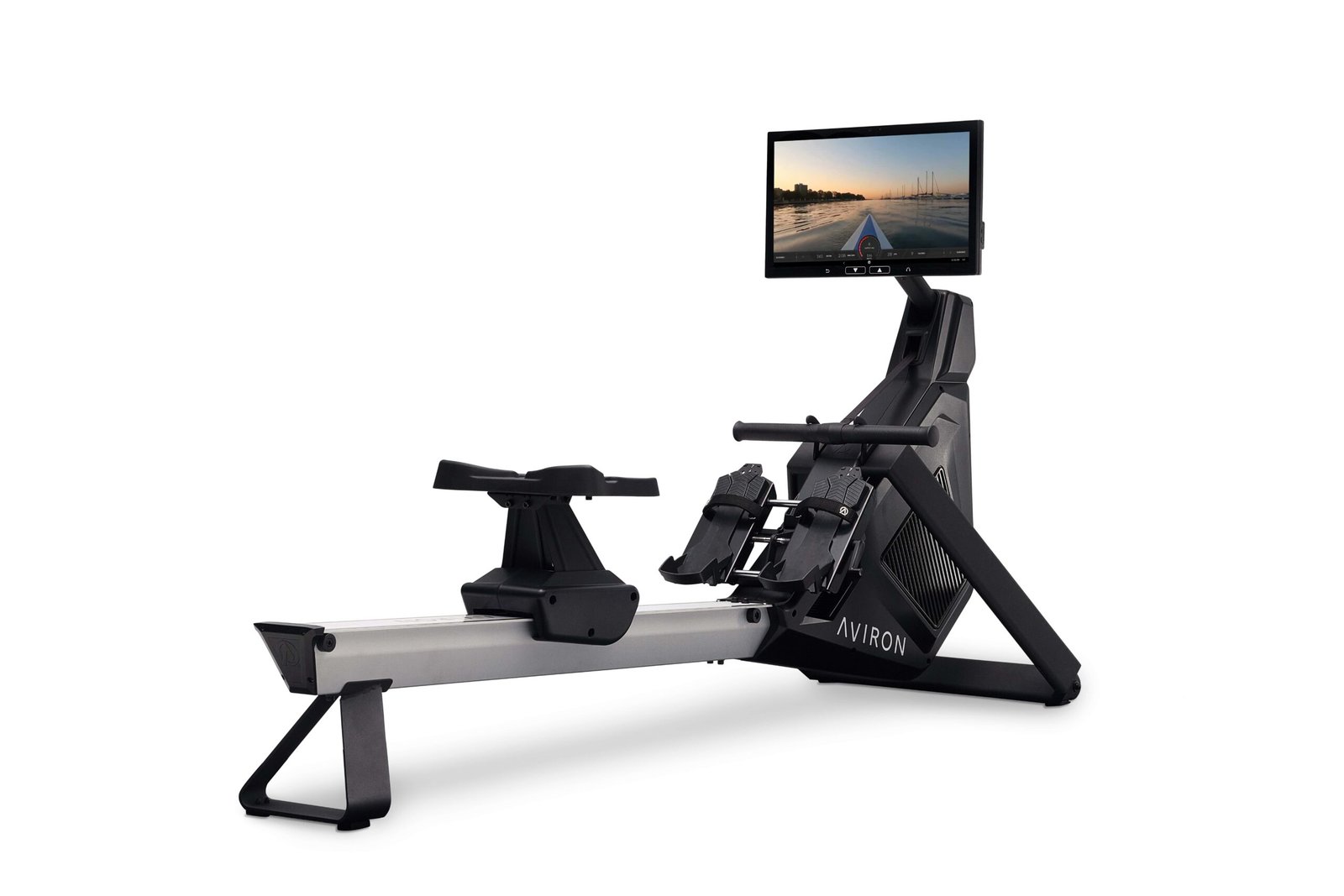
The seat sits about 20 inches off the ground, noticeably higher than a traditional rower, so you’re not lowering yourself into a low crouch to sit down. At the same time, the frame itself is a low 10 inches, so you don’t have to lift your leg high to step over it. The seat is also wide, cushioned, and stable rather than the narrow sliding seats you’ll find on budget rowers. In practice, that means less strain on your knees, hips, and lower back just getting in and out — which matters if you’re rowing daily rather than once a week.
Aviron Model Lineup: Which One Fits You
Aviron currently sells three main lines. Here’s how they compare:
Aviron Strong Go Rower — around $1,499 The most affordable entry point. It uses your own tablet or phone rather than a built-in touchscreen, which keeps the price down but means one more thing to set up before each row.
Aviron Impact Series Rower — around $1,900 A lighter, more compact rower with the same 22″ HD rotating touchscreen as the flagship model, built for smaller spaces or households sharing the machine. This is a strong middle-ground pick if space or budget is a bigger concern than resistance range.
Aviron Strong Series Rower — around $2,499 The flagship model, with dual air-and-magnetic resistance for a smoother, more adjustable feel and steel-and-aluminum construction rated to support users up to 507 lbs. This is the one most reviewers point to as the best all-around experience.
All three share the same core design advantages: the 20″ seat height, low step-over frame, and access to Aviron’s guided programs.
See current pricing and packages on Aviron’s site →
What the Touchscreen Actually Adds
Every Aviron model (aside from the Strong Go, which uses your own device) comes with a 22-inch touchscreen that rotates, so you can follow along with off-rower stretching or strength segments, too. It’s the centerpiece of what makes Aviron different from a plain rowing machine.
On the screen, you get access to guided workouts, scenic rows, and light, game-like challenges — plus the ability to log into your own Netflix, Hulu, Prime Video, Disney+, or YouTube account and watch while you row. For anyone who finds a plain rowing motion boring after five minutes, this is a meaningful difference. It’s also genuinely helpful for beginners: step-by-step instructional videos walk you through form before you start, which lowers the risk of straining your back with poor rowing technique.
The subscription is $29/month and unlocks the full library of guided programs and games. You can also use the rower without a subscription — you’ll still see your resistance, time, distance, and stroke metrics — but you’ll lose the guided coaching and entertainment features, which are arguably the best reasons to choose Aviron over a cheaper rower in the first place.
Warranty and Peace of Mind
This is worth calling out for anyone making a bigger equipment purchase later in life: Aviron backs its rowers with a 10-year frame warranty and 2-year parts warranty standard, and if you order directly from Aviron’s website, that extends to a 20-year limited warranty on the Impact, Strong, and Tough series. That’s an unusually long warranty for home fitness equipment, and it’s a meaningful reassurance if you’re investing in a machine you plan to use for years, not months.
Who Should and Shouldn’t Buy an Aviron
A good fit if:
- You want a low-impact cardio option that’s easier on the knees, hips, and back than walking or running
- You’d actually use guided workouts and entertainment to stay motivated
- Getting on and off the machine easily is a real priority, not an afterthought
- You want a long warranty on a piece of equipment you’re planning to keep long-term
Maybe not, if:
- You just want the cheapest possible rower and won’t use the touchscreen or subscription
- You have very limited space (the Strong Series is the largest of the three)
- You’re not comfortable with a recurring monthly fee for the full feature set
The Verdict
For adults 55 and up looking for a joint-friendly way to build cardio fitness and strength without giving up on their knees, the Aviron lineup stands out for reasons that go beyond the flashy screen: the higher seat, lower step-over frame, and beginner-guided coaching are the kind of details that actually matter day to day. The Impact Series is the sensible middle choice for most households—full features in a smaller footprint—while the Strong Series is worth the upgrade if you want the smoothest resistance feel and don’t mind the larger frame.
Check today’s price and current Aviron packages →
Compare Aviron models side-by-side →
This post contains affiliate links. If you purchase through a link on this page, senioraffair.com may earn a commission at no additional cost to you. We only recommend products we believe offer genuine value to our readers.